
Some pinks shout. Dusty rose pink whispers — and that is exactly why it is everywhere this winter. If you have been searching for dusty rose pink hair color ideas for winter that feel grown-up rather than girly, you are in the right place. This is the muted, grey-mauve pink that reads more like a neutral than a statement, which means it works with a wool coat, a work meeting and a grey January sky. It is pink for people who thought pink was not for them.
Below you will find 13 shades of dusty rose pink hair, from a barely-there gloss to a deep rosewood, plus the honest truth about bleach, skin tone, toner upkeep and the three-week fade. And if you like your pink with a little more mischief, our guide to pink peekaboo hair for brunettes shows how to hide a brighter pink underneath — the same low-commitment spirit, turned up a notch.

What “Dusty” Actually Means in a Hair Colour
The word dusty does a lot of quiet work here. In colourist language it means desaturated: the pink has been softened with grey and a touch of mauve, the way a rose looks after it has been pressed in a book for a month. It is not bubblegum pink, which is bright and blue-based, and it is not rose gold, which leans warm and metallic. Dusty rose sits between the two — cooler than rose gold, softer than bubblegum, and much easier to live with. When your colourist talks about adding a smoky or ash tone to the formula, that grey veil is what turns an ordinary pink into a dusty one.
Why does that matter? Because saturation is what makes a colour feel loud. A highly saturated pink reflects a lot of light and draws the eye straight to your hair, which can be wonderful if that is the point — but it also means the colour has to be perfect every day, and it clashes with half your wardrobe. A dusty pink reflects less light, so it behaves more like a neutral. It flatters skin instead of competing with it, it sits happily next to camel, charcoal, navy and cream, and when it fades it fades gracefully into something that still looks intentional. That is the whole appeal in one sentence: it is pink that behaves.
Why Dusty Rose Pink Is Winter’s Most Wearable Pink
Winter is the hardest season for a fun hair colour. The light is flat and grey, your wardrobe turns into a rotation of dark coats and chunky knits, and anything too bright can look stranded — like a summer colour that missed its flight home. Dusty rose was made for this. Its grey-mauve undertone picks up the same cool light as a January afternoon, so instead of fighting the season it blends into it. Against a charcoal coat or a cream roll-neck it looks deliberate and expensive, not accidental.
There is a practical side too. Winter is when most of us wash our hair less, wear hats more and spend less time styling, and dusty rose is forgiving about all of that. It does not show regrowth as harshly as a bright pink, it looks good slightly tousled under a beanie, and because it is a semi-permanent-friendly shade you can refresh it at home with a colour-depositing conditioner instead of booking a salon visit in the middle of a cold snap. If you have been waiting for a low-drama way into pink hair, winter is the season — and dusty rose is the shade.
Shade 1: Classic Dusty Rose on a Light Brown Base
This is the shade most people picture when they hear the words dusty rose: a medium pink with a soft grey veil, worn all over on a light brown base. It is the easiest version to get right, because light brown hair lifts to the level dusty rose needs without a punishing amount of bleach. Your colourist will usually pre-lighten to a level 8 or 9, tone out the yellow, and then apply a dusty rose gloss or semi-permanent colour over the top. The result is even, soft and unmistakably pink — but in a whisper, not a shout.
Ask for it by name and by feeling: “classic dusty rose, all over, muted rather than bright, with a smoky finish.” Bring a photo, because dusty rose means something slightly different to every colourist, and the photo does the talking. At home, wash in cool water and use a colour-safe, sulphate-free shampoo; this shade holds well for three to four weeks before it starts to soften into a pale blush, which is honestly a lovely second act.
Shade 2: Mauve Dusty Rose for Cool Skin Tones
If your skin has cool or pink undertones, mauve dusty rose is your version of the trend. It pushes the formula a step towards purple — think dried lavender mixed with rose petals — which sits beautifully against cool skin and makes blue or grey eyes look brighter. On warm skin it can look a little flat, so this is one to choose with your undertones in mind rather than because the photo is pretty. The pink is still there, but the mauve keeps it from ever reading as sweet.
Mauve dusty rose looks particularly good in a bob or a lob, where the blunt ends show off the depth of the colour, and it pairs beautifully with silver jewellery and a grey or navy coat. To keep the mauve from sliding too purple between appointments, use a pink colour-depositing conditioner once a week rather than a purple shampoo, which can push it further towards lavender than you intended.
Shade 3: Dusty Rose Balayage That Grows Out Softly
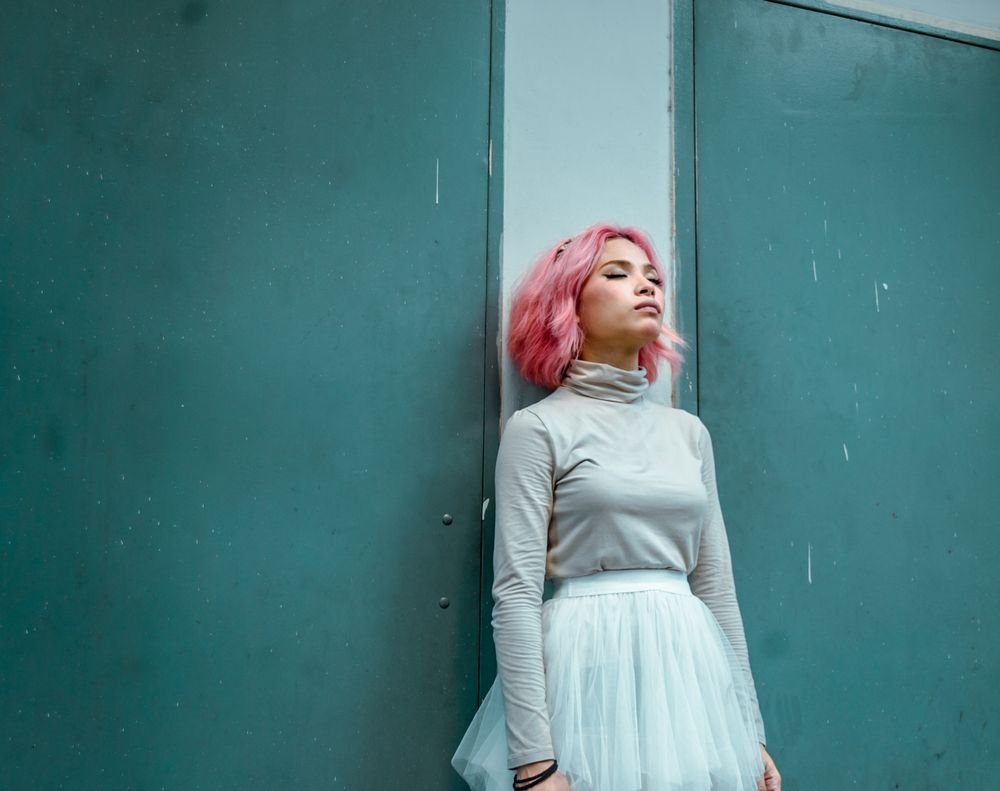
Balayage is the low-maintenance way to wear any fashion colour, and dusty rose is no exception. Here the colourist hand-paints the pink through the mid-lengths and ends, leaving your natural root untouched, so there is no hard line as it grows out. The effect is softer than an all-over colour — more like your hair has been dipped in rose water — and it is the version to choose if you want to try the trend without committing to root appointments every month.
It works on almost every base, from dark blonde to medium brown, because the pink is concentrated where the hair is lightest. Ask for a “dusty rose balayage with a melted root and plenty of dimension,” and expect the appointment to take two to three hours. The upkeep is refreshingly light: a gloss or a colour-depositing mask every three or four weeks, and a proper refresh only when the ends start to look washed out, usually after eight to ten weeks.
Shade 4: Rosewood Dusty Pink for Brunettes
Rosewood is the answer for brunettes who want dusty rose without bleaching their hair to within an inch of its life. It is a deeper, woodier pink — rose with a brown backbone — so it can be achieved on dark hair with far less lift than a pastel pink would need. On dark brown hair it reads as a warm, rosy brown in indoor light and reveals its pink in sunlight, which makes it one of the most office-friendly versions on this list.
The trade-off is that rosewood fades towards brown rather than towards blonde, so you will not get the pale blush phase that lighter dusty roses give you. That is fine — it just means the grow-out is even more discreet. Ask your colourist for “rosewood with a dusty, muted finish, no red tones,” and be ready for them to use a demi-permanent colour, which is gentler on dark hair and fades gradually instead of leaving a line.
Shade 5: Dusty Rose with a Smoky Lavender Undertone
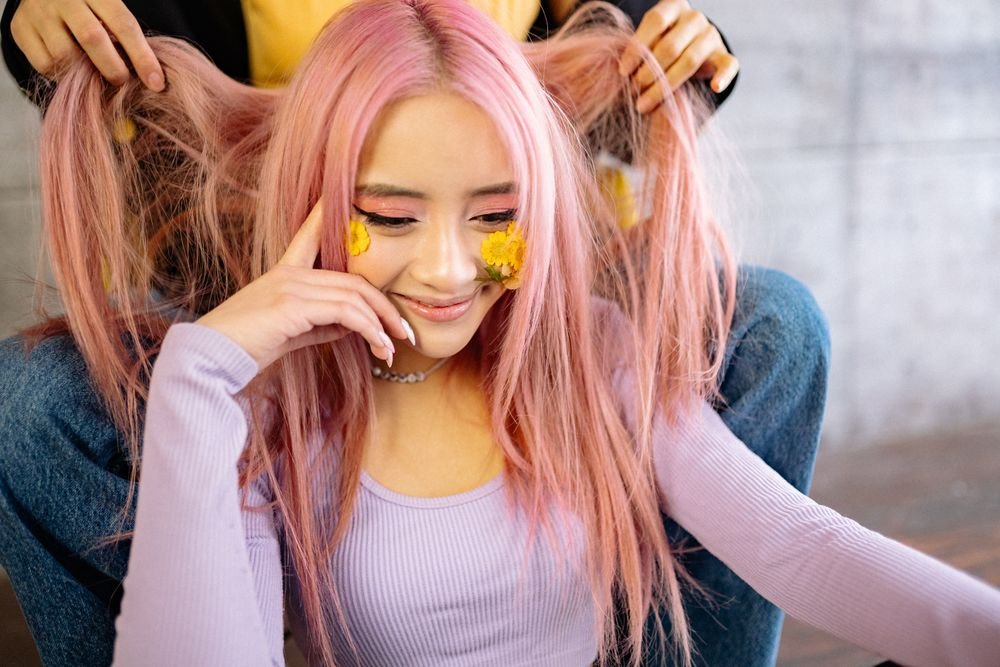
Some dusty roses lean grey; this one leans lavender. A smoky lavender undertone gives the pink a cool, almost lilac-grey dimension that looks extraordinary in winter light and photographs beautifully. It is the most fashion-forward shade on this list, and also the one that needs the most honest conversation with your colourist, because lavender undertones are the first thing to wash out. For the first week it will look like a dream; by week three it will have settled into a softer, pinker version of itself.
This shade suits cool and neutral skin tones best, and it loves texture — waves and curls catch the light and show off the lavender and pink shifting against each other. If you are going to commit to one high-maintenance dusty rose, make it this one, and keep a bottle of colour-depositing conditioner in the shower. Ask for “dusty rose with a smoky lavender reflect, not a solid lavender,” so the pink stays the main event.
Shade 6: Blush Dusty Rose for Fair Skin
Fair skin and dusty rose are natural friends, but only if the pink is kept light enough. Blush dusty rose is the palest version on this list — a sheer, powdered pink, like the colour of the inside of a seashell — and on fair skin it looks like an extension of your complexion rather than a colour sitting on top of it. It is delicate, romantic and very forgiving: because it is so light, it never looks harsh, even on a no-makeup day.
The catch is that blush needs the lightest base of any shade here, usually a level 9 or 10, so it is the most bleach-heavy option — and the fastest to fade. Think of it as a two-to-three-week colour rather than a two-month one, and plan your refreshes accordingly. If you love the look but not the upkeep, ask for the blush as a balayage or as face-framing pieces instead of all over; you get the glow around your face with a fraction of the maintenance.
Shade 7: Deep Dusty Rose for Dark Hair
Dark hair and dusty rose can be a beautiful combination, but only if you respect the base. Deep dusty rose is the darkest version of the shade: a rich, muted pink with real depth, worn on hair that has been lifted just enough to let the pink show. It is not a pastel, and it is not trying to be — the darkness is the point. In low light it looks like a warm, rosy brunette; in daylight the pink comes forward. That double life is what makes it so wearable.
Be honest with yourself about the bleach. Dark hair needs to be lifted to around a level 7 for deep dusty rose to read as pink rather than as a warm brown, and that lift should be done gently, ideally over two appointments if your hair is very dark or previously coloured. A colourist who promises you dusty rose on black hair with no bleach is selling you a brown. Done properly, though, this is one of the most flattering shades in the whole list — especially on long hair, where the depth shows in the movement.
Shade 8: Dusty Rose Money Pieces and Face Framing
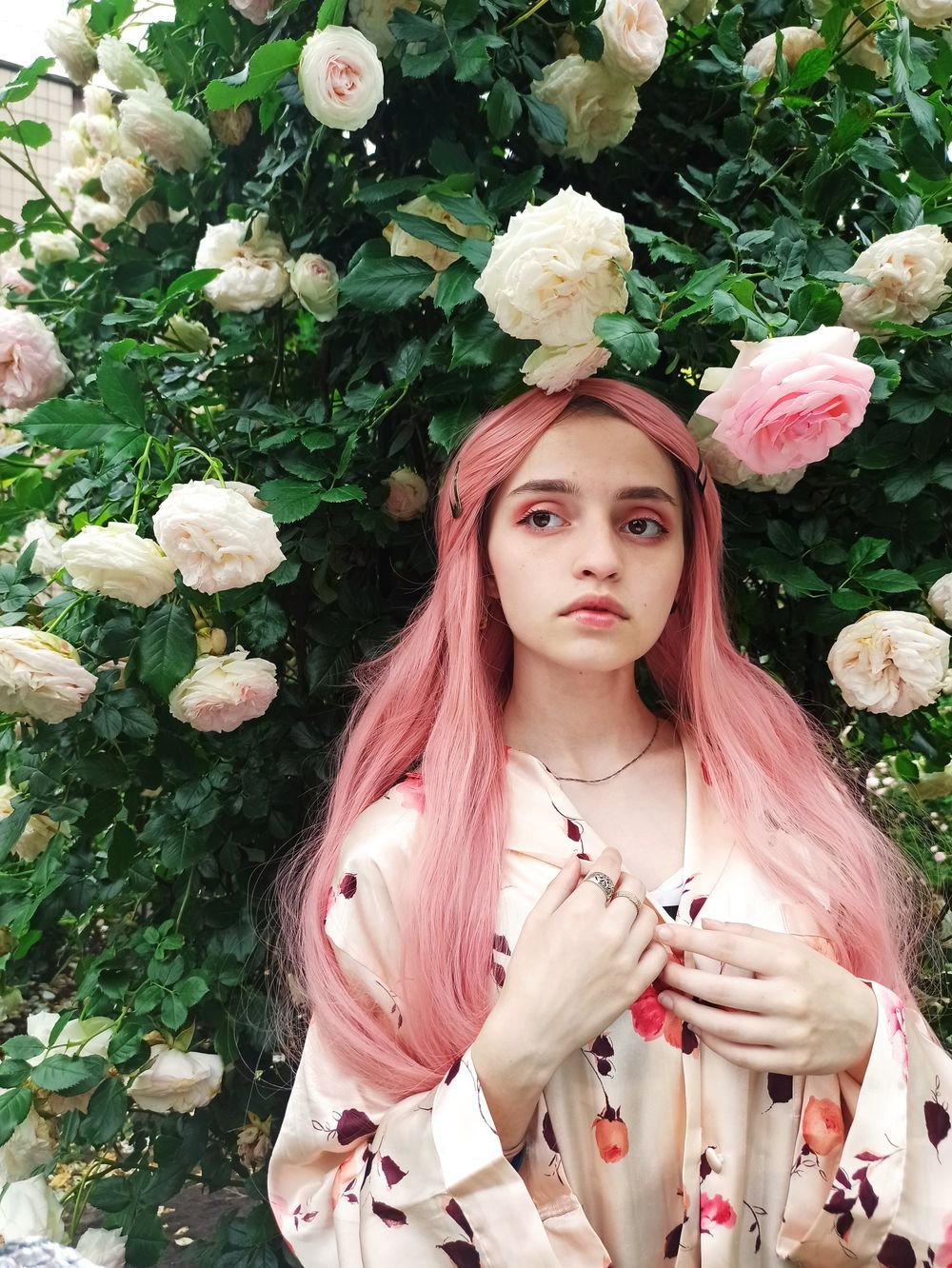
Money pieces — the two lighter front sections that frame your face — are the smallest commitment on this list and one of the most flattering. A dusty rose money piece brightens your face the way a good highlighter brightens your cheekbones, and because it is only two sections of hair, the bleach, the cost and the upkeep are all minimal. It is also the easiest version to grow out: the pieces just become part of your length.
This is a brilliant first step if you are dusty-rose curious but not ready for a full head of pink. Ask for “dusty rose money pieces, soft and blended, not striped,” and wear them with the rest of your hair in its natural colour. If you love them, you can extend the pink further back at your next appointment; if you do not, they grow out quietly. Either way, you will know within a month whether dusty rose is your colour.
Shade 9: Dusty Rose with a Root Shadow
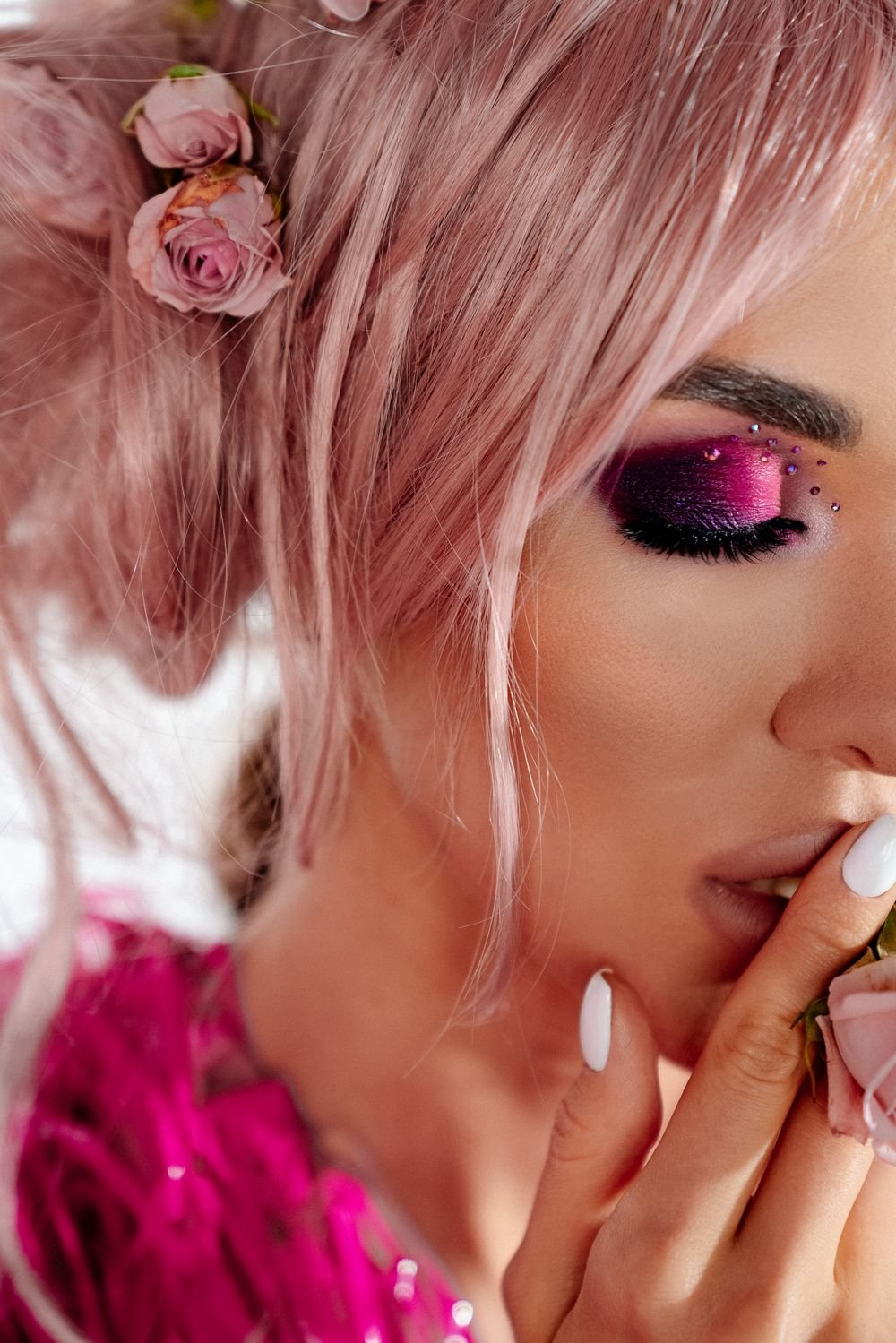
A root shadow is a darker tone melted into the roots, and it is the secret weapon of every low-maintenance dusty rose. By keeping the roots a shade or two deeper than the lengths — usually a soft brown with a rosy undertone — your colourist removes the harsh line that makes regrowth so obvious. The result is a lived-in colour that looks good on day one and still looks good on day sixty, because the grow-out was designed in from the start.
Root shadows are particularly kind to dark-haired wearers, because the shadow can be matched close to your natural colour. Ask for a “soft, diffused root shadow in a dusty rose-brown, blended at least two inches down,” and avoid a hard, straight shadow line — the whole point is the melt. Between appointments, all you need is a gloss to keep the pink fresh; the roots will take care of themselves.
Shade 10: The Dusty Rose Bob
Sometimes the cut sells the colour. A dusty rose bob — chin-length or just below, with a blunt or softly textured edge — is the pairing that made this shade famous on Pinterest, and it is easy to see why. The short length concentrates the colour, the blunt ends show its depth, and the shape frames the face so the pink becomes the first thing people notice. It is a confident, polished look that somehow reads as effortless.
The bob is also the most practical way to wear dusty rose in winter. Short hair dries faster, sits neatly under a hat, and uses less product — including less colour-depositing conditioner, which means your refresh routine is cheaper. Ask your stylist to cut first and colour second, so the colour is placed exactly where the finished shape needs it, and keep the ends healthy with a weekly mask: blunt ends show damage faster than layered ones.
Shade 11: Dusty Rose Curls, Waves and Winter Texture
Curls and waves do something magical to dusty rose. Every bend in the hair catches the light differently, so the colour shifts between pink, mauve and grey as you move — a dimension that straight hair simply cannot show. If you have natural texture, dusty rose is one of the best fashion colours you can choose, because the colour and the texture enhance each other instead of fighting.
Winter is the season when curly and wavy hair needs the most care, and coloured curls need more still: the bleach that makes dusty rose possible also dries the hair out, and cold air makes it worse. The routine that works is simple — wash less often, condition more, and let a leave-in cream and a little gel do the work instead of heat styling. Colour your curls with a colourist who understands curly hair, and ask for the pink to be placed so the curls, not the colour, lead the look.
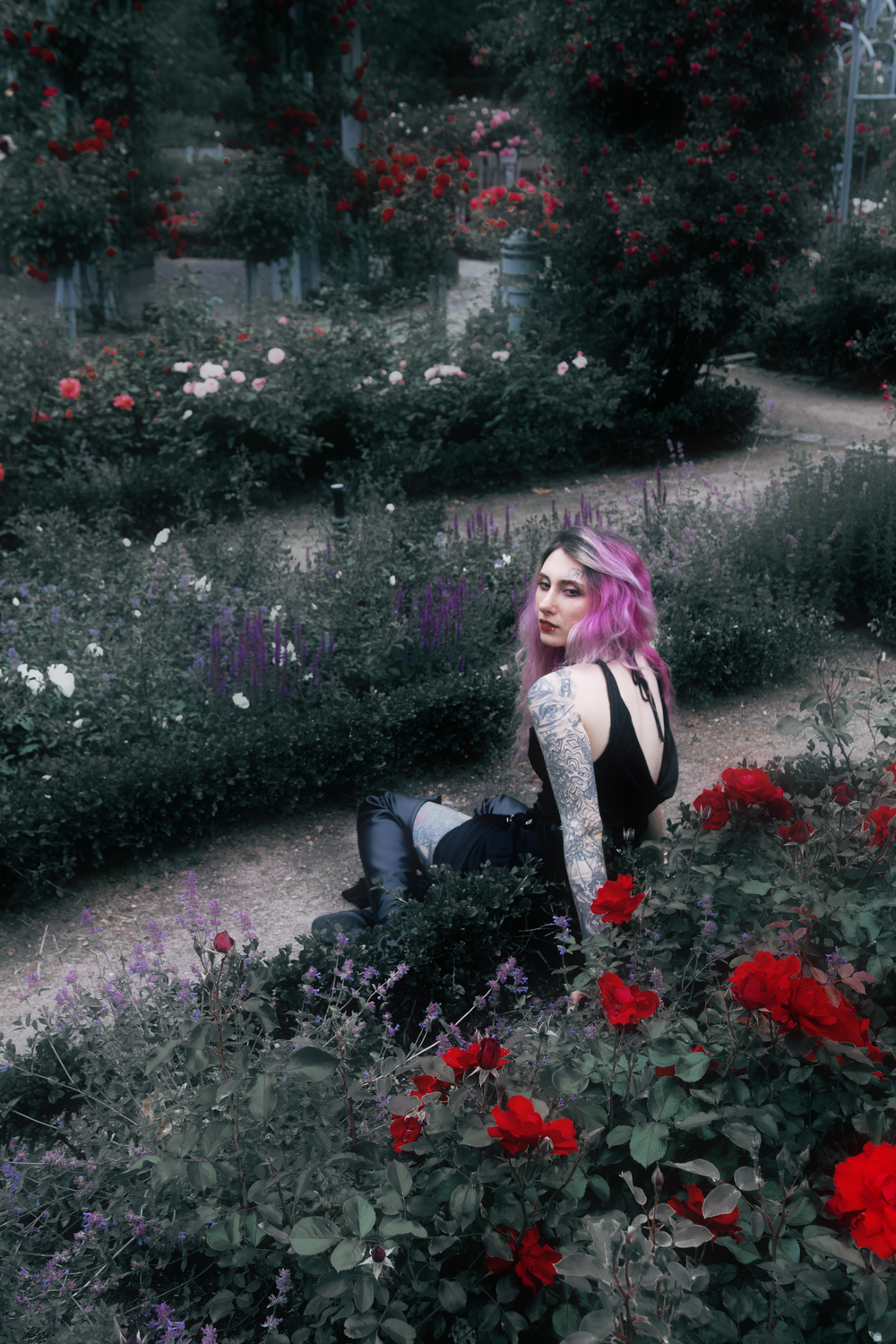
Shade 12: Silver-Dusty Rose for the Grey-Blending Crowd
If you are growing out grey hair — or blending it in rather than covering it — silver-dusty rose is a quietly brilliant option. The grey in the dusty rose formula harmonises with silver strands instead of fighting them, so new grey growth reads as part of the colour rather than as a mistake. It is the only shade on this list that actually gets easier to maintain as your grey comes in.
Ask your colourist for “dusty rose with a silver reflect, blended through the grey rather than painted over it,” and expect a conversation about your grey percentage: this works best when grey is at least a third of your hair, so there is enough silver for the pink to play against. The result is soft, modern and — unlike a solid colour — it never leaves you with a hard line at the roots.
Shade 13: The Subtlest Dusty Rose — A Gloss, Not a Dye Job
Last, the shade for the commitment-phobes: a dusty rose gloss. This is a sheer, demi-permanent wash of pink with a grey-mauve tone, applied like a conditioning treatment, that gives brown or dark blonde hair a rosy sheen in indoor light and a visible pink tint in sunlight. It washes out gradually over four to six weeks, and there is no bleach involved at all if your hair is already light enough to show it.
A gloss is also the smartest way to test dusty rose before you commit to the real thing. If you love it, you can go deeper next time; if you do not, it is gone in a month with no awkward grow-out. Ask for a “dusty rose gloss, sheer, with a cool, muted finish” — and if your colourist suggests a clear gloss over the top to seal it in, say yes. It adds shine and buys you an extra week of colour.
Dusty Rose by Skin Tone: Finding Your Version
Dusty rose is unusually forgiving across skin tones, because the grey in the formula stops it from clashing — but the version you choose still matters. Fair, cool skin takes the blush and mauve versions beautifully; the pink lifts your complexion without overwhelming it, and a little blush on the cheeks ties the whole look together. If you are fair and warm, lean towards the classic dusty rose rather than the mauve, so the colour does not pull too purple against your skin.
Medium and olive skin tones are where dusty rose really shines. The muted pink warms up olive skin without fighting its green undertone, and it looks especially good with the rosewood and deep dusty rose shades, which have enough depth to hold their own. Deep skin tones can wear every version on this list, but the deep dusty rose and the mauve are the standouts — the pink reads rich and deliberate, and the grey undertone keeps it elegant rather than sugary. Whatever your tone, the rule is the same: match the undertone of the pink to the undertone of your skin, and the shade will look like it belongs to you.
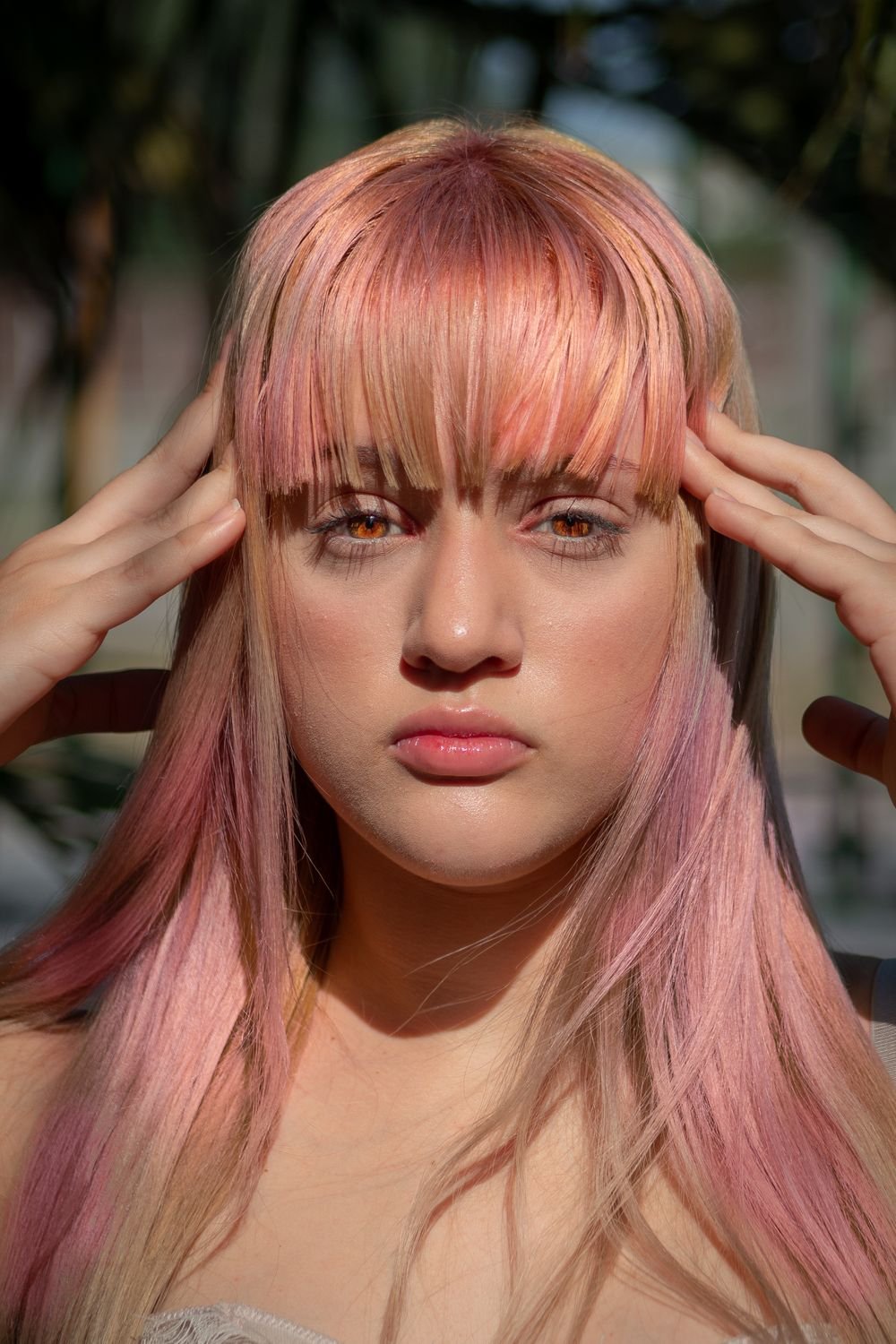
Dusty Rose by Base Colour: How Much Bleach You Really Need
Let us be honest about bleach, because it is the question every colourist gets asked first. If your hair is naturally dark brown or black, dusty rose needs lift — there is no way around it. For the deep and rosewood versions, a lift to a level 6 or 7 is enough, which a good colourist can do gently, often with bond-building treatments. For the classic, mauve and blush versions, you need a level 8 to 10, which is a bigger job and, on very dark hair, may take two appointments to do safely.
Medium brown hair is the sweet spot: one lifting session usually gets you where you need to be, and the damage is manageable with good aftercare. Dark blonde and light brown hair may not need bleach at all for the deeper shades — a high-lift tint or a demi-permanent colour can do the job — and only a light pre-lightening for the paler ones. If your hair is already coloured, tell your colourist everything that is on it, including box dye from two years ago; old colour changes how the lift behaves, and surprises in the chair are never the good kind.
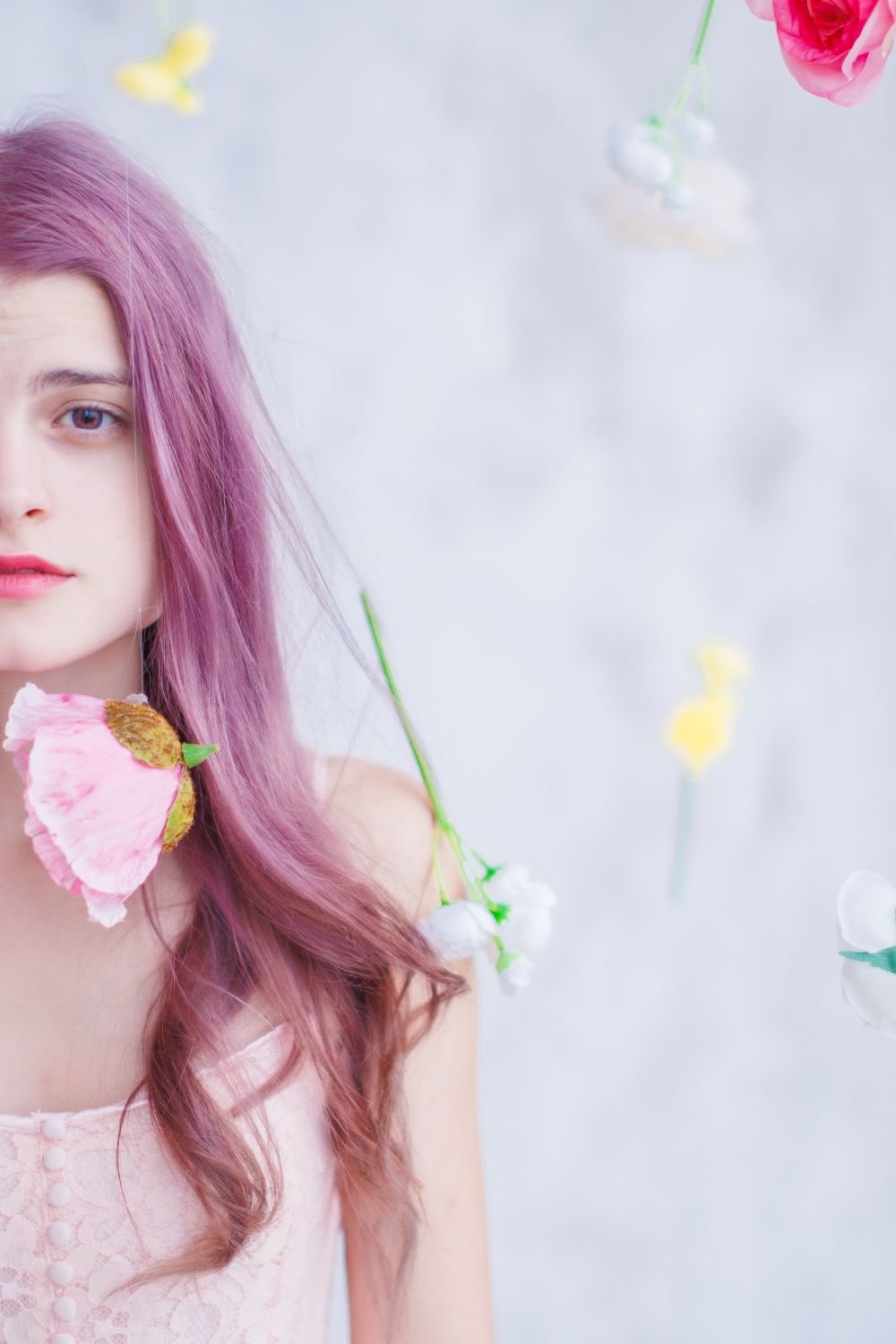
Toner Upkeep and the Honest Three-Week Fade
Here is the truth about the fade, because you deserve it before you book. Dusty rose is a semi-permanent-friendly colour, which means it fades — and it fades on a schedule. Week one is the best version of the colour: rich, even, exactly as the salon intended. By week two the grey veil starts to soften and the pink shows a little more. By week three, most people notice the colour looking lighter and slightly warmer, especially at the ends where the hair is most porous. It does not go patchy or strange; it just becomes a paler, softer version of itself.
The upkeep that actually works is simple. Wash in cool water, two or three times a week at most, with a sulphate-free, colour-safe shampoo. Once a week, swap your conditioner for a dusty-rose colour-depositing conditioner or mask — it puts a little pink and grey back in and buys you an extra week or two. Book a toner refresh at the salon every four to six weeks, and a full refresh every eight to ten. Skip the purple shampoo unless your colourist tells you otherwise; it can push dusty rose towards lavender. And if you swim, wet your hair with clean water and add conditioner before you get in — chlorine is dusty rose’s worst enemy.
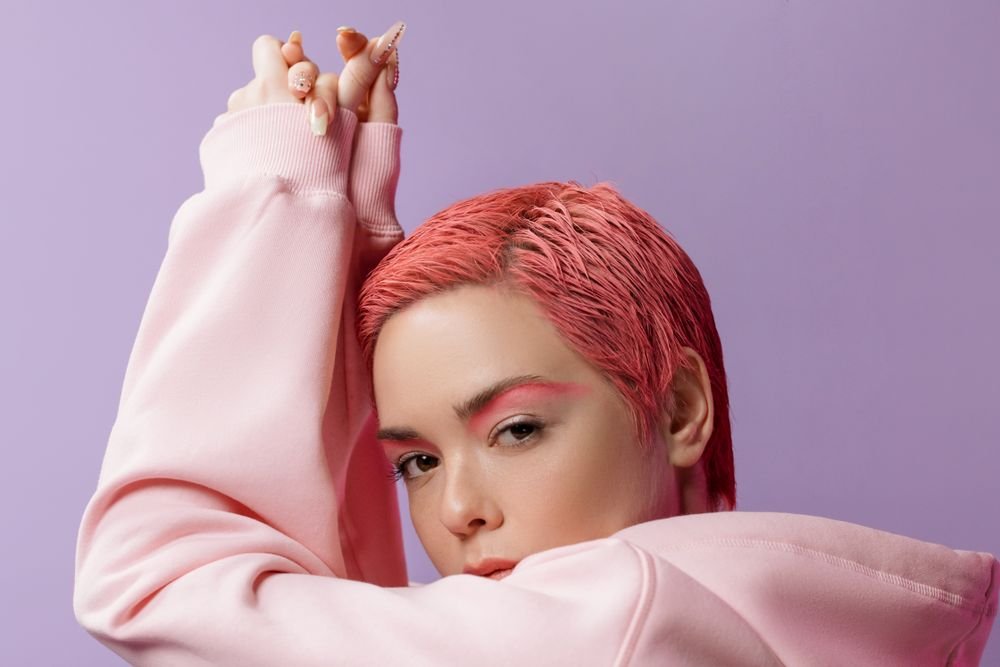
Winter Outfits That Flatter Dusty Rose Hair
Dusty rose is the rare fashion colour that makes getting dressed easier, because it behaves like a neutral. The outfits that flatter it most are the ones already in your winter wardrobe: a camel coat over cream knitwear, a charcoal roll-neck with dark jeans, an all-black outfit with the pink as the only soft note, or a navy coat with a grey scarf. These combinations let the hair be the colour in the outfit instead of competing with it.
For jewellery, silver is your best friend — the cool metal echoes the grey in the hair — and pearls are a close second. Makeup should stay soft: a rose or mauve blush that echoes the hair, a neutral eye, and a lip in a muted rose or a soft berry. What to avoid? Anything neon, and large blocks of hot pink clothing, which turn a muted hair colour into a matching set. And one small, practical note: dusty rose hair and a white winter coat are a beautiful combination, but keep a dark scarf between your hair and the collar on the first few days, while the colour is still settling.
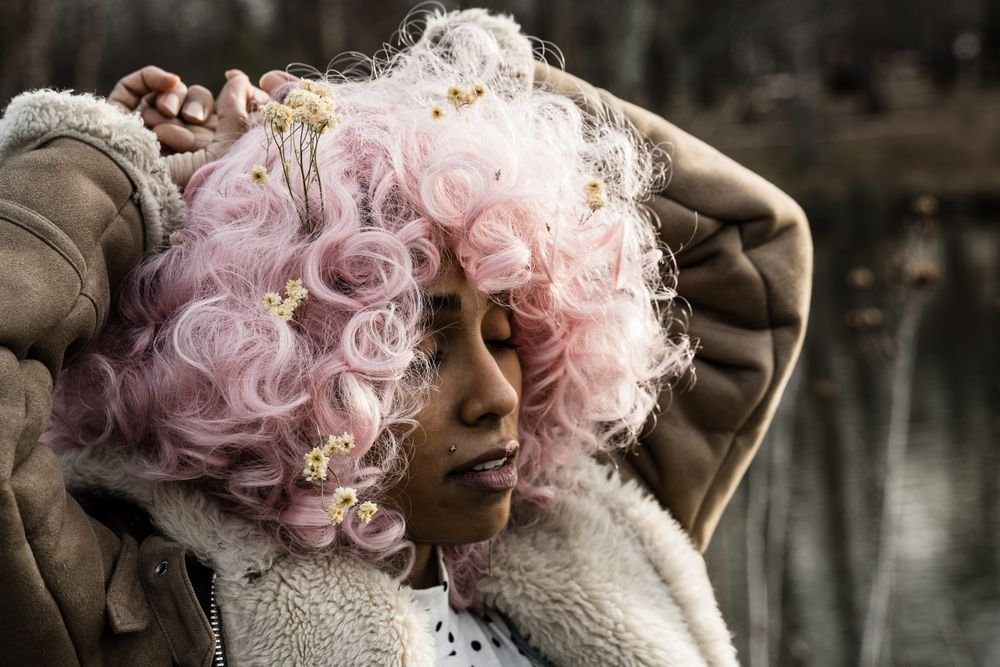
Save This for Later: Your Dusty Rose Pinterest Pin
If one of these 13 shades caught your eye, save it before you forget which one it was. Pin the image below to your hair board, and bring it to your colourist — a photo communicates the exact dusty, muted finish far better than any description. And if you want your pin to get found, try our free Pinterest caption and pin generator to write a caption for it in seconds.
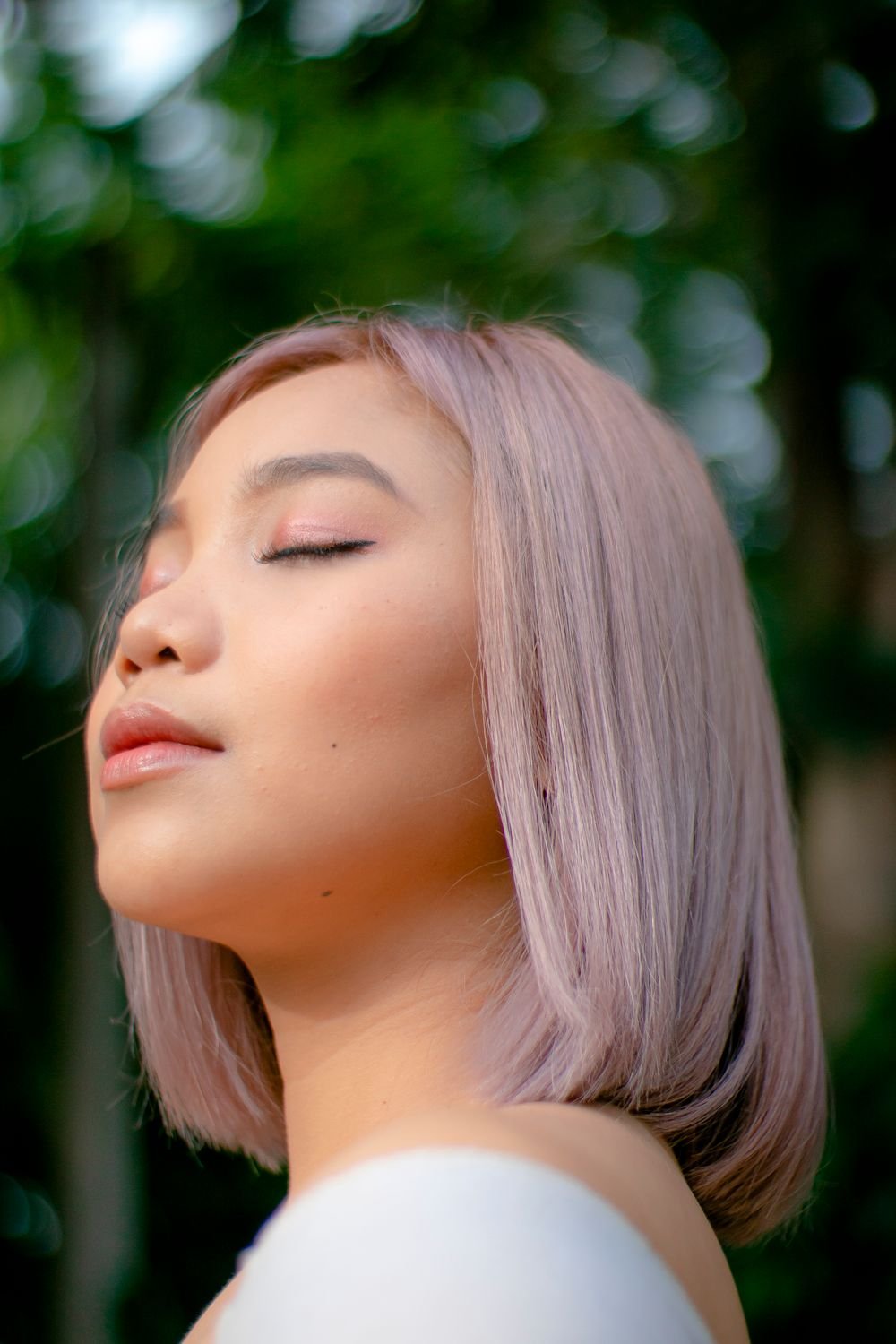

Dusty rose pink is the quiet way into pink hair — muted, grown-up and kind to your wardrobe, your skin tone and your grow-out. Pick the shade that matches your base and your undertones, be honest about the bleach, and keep a colour-depositing conditioner in the shower. Your future self, three weeks in, will thank you.