Wide-Leg and Flared Trousers
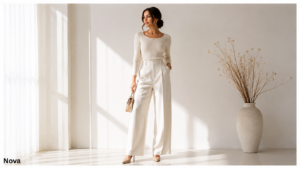
Wide-leg trousers are the single most powerful lower-body tool for an inverted triangle shape because the extra fabric volume around the legs and hips visually widens the lower half of the body to match the broader upper half. The balance happens immediately and naturally.
Flared denim and wide-leg linen work equally well across casual and smart-casual settings. Cropped wide-leg trousers work beautifully since the exposed ankle area adds a slight elongating effect while the wide leg still delivers the balancing volume around the hip and thigh.
A-Line and Full Skirts
An A-line skirt flares outward from the waist, adding exactly the kind of graduated hip and thigh volume that balances a wider shoulder line. A full midi skirt in a print or textured fabric amplifies this effect further, drawing visual weight firmly toward the lower body.
This is one of the easiest styling wins for an inverted triangle shape since A-line skirts are available at every price point in every season. A fuller skirt with more fabric creates even more dramatic balance for very broad shoulders.
V-Neck and Wrap Tops
A V-neck neckline draws the eye inward and downward, creating a central vertical line that visually narrows the upper chest and shoulder area. Wrap tops do this even more effectively since the diagonal line of the wrap also creates a narrowing effect through the torso.
Both styles work in casual and elevated settings, making them genuinely flexible wardrobe additions rather than situational solutions. Wrap dresses apply the same principle across the entire body simultaneously, which makes them one of the most universally recommended styles for this shape.
Avoid Boat Necks and Cap Sleeves
Boat necks run horizontally across the widest part of the chest and shoulders, amplifying their width with a direct visual line that emphasizes exactly what you are trying to balance. Cap sleeves do the same thing by cutting across the shoulder in a way that makes it appear wider.
These are not forbidden pieces, but understanding why they add perceived width helps you make more intentional choices. If you love a boat neck silhouette, counterbalance it with full-volume bottoms that genuinely match the statement the top is making.
Patterned or Bold Bottoms
Putting pattern, print, or bold color on the lower half of the body immediately pulls the eye downward rather than letting it rest across the widest part of the frame. Large florals, geometric prints, plaid, and bold color blocking all accomplish this shift in focus effectively.
The visual logic is straightforward: attention travels toward contrast and pattern, so placing those elements below the waist creates natural lower-body emphasis. This is one of the fastest and most satisfying styling changes for an inverted triangle shape.
Simple or Minimal Tops
Keeping the top half of your outfit simple and underpowered, plain colors, minimal pattern, no statement sleeves, lets the bottom half take its intended position as the visual focal point. A simple fitted tee over a statement skirt creates exactly the right proportional conversation.
This is less about restriction and more about directing attention. Once you stop adding visual interest to the top half and let the bottom half lead, the balance becomes obvious and immediate. Plain tops are not boring here. They are strategic.
High Waist Everything
High waisted bottoms sit above the natural waist, which shortens the visual length of the torso and elongates the leg line simultaneously. For an inverted triangle, this creates a defined waist marker that would otherwise be absent in a straight-cut silhouette.
High rise denim, high-waisted skirts, and high waisted trousers all accomplish this in different contexts. Tucking your top into a high waisted bottom reinforces the waistline definition further and prevents the top from visually merging with the bottom in a way that removes all shape from the silhouette.
Belted Outfits
A belt placed at the natural waist creates definition where the inverted triangle shape tends to transition relatively straight from shoulders to hips. That cinched waist reference point changes the entire visual story of an outfit, giving the eye an anchor point in the middle of the frame rather than letting it rest at the top.
This works on dresses, coats, cardigans, and oversized tops where a high waisted bottom is not practical. A medium width belt in a matching or contrasting tone works equally well depending on whether you want the waist to feel integrated or emphasized.
Maxi Dresses and Skirts
A maxi dress or maxi skirt adds the most significant lower-body volume of any single garment since the full length of fabric from waist to floor creates continuous visual weight throughout the lower half of the frame. Wrap styles do double duty by simultaneously addressing the neckline.
This format is particularly useful on occasions where you want to look genuinely polished without thinking too hard about outfit construction. A wrap maxi dress in a single flattering tone manages proportion, neckline, and waist definition in one piece with no additional coordination required.
Shoulder Friendly Tops That Celebrate Rather Than Hide
Broad shoulders are genuinely one of the most celebrated physical traits in fashion, and some of the most powerful styling choices lean into them rather than minimizing them. An off shoulder top frames strong shoulders beautifully when paired with significant lower body volume that matches that energy.
Cold-shoulder and asymmetric necklines also work with athletic upper bodies rather than against them. The styling principle throughout this guide is balance, not erasure. Shoulders that are celebrated as a feature and then balanced below the waist create a far more confident look than any approach centered entirely around minimization.
Layered Bottom Half
Layering at the bottom half, wearing a skirt over trousers, adding a kimono or wrap that falls below the waist, or choosing a dress over wide leg pants, concentrates multiple visual layers in the lower portion of the outfit where extra dimension is genuinely welcomed.
This approach creates interesting outfits with real depth and personality while serving the practical purpose of adding lower body volume. It also tends to produce very photographically interesting styling since layering at the hem creates movement and visual texture that flat single layers do not.
Avoid Horizontal Shoulder Details
Puff sleeves, shoulder ruffles, cold-shoulder cutouts placed specifically at the shoulder seam, and oversized raglan sleeves all add horizontal width at the already widest point of the inverted triangle frame. These details do not work against the body but they do reinforce rather than counterbalance existing shoulder width.
Understanding this is not about eliminating personal style preferences. It is about making a deliberate trade off when you choose these pieces: if you love a puff sleeve top, balance it with the most voluminous bottom possible to keep the proportional conversation genuine.
Wear Color Down and Neutral Up
The simplest possible version of this entire styling philosophy is placing your most eye catching color on the bottom and keeping the top in a soft neutral. Cream or white on top with a deep burgundy, rich navy, or warm terracotta trouser draws the eye downward without any additional technique required.
This works because the eye naturally travels toward color and contrast first. When the most visually interesting element is consistently placed at the hip and below, the natural tendency to read the wider shoulder area first gets quietly redirected without any obvious intervention.
Conclusion
The core principle is simple: add visual interest and volume below the waist while keeping the upper body relatively quiet, and the proportional balance happens naturally. Start with one or two ideas from this guide that genuinely resonate with your existing style, build from there, and notice how much more intuitive getting dressed becomes once you understand why certain choices work better than others.

Hazel Susan
Hazel Susan is a fashion writer and author at Nova Fashion, specializing in outfit ideas, seasonal trends, beauty inspiration, and everyday style tips. She enjoys helping readers discover practical fashion advice, timeless wardrobe ideas, and the latest fashion trends through easy-to-follow guides. Her goal is to make fashion simple, stylish, and inspiring for everyone.