Wear High Waisted Bottoms
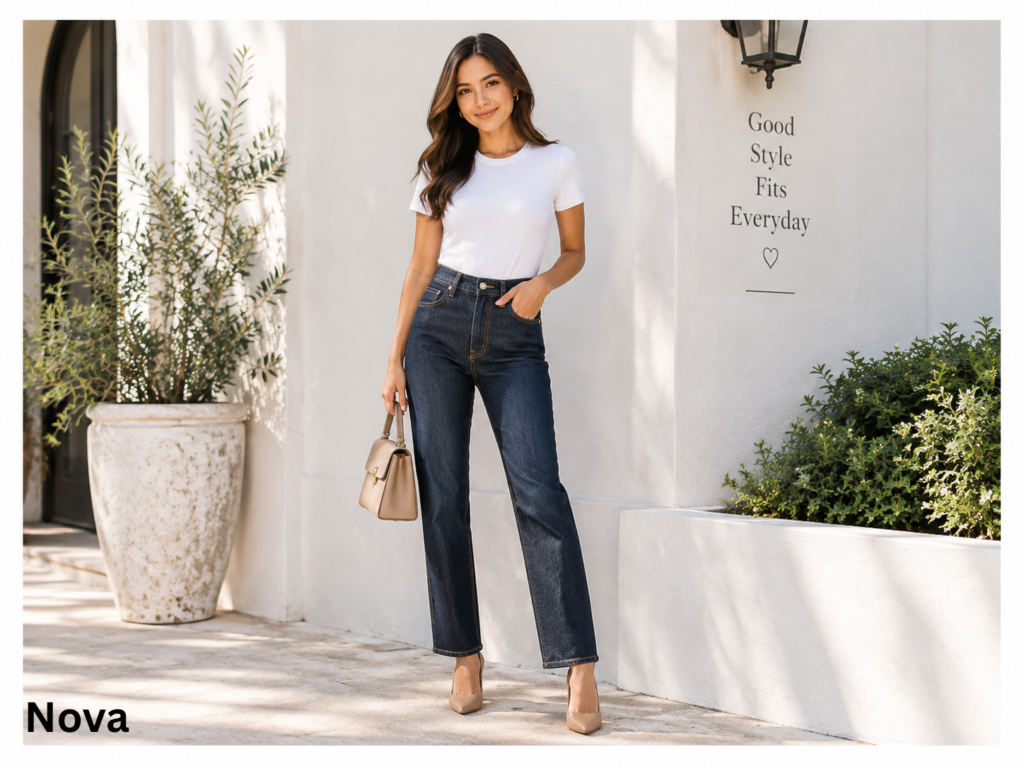
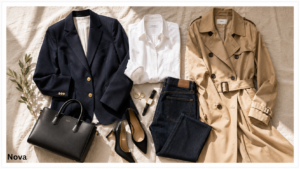
High waisted jeans, skirts, and trousers are the single most effective silhouette tool for dressing a petite body because they visually raise the waistline, which creates the optical illusion of a longer leg line below. The higher the waistband sits on the natural waist, the more leg appears below it regardless of actual height.
The difference between a high waist and a mid or low rise bottom on a petite frame is often visually dramatic rather than subtle. Even a modest two inch difference in waistband placement can appear to add several inches of visual height. Pair with a tucked in top for maximum effect since untucked tops cover the waistband and eliminate most of the elongating benefit.
Choose Vertical Lines and Patterns
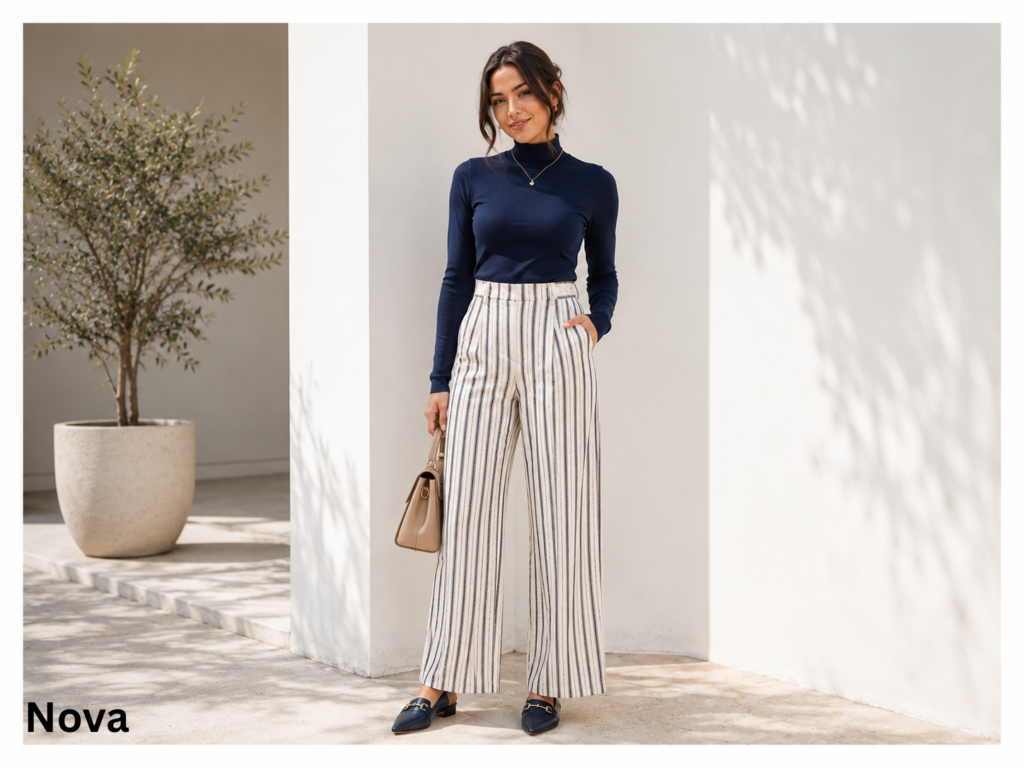
Vertical lines in stripes, seams, or patterns draw the eye up and down the body rather than across it, which creates a natural elongating effect that works particularly well on petite frames. A vertically striped trouser, a dress with vertical seam detailing, or a vertical ribbed knit all use this principle to add visual height.
The contrast matters here. A bold navy and white vertical stripe reads more dramatically than a subtle tone on tone version, which means a bolder vertical stripe delivers more visual elongation. Horizontal stripes do the opposite by drawing the eye across the body, widening rather than lengthening the frame. Not banned entirely, but placed strategically so they fall where you want the eye to stop rather than where you do not.
Go Monochrome from Head to Toe
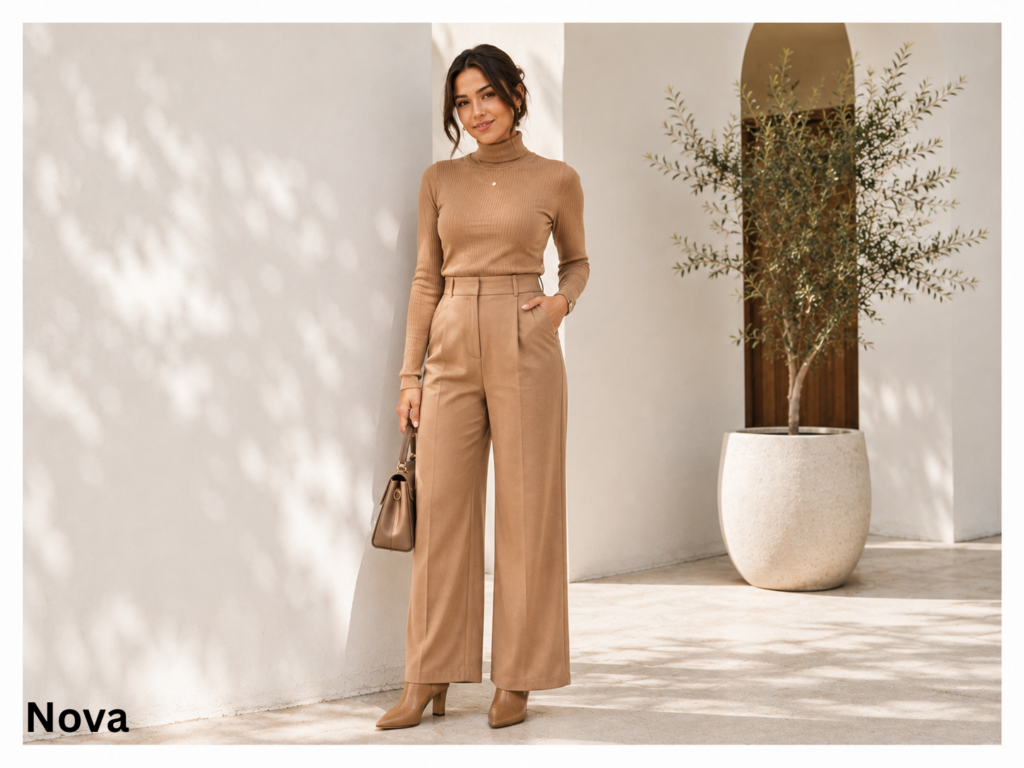
Wearing one color from top to bottom removes the visual break that contrasting colors create at the waist or hip. That horizontal break is what divides the body into sections and makes each section look shorter independently than the full height would suggest. A monochrome outfit creates one continuous vertical read that the eye travels along without interruption.
This is probably the most effortless elongating strategy available for petite dressing because it requires no specific silhouette, no particular cut, and no accessories strategy. Simply choosing one color from neckline to shoe and letting the vertical continuity do the work produces results that taller and more complex styling decisions sometimes cannot match. Cream, camel, navy, and deep chocolate all create particularly beautiful monochrome results.
Opt for Cropped Tops and Jackets
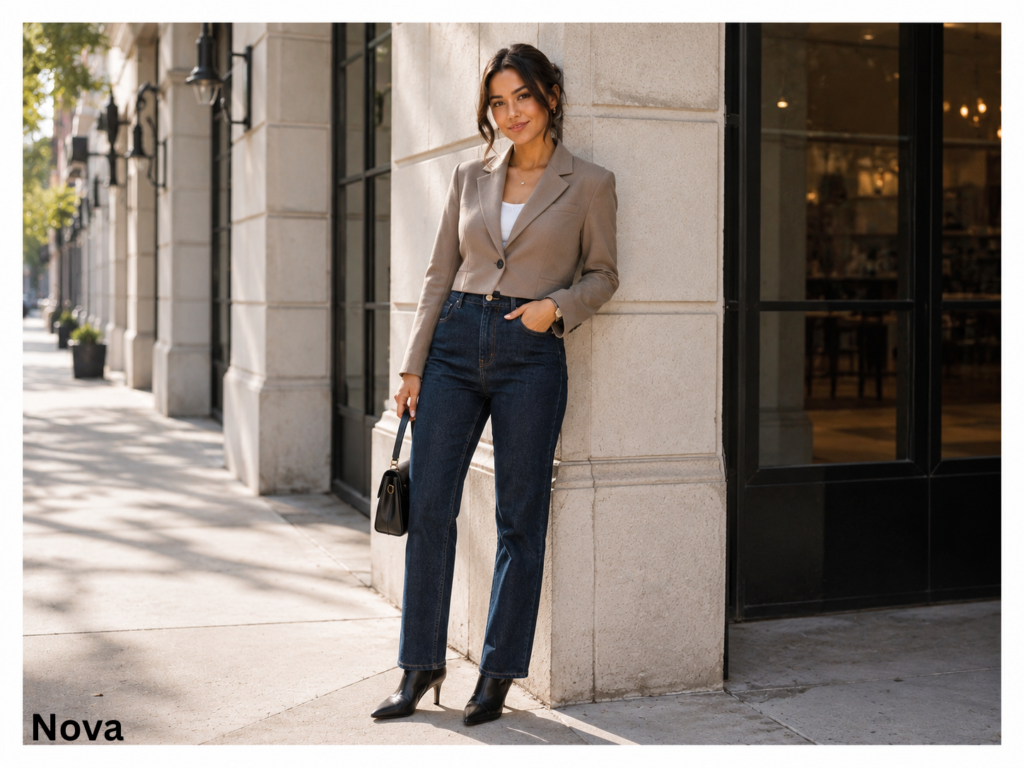
A cropped top or jacket that ends at or just above the natural waist is one of the most proportion correcting garments for a petite frame specifically. The cropped length visually elevates where the outfit divides horizontally, which tricks the eye into reading more body below the division point than actually exists.
A regular length blazer on a petite woman often ends mid hip, visually shortening the leg. A cropped version ending at the natural waist gives the legs three to four additional inches of visual length in a single styling decision. The same principle applies to cardigans, denim jackets, and knitwear. When in doubt, the shorter version serves a petite frame better almost every time.
Wear Pointed Toe Shoes
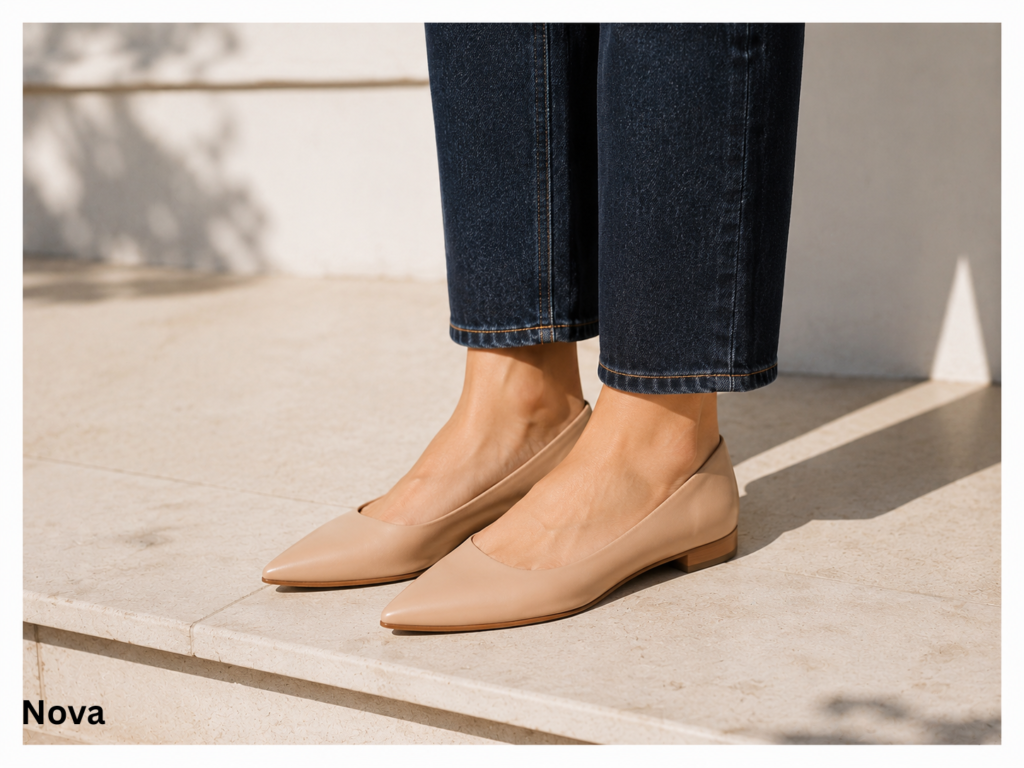
The shape of a shoe toe has a more significant impact on perceived height than most people realize. A pointed toe extends the visual line of the foot beyond where it actually ends, creating an elongating effect that adds the appearance of length to the entire leg above it. A round toe, by contrast, cuts the leg line at exactly the point where the foot actually stops.
Pointed toe flats in nude or skin toned leather deliver the elongating benefit of the toe shape without requiring a heel, which matters for petite women who prefer flat shoes but still want the longest possible leg line. The combination of a pointed toe with a nude color that blends with the leg skin tone creates the maximum elongating effect available in a flat shoe.
Choose the Right Hem Length
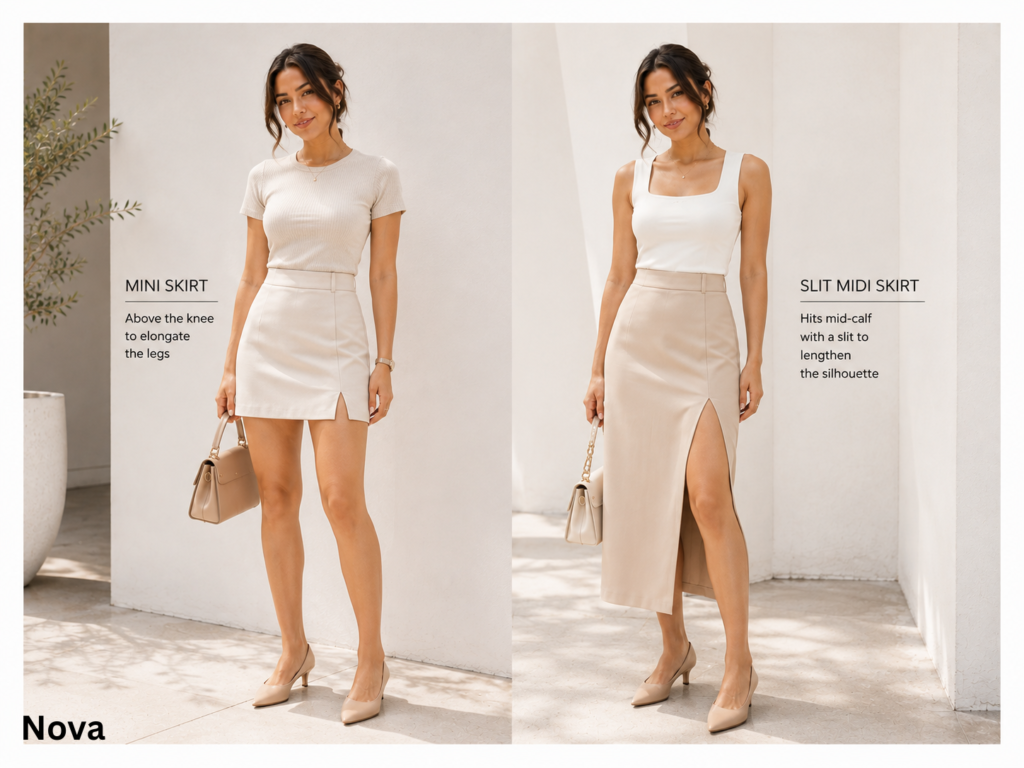
Hem length is one of the most misunderstood elements of how to dress a petite body. The common advice is to avoid midi and maxi lengths, but that is not entirely accurate. What matters is where the hem falls relative to the specific proportions of each individual body rather than a universal rule about length.
A midi skirt that falls at the widest point of the calf visually widens and shortens the leg. The same midi skirt cut higher to fall at the narrowest point of the calf just below the knee creates a much more elongating effect. For petite women who love longer lengths, a high slit midi or maxi that reveals the ankle creates the visual break that keeps the outfit from overwhelming the frame entirely.
Avoid Oversized Silhouettes
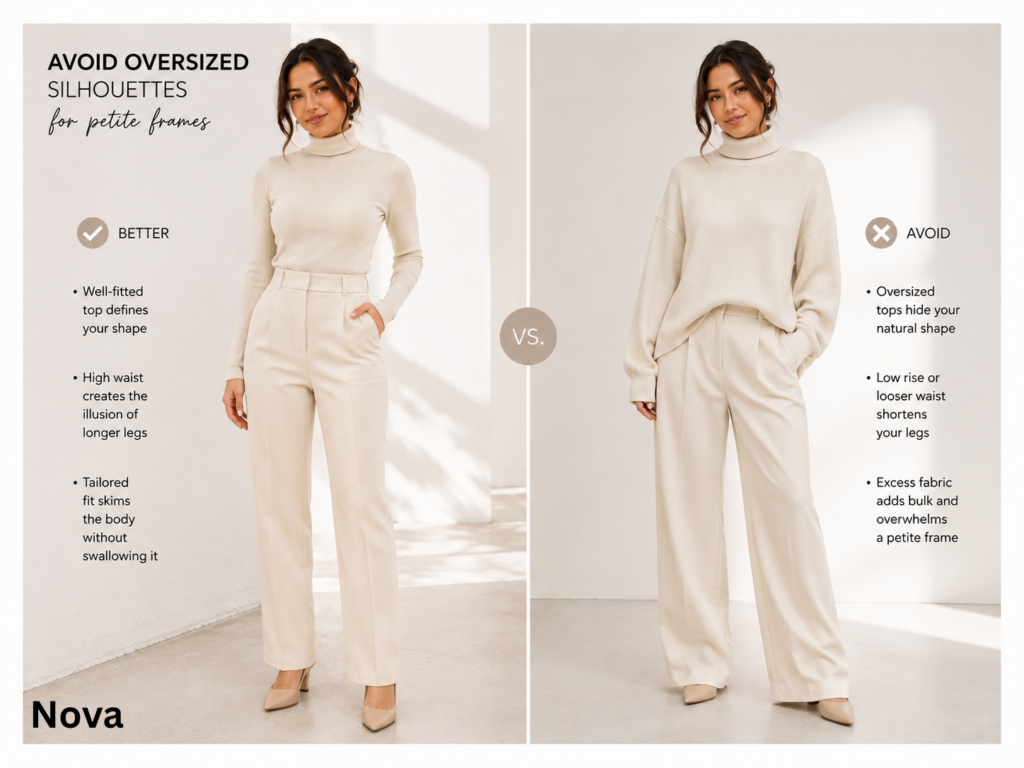
Oversized clothing adds visual volume to the frame rather than visual height, which works against the proportional goals of most petite dressing. A blazer with sleeves covering the hands, a sweater that falls past the hips, or wide leg trousers with excessive fabric all make a petite frame appear smaller rather than taller.
The important distinction is between intentionally relaxed and genuinely oversized. A slightly relaxed fit in a cropped length reads as deliberately styled and fashion forward on a petite frame. The same fit in a longer length reads as the clothing wearing the person rather than the person wearing the clothing. Slightly relaxed in a shorter silhouette almost always works. Truly oversized in a longer one almost never does.
Tailor Your Clothes
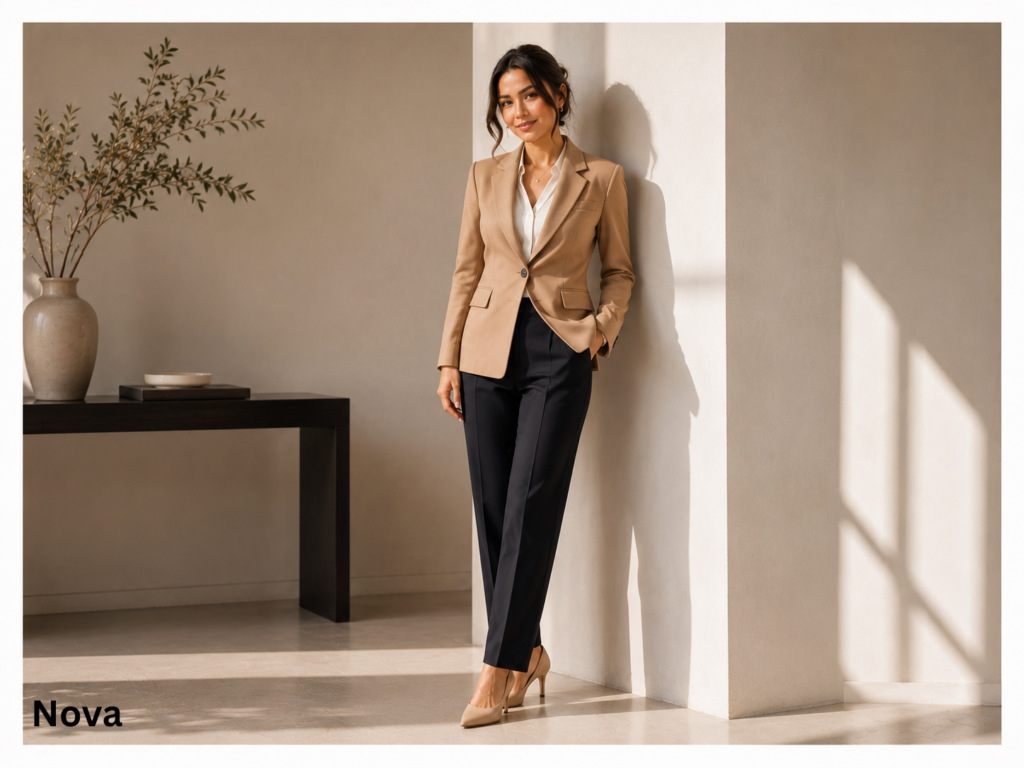
Tailoring is the single most transformative investment available for anyone learning how to dress a petite body, and it is significantly less expensive than most people assume. A blazer with sleeves shortened by one inch, a trouser leg hemmed to the correct length, or a waistline taken in slightly costs between fifteen and forty dollars per alteration and produces results that no off the rack fit can replicate.
The reason fit matters more for petite bodies than any other frame type is that proportional errors are more visible at a smaller scale. An extra inch of fabric in the sleeve of a blazer is barely noticeable on a six foot woman. On a five foot two woman, that same inch covers the knuckles and reads as genuinely wrong rather than simply approximate. Tailoring eliminates these errors completely.
Use Nude or Skin Toned Shoes
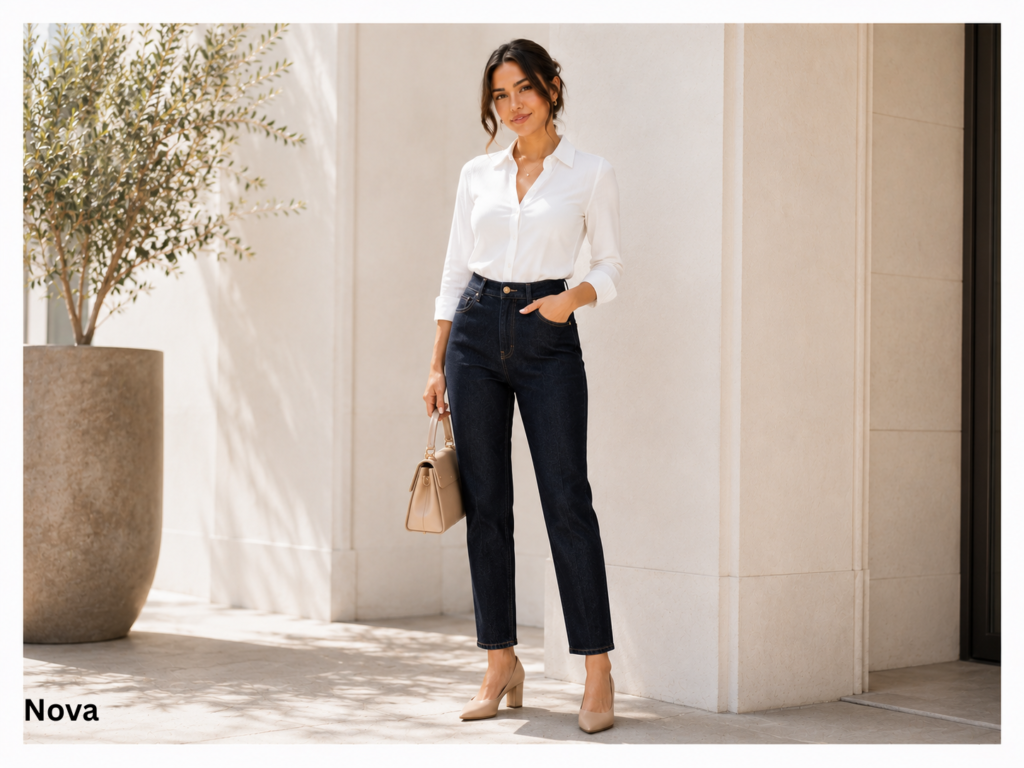
A shoe that matches or closely approximates the skin tone of the wearer creates an unbroken visual line from the hemline of the trouser or skirt straight down to the floor without a visual interruption at the ankle. This effect adds significant apparent height because the eye reads the leg as continuing to the ground rather than stopping at the shoe line.
Nude in this context does not mean a single universal beige. It means a shoe color that most closely matches the specific skin tone of the individual wearing it. For deeper skin tones this might be a rich caramel or warm chocolate. For medium tones a warm tan or light cognac. For lighter tones a soft blush or ivory. The principle is the same regardless of the specific shade.
Embrace Minimalist Accessories
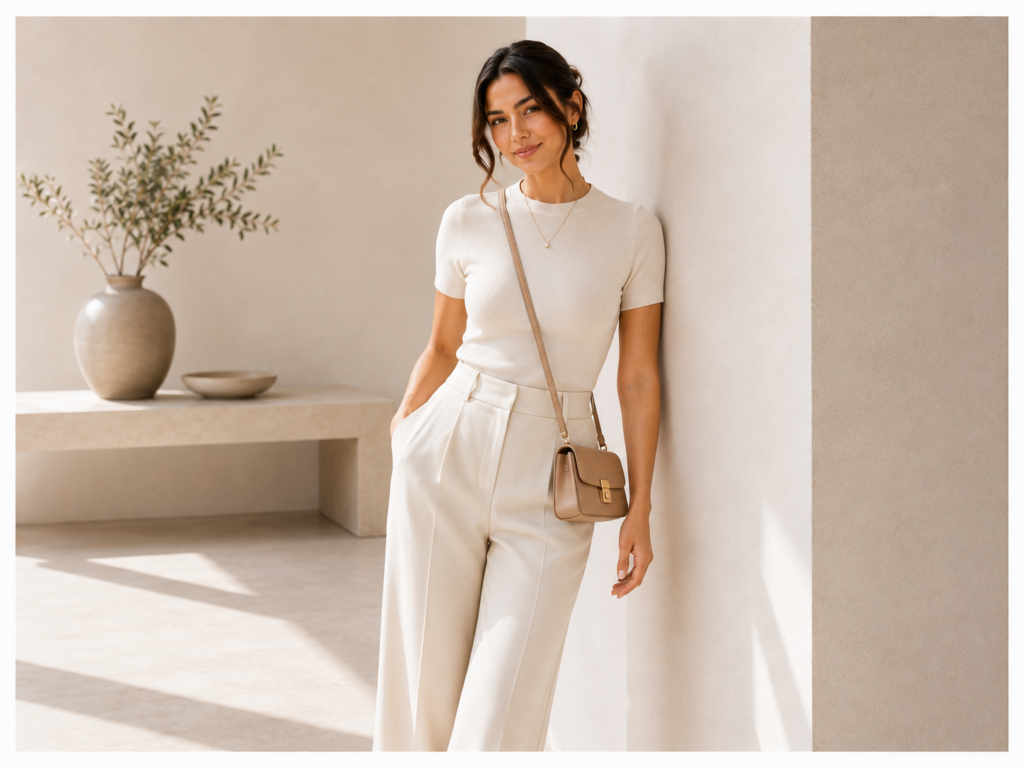
Accessories that are proportionate to a petite frame add polish without overwhelming the look. Large statement bags, oversized scarves, and chunky platform shoes can visually dominate a petite body and reduce the apparent height of the person carrying or wearing them. Scale is the key consideration.
A small to medium structured crossbody bag, delicate jewelry, and a simple hair accessory all register as appropriately sized for a petite frame while still providing genuine style interest. The goal is accessories that enhance the outfit rather than compete with it for visual space. A large tote that reaches mid thigh on a petite woman adds bulk at exactly the point where the visual line should remain clean and uninterrupted.
Wear V Necks and Open Necklines
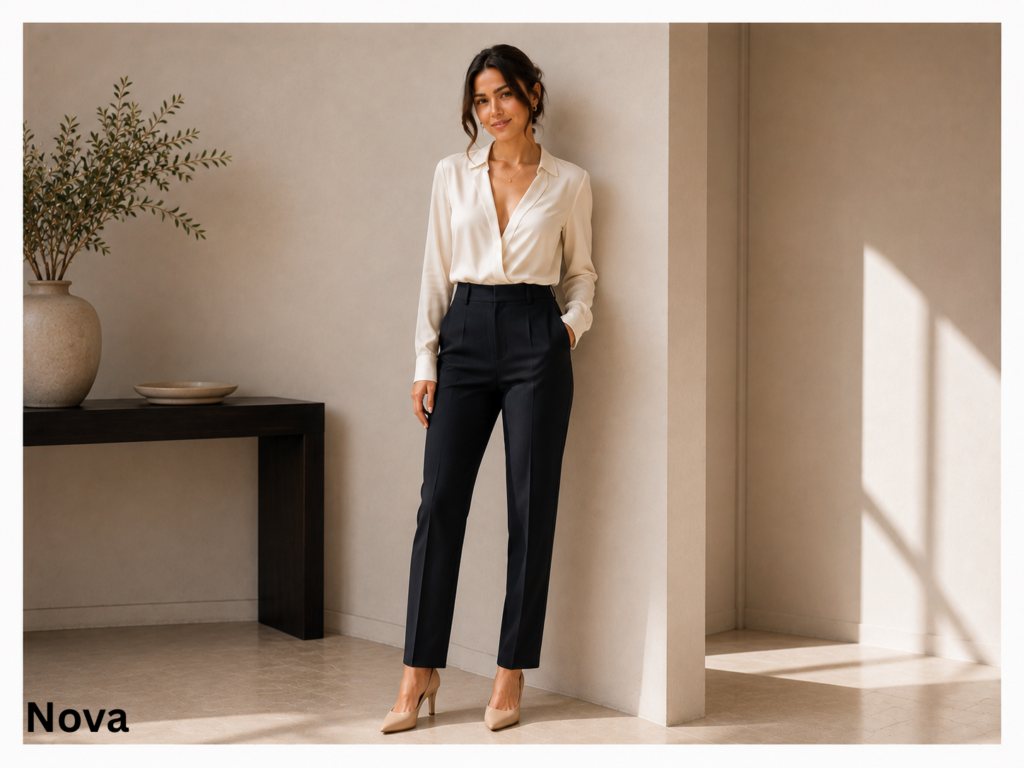
A V neckline draws the eye downward toward the center of the chest and creates a visible vertical line from the throat into the neckline of the garment. This downward directional pull is elongating in the same way vertical stripes are because it encourages the eye to travel vertically rather than horizontally across the shoulders and neckline.
A deep V neckline also visually lengthens the neck by revealing more skin at the collarbone and throat, which adds apparent height from the shoulders upward. This explains why a petite woman in a high crew neck and a low V neck top of identical length can look noticeably different in apparent height even though the two garments are structurally identical below the neckline.
Choose Petite Specific Clothing Lines
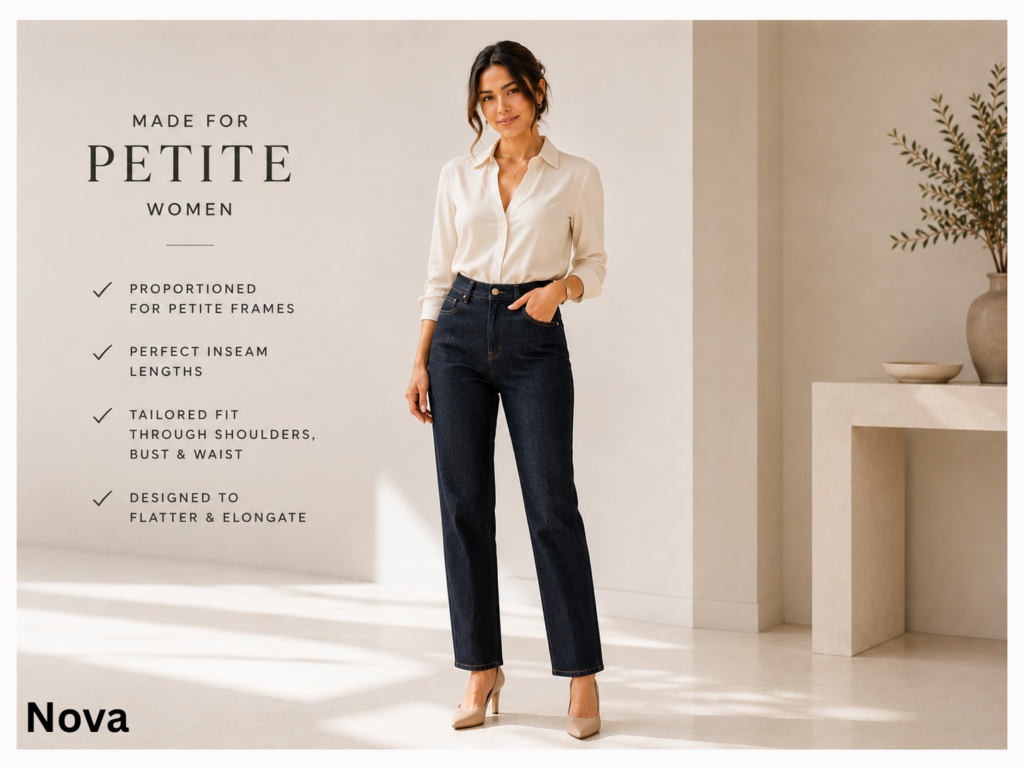
Clothing designed and cut specifically for petite proportions solves the scaling problems that standard sizing creates in ways that no amount of hemming or tailoring can fully address. Petite specific garments have shorter torso lengths, narrower shoulder widths, correctly scaled pockets and buttons, and proportionately adjusted sleeve and trouser lengths that work together as a complete system.
Many major retailers now offer dedicated petite sections and several independent brands build their entire collections around petite proportions from the design stage rather than simply shortening standard pieces. The difference between a standard sized garment that has been hemmed and a purpose built petite garment is visible in the overall proportional balance of the finished look rather than in any single alteration point.
Conclusion
Learning how to dress a petite body is not about following a set of rigid rules that limit what you can wear. It is about understanding the visual principles that create elongation and proportion so you can apply them selectively and confidently across every outfit you build.
The twelve tips in this article work both individually and in combination. Start with the two or three that feel most immediately applicable to your current wardrobe and personal style, practice applying them consistently, and notice how the visual impact changes. Then layer in additional principles as they become intuitive. The result over time is not a more restricted wardrobe but a significantly more intentional and flattering one.

Hazel Susan
Hazel Susan is a fashion writer and author at Nova Fashion, specializing in outfit ideas, seasonal trends, beauty inspiration, and everyday style tips. She enjoys helping readers discover practical fashion advice, timeless wardrobe ideas, and the latest fashion trends through easy-to-follow guides. Her goal is to make fashion simple, stylish, and inspiring for everyone.