
There is nothing quite like that first cold morning when you pull on your favorite dark sweater, catch your reflection, and spot those little white flakes on your shoulders. If a winter scalp care routine for dandruff is suddenly at the top of your to-do list, you are in very good company — and no, it is not because you did something wrong. Dandruff shows up for millions of women every winter, and it has far more to do with cold air, dry heat, and a tiny yeast that loves your scalp than it does with how clean you keep your hair.
This routine is built to be kind. No shame, no harsh scrubbing, no ten-product shopping list you will never finish. Just 19 gentle steps that work together: a calmer wash, the right shampoo, a little exfoliation, a weekly mask, and a few small habits that keep flakes quiet until spring. If your scalp is dry and itchy without much flaking, you may also like our companion guide to a winter scalp care routine for a dry, itchy scalp — the two routines share a lot of DNA, but this one is tuned specifically for dandruff.
Before we start, one promise: dandruff is a skin condition, not a personal failure. The goal here is not a perfect scalp. It is a comfortable one — less itching, fewer flakes on your clothes, and hair you actually enjoy wearing down. Give the routine two to three weeks, and judge it by how your scalp feels, not by one bad-hair morning.

Why Winter Makes Dandruff Worse (And What Dandruff Actually Is)
Winter is basically a perfect storm for dandruff. Cold air outside holds very little moisture, and the heated air inside your home is even drier. Your scalp responds by producing oil in fits and starts, and the skin barrier that normally keeps everything calm gets a little leaky. Add a wool hat that traps heat and sweat, plus extra-hot showers that strip natural oils, and flakes that were barely noticeable in September can suddenly feel like a daily event.

Here is the part most people never hear: dandruff is not dry skin. It is usually caused by an overgrowth of a yeast called Malassezia, which lives on everyone’s scalp. In winter, when your scalp is stressed and oily in patches, that yeast can multiply, and your skin sheds faster than usual to try to get rid of it. That is why the flakes are often a little oily and yellowish, and why moisturizer alone rarely fixes it. The good news is that the same things that calm the yeast — a gentle antifungal shampoo, regular washing, and not letting product build up — also calm the itch.
One more thing worth knowing: dandruff and a dry scalp are cousins, not twins. A dry scalp flakes because the skin is parched, and the flakes are small and dry. Dandruff flakes because the skin is turning over too fast, and the flakes are larger and sometimes a bit greasy. If your flakes are big, your scalp itches, and your hair gets oily quickly, you are almost certainly dealing with dandruff — and this routine is exactly for you.
Steps 1–2: The Gentle Anti-Dandruff Wash
Step 1: Start with lukewarm water. Before any shampoo touches your hair, soak your scalp thoroughly with lukewarm water for a full minute. Hot water feels wonderful on a freezing day, but it strips the oils that protect your scalp barrier and can make itching worse within hours. Think warm, not steaming — if the mirror is fogging up, turn the heat down a notch.
Step 2: Lather with your fingertips, not your nails. Pour a coin-sized amount of shampoo into your palm, rub your hands together, and work it into your scalp with the pads of your fingers in slow circles. Spend a solid two minutes on this part. Most of us rush the lather and let the shampoo slide straight down the lengths, but the scalp is where the dandruff lives — it deserves the attention. Your nails should never touch your scalp; even tiny scratches give the yeast more places to thrive.

A practical rhythm that works for most women: wash every other day in winter, or every day if your hair gets oily fast. The old advice to wash less often to “train” your scalp backfires with dandruff, because the yeast feeds on the oil that builds up between washes. If your scalp is very sensitive, try washing on a Monday, Wednesday, Friday, and Sunday pattern for two weeks and see how it feels — consistency matters more than perfection.
Steps 3–4: Choosing the Right Anti-Dandruff Shampoo
Step 3: Pick a shampoo with a proven active ingredient. Look for pyrithione zinc, selenium sulfide, ketoconazole, or salicylic acid on the label. Pyrithione zinc is the gentlest everyday option and a great place to start. Selenium sulfide is a little stronger and good for stubborn flakes. Ketoconazole is the heavy hitter — many women use it once or twice a week when things are at their worst, then step down to something milder. Salicylic acid helps lift flakes off the scalp so the other ingredients can reach the skin underneath.
Step 4: Let it sit, and rotate when it stops working. Here is the trick almost everyone misses: massage the shampoo in, then leave it on your scalp for three to five minutes before rinsing. That contact time is what lets the active ingredient do its job. Sing a verse of a song, brush your teeth in the shower, whatever it takes. And if a shampoo that worked beautifully in November seems to lose its magic by January, rotate to a different active ingredient for a month. Your scalp can get used to one formula, and switching keeps the yeast guessing.

What to skip while you are at it: heavy silicone serums and thick styling creams applied right at the roots, which trap oil and feed the yeast. If you love a leave-in, keep it on the mid-lengths and ends only. And if your hair feels a little dry after an anti-dandruff shampoo, that is normal — follow with a light conditioner on the lengths, never on the scalp, and your hair will forgive you.
Steps 5–6: Gentle Scalp Exfoliation
Step 5: Exfoliate once a week — gently. A scalp scrub is like a reset button for buildup. Once a week, on a day you are not in a rush, work a gentle scalp scrub into damp hair before shampooing. Look for fine sugar or salt granules, or a chemical exfoliant with salicylic acid, rather than anything gritty or rough. The goal is to lift dead skin and product residue, not to sand your scalp.
Step 6: Use small circles and zero pressure. Section your hair into four or five parts so you can actually reach the scalp, then massage the scrub in with your fingertips for two or three minutes. Rinse thoroughly and follow with your anti-dandruff shampoo as usual. If your scalp feels raw or stings afterward, you pressed too hard or used the scrub too often — back off to once every two weeks and try a finer formula.

A real-life example: Sunday evening is the classic scrub night for a reason. You have time, you are not rushing out the door, and your scalp gets a fresh start for the week. If you work out a lot or wear a hat daily, you might need that weekly scrub more than someone who works from home — sweat and hat friction both add to buildup. Just remember the golden rule: exfoliation is a helper, not a punishment. If it hurts, it is wrong.
Steps 7–8: The Scalp Massage That Calms Flaking
Step 7: Massage for three minutes a day. This is the simplest step in the whole routine, and honestly one of the most satisfying. Every day — while your shampoo is sitting, while you are watching television, whenever — spend three minutes massaging your scalp with your fingertips. Small, firm circles, moving from your hairline back toward the crown, then down to the nape of your neck. Massage boosts blood flow, helps loosen flakes before they become visible, and spreads your scalp’s natural oils more evenly instead of letting them pool in one spot.
Step 8: Try a silicone scalp massager. If your fingers get tired or you want a little extra help, a soft silicone scalp brush is a lovely tool. Use it in the shower with shampoo, or on a dry scalp before bed. The flexible bristles reach through thick hair without scratching, and they make the whole thing feel like a tiny spa treatment. Keep it clean — rinse it after every use and let it dry, because a damp massager can grow the very things you are trying to calm.

Here is a trick that makes the massage do double duty: do it while your anti-dandruff shampoo is sitting on your scalp. Those three to five minutes of contact time suddenly feel like a treat instead of a wait, and the massage helps the shampoo reach every part of your scalp. Women who stick with this step often say the itching eases within the first week, even before the flakes fully calm down — and less itching means less scratching, which means less irritation, which means fewer flakes. It is a virtuous circle, and it starts with your fingertips.
Steps 9–10: Pre-Wash Oil Treatments
Step 9: Warm a light oil and massage it in before you wash. About thirty minutes before your wash day, warm a teaspoon of a light oil — jojoba is a favorite because it is close to your scalp’s own sebum — between your palms and massage it into your scalp. If you like tea tree oil, add just two drops to that teaspoon of carrier oil; it has natural antifungal properties, but it must always be diluted, never applied straight. The oil softens flakes so they lift away easily in the shower instead of clinging on.
Step 10: Keep oil on the scalp, not the lengths, and rinse it out fully. Oiling the lengths of your hair is fine for shine, but for dandruff the treatment belongs on the skin. After thirty minutes, wash with your anti-dandruff shampoo — and wash twice if the first lather feels slippery. Leftover oil feeds the very yeast you are trying to calm, so a thorough rinse matters more than the oil itself.

A Sunday ritual that works beautifully: oil your scalp while you make coffee, let it sit while you read or tidy up, then wash as usual. One honest warning, though — heavy oils like straight coconut oil or olive oil can actually make dandruff worse for some women, because the yeast feeds on certain fats. If your flakes get worse after oiling, switch to jojoba or skip the oil entirely and lean on the mask in Step 13 instead. Your scalp will tell you what it likes.
Steps 11–12: Rinsing, Drying, and Styling Without Irritation
Step 11: Rinse until the water runs clear — then rinse a little more. Shampoo residue is one of the sneakiest dandruff triggers. It sits on the scalp, mixes with oil, and flakes appear by lunchtime. After your final lather, rinse with lukewarm water for a full minute, tilting your head so the water reaches the nape and behind your ears, the two spots everyone forgets. If your hair still feels slippery or coated, you are not done yet.
Step 12: Pat dry, then blow-dry on low and cool. Never rub wet hair with a towel — the friction roughs up the scalp and snaps fragile winter hair. Instead, press a microfiber towel or an old cotton T-shirt against your hair to soak up the water. If you blow-dry, use the lowest heat setting and hold the dryer at least six inches from your scalp, finishing with a blast of cool air. Air-drying is lovely in theory, but going outside with a damp scalp in January is a fast track to itching, so dry your roots before you leave the house.

One habit to break: the towel turban. Twisting wet hair up in a heavy towel for twenty minutes traps dampness against your scalp and tugs at the roots. If you love the feeling of your hair being wrapped up while you get ready, switch to a lightweight microfiber wrap and keep it on for five minutes, tops. Your scalp will feel the difference within days.
Steps 13–14: The Weekly Scalp Mask
Step 13: Give your scalp a weekly mask. Once a week, after shampooing, smooth a soothing scalp mask over your scalp — not your hair — and let it sit for ten to fifteen minutes. A store-bought mask with aloe, niacinamide, or a little salicylic acid is the easy route. If you prefer DIY, mix two tablespoons of pure aloe vera gel with two drops of diluted tea tree oil and a teaspoon of honey. Aloe calms the itch, and the mask gives your scalp a full week of breathing room.
Step 14: Rinse well and follow with a light conditioner on the lengths only. Masks are richer than shampoo, so rinse thoroughly with lukewarm water, then condition just the mid-lengths and ends. Skipping the scalp when you condition is a small change with a big payoff — conditioner on the scalp is a classic cause of buildup that looks exactly like dandruff.

Patch-test any new mask first, especially a homemade one: dab a little behind your ear and wait a day. A mask should feel cool and soothing, never hot or stingy. If you have ever had a reaction to tea tree or a new product, skip the DIY version and use a plain aloe gel instead — simple is still effective.
Steps 15–16: Brushing, Hats, and Friction Control
Step 15: Brush daily with a soft brush — and wash the brush. A gentle daily brush does two lovely things: it lifts loose flakes before they land on your shoulders, and it distributes your scalp’s natural oils down the hair shaft where they protect the lengths. Use a soft-bristle or wide-tooth brush, start at the ends and work up, and clean the brush every week with warm soapy water. A dirty brush just puts yesterday’s oil and flakes back on a clean scalp.
Step 16: Make your hats work for you, not against you. Winter hats are non-negotiable, but they can trap heat and sweat against your scalp. Choose hats in breathable natural fibers when you can, and wash them regularly — once a week if you wear one daily. If a hat makes your scalp itch within an hour, it is too tight or too synthetic. A silk or satin lining inside a wool hat is a wonderful trick: it cuts friction and lets your scalp breathe.

Here is the routine in miniature: brush before you wash, not after, when hair is at its most fragile. Brush before you put a hat on, so flakes do not get pressed into place. And brush before bed, so you are not sleeping on a day’s worth of buildup. Three quick brushes a day, thirty seconds each, and your scalp stays noticeably calmer.
Steps 17–19: The Winter Schedule and When to Repeat Treatments
Step 17: Put the routine on a weekly rhythm. A routine only works if you can remember it, so anchor each treatment to a day. Try this: wash with anti-dandruff shampoo every other day, exfoliate on Sunday, mask on Wednesday, and oil thirty minutes before your Friday wash. Write it on a sticky note on your bathroom mirror for the first two weeks — by the third, your hands will know the pattern.
Step 18: Check in with your scalp every month. Once a month, take an honest look: are the flakes smaller and fewer? Is the itching down? Is your hair less oily between washes? If yes, stay the course. If nothing has changed after a full month, switch your shampoo’s active ingredient — for example, from pyrithione zinc to selenium sulfide — and give the new one another month. Progress with dandruff is usually slow and steady, not overnight.
Step 19: Keep going through early spring. The biggest mistake women make is stopping the moment the flakes ease. Dandruff loves to return the second you drop the routine, especially while the air is still cold and dry. Keep the full routine going until the weather genuinely warms up, then taper slowly — drop the weekly mask first, then the scrub, and keep the anti-dandruff shampoo in rotation once a week as maintenance.

If you ever feel like treating yourself, a salon wash is a lovely reset — a professional scalp massage and a proper rinse can do in one visit what a week of home care does slowly. Just tell your stylist you are managing dandruff, and ask them to skip heavy oils at the roots. And if your scalp ever feels worse after a salon visit, mention it next time; a good stylist will adjust the products they use on you.
Oils That Help Dandruff (And the Ones That Make It Worse)
Not all oils are friends to a flaky scalp. The helpful ones are light and targeted: jojoba oil, which closely mimics your scalp’s own sebum and rarely clogs anything; tea tree oil, always diluted to a few drops in a carrier oil, which has genuine antifungal action against the yeast behind dandruff; and rosemary oil, diluted the same way, which supports circulation. The ones to skip: heavy coconut or olive oil applied straight and left on, which can feed the yeast, and any undiluted essential oil, which can irritate an already unhappy scalp. Thick, petroleum-based pomades are also a no — they trap flakes and oil against the skin.

A simple rule of thumb: if an oil feels heavy on your hand, it will feel heavy on your scalp. Start with one oil, use it for two weeks, and only add another if the first one clearly helped. And always patch-test behind your ear before a new oil goes anywhere near your hairline.
Diet and Hydration for a Calmer Scalp
Food will not cure dandruff on its own, but it can quietly support everything else you are doing. Omega-3 fatty acids — salmon, sardines, walnuts, flaxseed — help keep the skin barrier strong. Zinc, found in pumpkin seeds, chickpeas, and lean meat, plays a role in skin repair. B vitamins from whole grains and eggs support healthy skin turnover. And plain water matters more than any supplement: a well-hydrated body keeps its skin barrier working better in dry winter air.

On the other side of the plate, very sugary diets and heavy drinking can both make yeast-driven skin issues worse, so winter is a good time to ease up on both. You do not need a perfect diet — a salmon dinner once a week, a handful of seeds on your breakfast, and a glass of water before your coffee will do more than any expensive supplement.
Common Dandruff Mistakes to Avoid
A few habits quietly undo all the good work. Scratching with your nails feels satisfying for about ten seconds, then leaves tiny scratches that invite more flaking. Skipping washes to “rest” your scalp lets oil and yeast build up. Piling conditioner on your roots creates the buildup that looks exactly like dandruff. Washing with scalding water strips the barrier you are trying to protect. And quitting your anti-dandruff shampoo the moment flakes ease is the classic trap — the yeast comes straight back. If you catch yourself doing any of these, just stop gently and carry on; there is no need to start over.
When to See a Dermatologist About Dandruff
Most winter dandruff answers to a steady home routine within four to six weeks. But some signs mean it is time for a professional. Book an appointment if flakes have not improved after six weeks of consistent care, if you see thick yellow crusts, redness, or swelling, if you are losing hair in patches, or if flaking spreads to your eyebrows, ears, or chest. Those can point to seborrheic dermatitis or psoriasis, which look like dandruff but need different treatment — usually a prescription-strength shampoo or a short course of topical medication. Seeing a dermatologist is not a failure of your routine; it is the smart next step, and many women find that one visit and one prescription finally break a cycle they fought for years.

Dandruff Questions, Answered
Is dandruff the same as a dry scalp?
No. Dandruff is driven by yeast and fast skin turnover, and its flakes tend to be larger and a little oily. A dry scalp is simply parched skin, and its flakes are small and dry. An anti-dandruff shampoo will not do much for a truly dry scalp, and a rich moisturizer will not fix dandruff — which is why matching the treatment to the problem matters.
How often should I use anti-dandruff shampoo in winter?
Two to three times a week works for most women, and daily is fine if your hair gets oily quickly. Always leave it on your scalp for three to five minutes. Once the flakes calm down, keep using it once a week as maintenance so they do not creep back.
Can I oil my scalp if I have dandruff?
Yes, lightly. A teaspoon of jojoba oil, or a carrier oil with two drops of tea tree, massaged in thirty minutes before washing is a good approach — just rinse it out fully. If heavy oils make your flakes worse, skip oiling and lean on the weekly mask instead.
Save This Winter Scalp Care Routine for Dandruff for Later
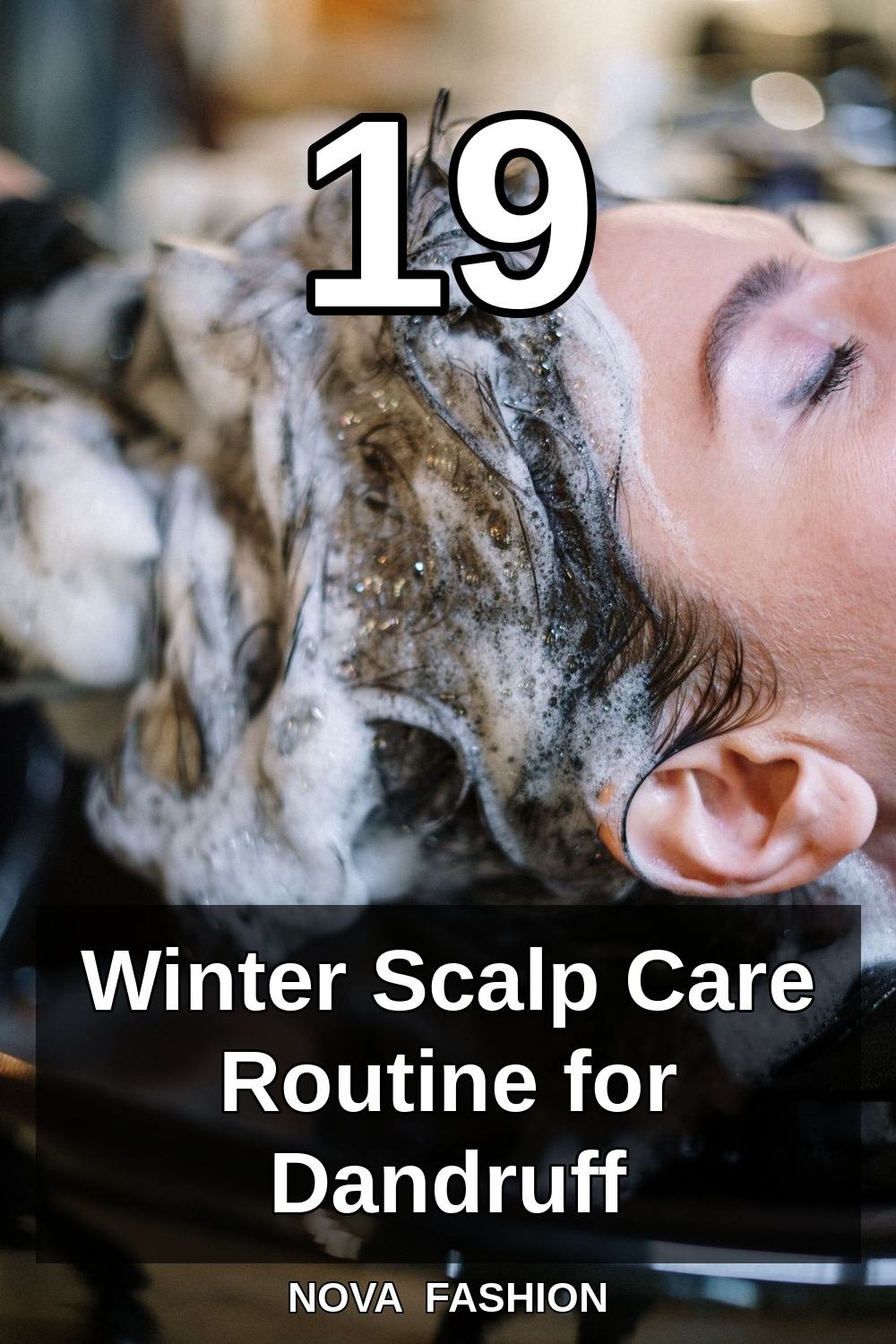
Save this look for later on Pinterest so you can find the full 19-step routine whenever you need it.

Want to make your own pin for this routine? Try the free Pinterest Caption & Pin Generator on Nova Fashion — it writes a caption for your pin in seconds.
Your Turn: A Calmer Scalp Starts Tonight
Dandruff in winter is frustrating, but it is also very fixable — and you do not need to buy a shelf full of products to fix it. Start tonight with just the gentle wash: lukewarm water, fingertips instead of nails, and three quiet minutes while your shampoo does its work. Add the scrub on Sunday, the mask on Wednesday, and see how your scalp feels in two weeks. Then come back and browse more hair ideas on Nova Fashion, and follow Nova Fashion on Pinterest for more seasonal hair routines — your calmest scalp is closer than you think.
Pingback: 19-Step Winter Scalp Care Routine for Oily Scalp Nova Fashion