
If you have been looking for winter hairstyles for women with a double dutch braid chic enough for a party and practical enough for a snowy walk, you have found the style that does both. Double Dutch braids are the hairstyle that says sporty and pretty at the same time: two braids that sit on top of the hair, run from the forehead to the nape, and survive any hat you put over them. They keep every strand contained, they look deliberate from every angle, and they last from morning to night without a single touch-up. That is why they have become one of my favourite cold-weather styles, and why they work for the gym, the office and a night out.
Winter is hard on loose hair. Wind tangles it, hats flatten it, static makes it fly away, and most of us do not want to spend an hour styling hair we are about to hide under a beanie anyway. Double Dutch braids solve all of that at once. The braids sit close to the scalp, so a hat slides over them without crushing them. The lengths are contained, so the wind cannot tangle them. And the braids themselves add texture and pattern right where people can see it, so the style reads as intentional even from behind. In this guide I will walk you through 17 chic ways to wear them, from the basic double Dutch to ribbon versions, a low-bun finish, gym and party versions, and a few braided variations to try when you fancy a change.

What Is a Double Dutch Braid, Exactly?
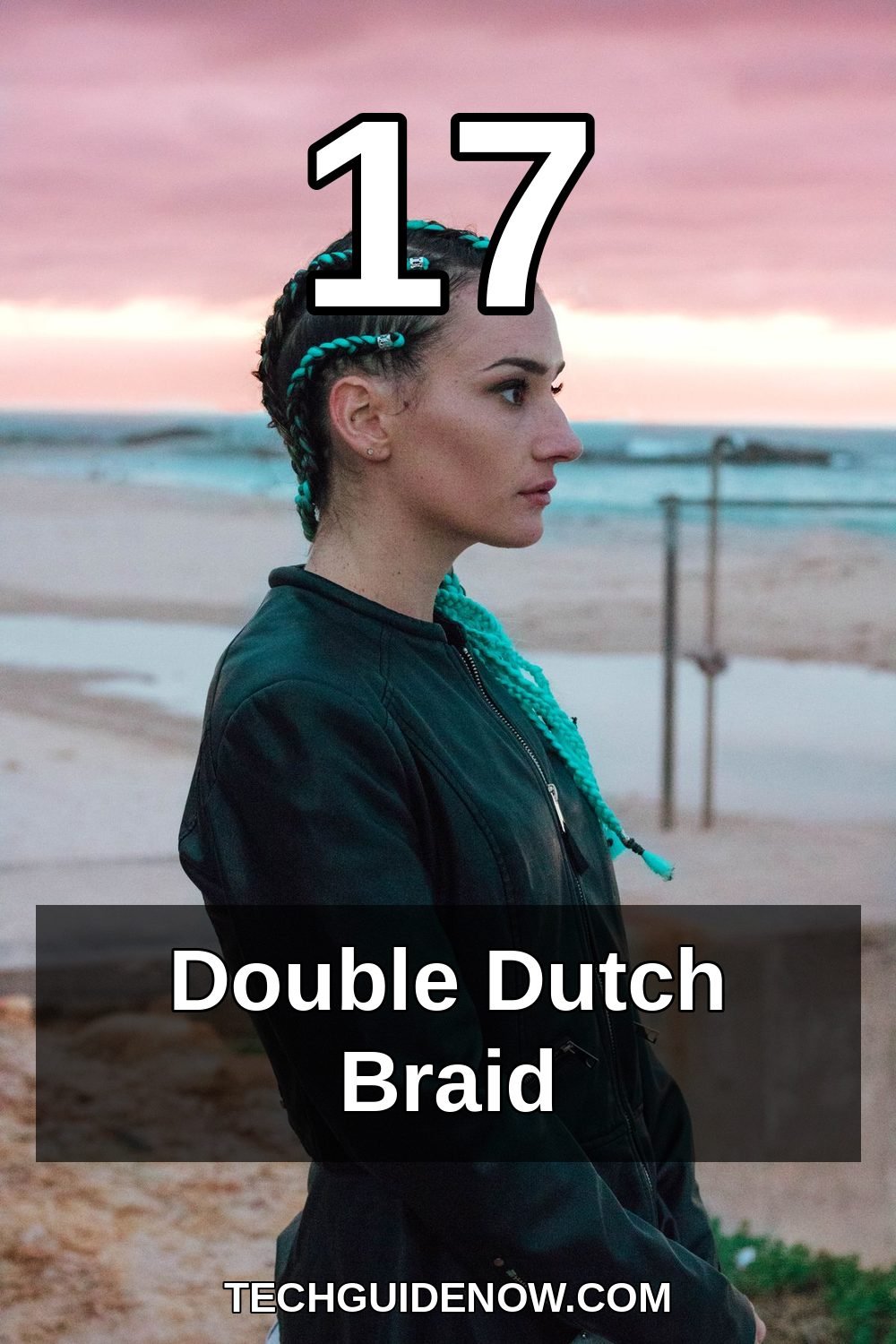
A double Dutch braid is two Dutch braids, one on each side of a centre parting, running from the forehead to the nape. A Dutch braid is the reverse of a French braid: instead of crossing the outer sections over the middle one, you cross them under it, so the braid sits on top of the hair rather than sinking into it. That raised, rope-like braid is what makes a Dutch braid so visible and so pretty. Do it twice, once on each side, and you have a double Dutch: symmetrical, textured, and sturdy enough to last all day.
What makes it chic rather than schoolgirlish is the finish. Keep the braids tight at the scalp, where they need to hold, and loosen the lengths a little, pulling tiny pieces out along each braid to make them look fuller and softer. Add a ribbon at the ends, or tie the two braids together at the nape, and the style suddenly looks grown-up and deliberate. It works on straight hair, wavy hair and curly hair, on thick hair and fine hair, and it is one of the few styles that actually looks better the longer you wear it, because the braids settle and soften as the day goes on.

The Basic Double Dutch
Start here, because every other version in this guide is a variation on this one technique. Part your hair down the centre, from the forehead to the nape, and clip one side out of the way. On the other side, take a small section at the hairline, split it into three, and start braiding: cross the right section under the middle, then the left section under the middle, and keep going, adding a little more hair to each outer section before you cross it under. That under-crossing is the whole secret: it is what makes the braid sit on top of the hair. Keep the tension even and the sections small, and braid all the way down to the ends, then secure with a small clear elastic. Repeat on the other side.
The part most people get wrong is the tension. If you braid too loosely at the scalp, the braids will sag and look messy by midday. If you braid too tightly all the way down, the lengths look stiff and the ends stick out. The trick is to keep the braids tight at the scalp, where they need to hold, and loosen them gradually as you go down, pulling tiny pieces out along the lengths to make them look fuller. That contrast, tight at the top and soft at the bottom, is what makes a double Dutch look chic rather than severe. Practice it twice and your hands will learn the rhythm.

How to Braid It Yourself: The Five Steps
One, part the hair down the centre and clip one side away. Two, take a small section at the hairline and split it into three. Three, cross the outer sections under the middle one, adding hair to each outer section as you go. Four, braid all the way to the ends and secure with a small clear elastic. Five, repeat on the other side, then pull tiny pieces out along both braids to soften them. If your arms get tired, rest them for a minute between sides; there is no rush, and the second braid is always easier than the first. Keep a few spare elastics in your pocket, because the one you need always disappears at the worst moment.

Double Dutch With Ribbons
Of all the versions in this guide, the ribbon one is the prettiest, and it is the one that gets the most compliments. A double Dutch with ribbons takes the basic braids and weaves a slim ribbon through each one, or ties a ribbon around the end of each braid in a small bow. The ribbon adds colour and softness, and it turns a sporty style into something romantic. It is the perfect choice for a winter lunch, a family gathering, or any day when you want the braids to feel a little more dressed up.
Choose a ribbon about one centimetre wide and about a metre long for each braid, so you have enough to weave through and tie at the end. Velvet is my favourite for winter, because it grips the hair instead of sliding out, and it looks rich against wool coats and knitwear. Weave the ribbon in as you braid, laying it along the middle section so it appears in the centre of the braid, or simply tie it around the elastic at the end and let the ends trail. If the ribbon slips, tie it in a double bow and pin the knot of the bow with one bobby pin. Keep the colours deep for winter, burgundy, forest green or navy, which hide lint and look deliberate against winter fabrics.

Choosing Ribbons That Stay Put
The ribbon has to survive your coat, and that is a practical problem most guides ignore. A pale satin ribbon against a dark wool coat will pick up fluff and look grubby by midday, and a very long trailing ribbon will catch in your coat zip or your scarf. For everyday winter wear, pick a ribbon in a colour close to your coat, or in a deep tone that hides lint, and keep the trailing ends short, no longer than the braids themselves. Velvet and grosgrain are the best fabrics for this, because they are matte, they grip, and they do not show every speck of lint. Save the pale satin for indoor parties, where it will stay clean and catch the light beautifully.
Double Dutch Into a Low Bun
When you want the braids but not the tails, fold them into a low bun. Braid both sides as usual, then cross the two tails at the nape, tuck them up and under, and pin them into a soft low bun. The braids become the decoration around the bun, and the whole style sits neatly at the nape, which makes it perfect for a coat with a high collar or a scarf that would otherwise tangle the tails. It is also the version to choose for a formal occasion, because it reads as an updo rather than a sporty style, and it shows off the neck and shoulders beautifully.
The trick is to keep the bun soft. Do not wrap the tails tightly or the bun will look hard and small. Instead, coil them loosely, pin from underneath with two crossed bobby pins, and pull a few pieces out around the bun and at the front to soften the shape. If the tails are long, wrap them around the bun twice and pin the ends underneath. If they are short, just tuck them under and pin. The finished shape should look like a soft knot of braids, not a tight ball, and a velvet ribbon tied around the base will hide the pins and finish the look.

Double Dutch for the Gym
Double Dutch braids are the best gym hairstyle for winter, because they keep every strand out of your face, they do not bounce around the way a ponytail does, and they survive a workout, a shower and a hat on the way home. A high ponytail swings and pulls, and hair left down gets sweaty and tangled, but two Dutch braids sit flat against the head and stay exactly where you put them. They are also the style that looks best after a workout, because a little sweat softens the braids and makes them look lived-in rather than messy. For more single-braid ideas, see our Dutch braid hairstyles for women, which has plenty of winter looks that pair well with this one.
The trick for the gym is to braid tightly at the scalp and to secure the ends properly. Use small clear elastics, and wrap them twice around the ends so they cannot slip. If your braids are long, tuck the ends into your sports bra strap or pin them up at the nape, so they do not swing and hit you in the face during a run. And if you wear a headband, put it on after the braids are finished, sliding it back over the braids rather than dragging it forward, so it does not pull the braids loose. After the gym, a little dry shampoo at the roots and a quick squeeze of the braids will freshen the style for the rest of the day.

Keeping Braids Secure Through a Workout
A braid that comes loose mid-workout is annoying, and it is almost always because the elastic gave up, not because the braid failed. Use good-quality small elastics, the kind made for thick hair, and wrap them at least three times around the ends. If your hair is very slippery, add a tiny bit of texturising spray to the ends before you secure them, so the elastic has something to grip. And if you do high-impact exercise, pin the ends up at the nape with two crossed bobby pins, so the tails cannot swing at all. Check the braids after your first workout to see how they behaved, and adjust the tension next time; a slightly tighter braid at the scalp is usually all it takes.
Double Dutch for Parties
For a party, double Dutch braids become a base you can dress up. Start with the basic braids, then add the glamour: a velvet ribbon woven through each braid, a pair of gold cuffs clipped onto the braids, or a small sparkly pin at the end of each one. Keep it to one statement detail, because the braids themselves are already interesting. Two braids with a single gold cuff on each look expensive; two braids with cuffs and glitter and ribbons look like a costume. Keep the lengths soft and a little loose for parties, too, because tight, stiff braids read as gym, while soft, full braids read as evening.
This is also the version where a little shine spray earns its place. Winter party lighting is often warm and dim, and a light mist of shine spray over the braids catches it beautifully in photographs. Do not overdo it, one light pass is enough, and keep it off the roots so the style does not go flat. If you are going from the gym or the office to a party, you do not even need to redo the style: loosen the braids a little by pulling tiny pieces out along each one, add the gold cuffs, add the shine spray, and you are ready. It is the easiest day-to-night change in this whole guide.

Dressing It Up for the Evening
For an evening out, the details matter more than the braids themselves. Choose accessories that match your jewellery: gold cuffs with gold earrings, silver cuffs with silver earrings, and keep the rest of your look simple so the braids can be the feature. A double Dutch with a velvet ribbon pairs beautifully with a dark, simple outfit, because the braids provide all the texture the look needs. If you wear your hair with a centre part, keep the front smooth and symmetrical; if you wear a side part, let a soft wave fall on the side opposite the part. And do a trial run the night before, so you know exactly how long the braids take when you are not in a rush.
Braided Variations to Try
Once you can do a double Dutch, a whole family of braided styles opens up, and they are all worth trying. The photos below show three of them. The first is a box-braids variation with a top bun: thick, rope-like braids gathered up on top of the head, which is a beautiful protective style and a striking winter look. The second and third are braided ponytails with a headwrap: the braids are gathered into a high ponytail and the headwrap adds colour and warmth, which is perfect for a cold day when you want the braids contained and your ears covered. None of these is a double Dutch, and they are not pretending to be; they are cousins of it, using the same braiding skills in a different shape, and they are useful when you fancy a change.


Box Braids and Cornrows: A Different Kind of Braid
Box braids and cornrows are a different kind of braid from a Dutch braid, and it is worth knowing the difference. Box braids are individual braids, usually with extensions, that hang loose and move freely; cornrows are braids worked flat against the scalp in straight rows. A double Dutch is closer to cornrows in technique, because both are worked close to the scalp, but the double Dutch uses only two braids and leaves the lengths hanging. If you love the look of braids but want something that lasts for weeks rather than a day, box braids and cornrows are the styles to ask your braider about. For a single day, though, the double Dutch is the quicker, easier choice, and it gives you the same braided texture without the commitment.
Double Dutch for Thick Hair
Thick hair is the double Dutch braid’s best friend, because the braids have plenty to grip and they look full and substantial. The challenge with thick hair is not the braiding, it is the weight: heavy braids can pull at the hairline and give you a headache. The fix is to keep the sections small and the tension even, so the weight is spread across the whole scalp rather than pulling at the front. Use strong, small elastics, and if the braids feel heavy, pin the ends up at the nape for the day, which takes the weight off the hairline. A thick-haired double Dutch is one of those styles that looks better at four in the afternoon than it did at nine in the morning, because it settles and softens as the day goes on.

Double Dutch for Fine Hair
Fine hair needs the opposite approach: you want the braids to look bigger than they are. Start with a little texturising spray or dry shampoo through the lengths, because clean, silky fine hair is the hardest hair to braid. The braid needs something to grip, and a little texture gives it that. Braid a little tighter than you would for thick hair, so the rope holds together, and then spend a little longer pulling tiny pieces out along each braid to make them look fuller. A fine-haired double Dutch that is pulled out and puffed up looks twice its real size, and nobody will know the difference. If your hair is very fine, a ribbon woven through each braid adds visual volume and draws the eye along the braid, which makes it look thicker.

Making Double Dutch Last Under a Winter Hat
Double Dutch braids are the most hat-proof hairstyle there is, because the braids sit flat against the scalp and a hat slides over them without crushing anything. Put the braids in first, then pull the hat on from the front, sliding it back over the braids rather than dragging it down over them. A beanie works better than a tight beret, because the knit stretches around the braids instead of flattening them. When you take the hat off, do not just yank it: lift it from the front, then smooth the front of your hair with your palms and give each braid a quick squeeze to wake it up. A little dry shampoo at the roots after hat removal brings back any volume the hat flattened.

Mistakes That Make Dutch Braids Go Flat
Three mistakes make a double Dutch go flat. The first is braiding too loosely at the scalp, so the braids sag and look messy by midday. Keep the tension firm at the top and loosen it gradually as you go down. The second is crossing the sections over instead of under, which turns a Dutch braid into a French braid and loses the raised, rope-like look. If your braid keeps sinking into the hair, check that you are crossing under, not over. The third is using an elastic that is too big or too loose, so the ends come undone. Use small, strong elastics and wrap them at least three times. Avoid those three, keep the braids tight at the scalp and soft at the lengths, and the style will hold all day.
Frequently Asked Questions
How long do double Dutch braids take?
About ten to fifteen minutes for both braids once you have done them a few times, and five minutes if someone else braids them for you. It is one of the longer styles in this guide, but it lasts all day without a touch-up, so the time pays for itself.
Can I do double Dutch braids on short hair?
You need enough length to braid to the nape, which usually means hair that reaches at least the shoulders. If your hair is shorter, try a half-up version, braiding only the top section on each side and leaving the rest down, which gives you the same braided look with less length.
Save This Look for a Hat-Proof Winter Style
Double Dutch braids are proof that the most practical styles can also be the prettiest: two braids, a few elastics, and a style that works for the gym, the office, a party and a walk in the snow, all without a single touch-up. Try the basic double Dutch first, then make it yours with a ribbon, a low bun or a braided variation, and see how many compliments a hat-proof style can earn. If you loved these winter hairstyles for women with a double dutch braid chic enough for any occasion, save the pin below to your winter hair board so you can find it again when the cold sets in.

Want to write the perfect caption for your own pin? Try our free Pinterest Caption & Pin Generator to create a pin caption in seconds. And if you want more winter hair ideas, take a look at our 21 winter ponytail hairstyles for women, and follow Nova Fashion on Pinterest for a new look every day.