
A pixie bob with an undercut is short hair with a secret. From the front, it is polished, soft and completely respectable — the kind of cut that works at the office, at a wedding, and at the school gates. From the back or the side, it is a different story: a clean, shaved undercut hiding underneath all that softness. If you have been hunting for winter haircut ideas for women with a pixie bob and undercut, you have found the cut that lets you be two people at once, and this winter it is having a moment. It is the haircut for the woman who wants edge without the commitment of a full shave, and polish without the boredom of a plain bob.
In this guide, I am sharing 19 pixie bob with an undercut looks for winter, from soft and polished to bold and fearless, plus how the undercut actually works, what it looks like on straight versus curly hair, how to style it two ways, and how to grow it out when you are ready for a change. Save this one for your stylist — and bring the pictures.

Short blonde pixie close-up — soft, textured layers with a clean finish.
What a Pixie Bob Actually Is
A pixie bob — sometimes called a bixie — sits right between a pixie and a bob. It is longer than a pixie, so it has softness around the ears and the nape, but shorter than a bob, so it keeps that cropped, face-framing energy. The top stays long enough to sweep, tuck or tousle, the sides stay neat, and the back is tapered or undercut so the whole shape stays light. It is the cut for women who think a pixie sounds too severe and a bob sounds too safe. In winter, it is especially practical: it dries in minutes, it fits under a beanie without going flat, and it shows off a scarf or a high collar beautifully, because there is no long hair competing with your coat.
Pixie vs. bob vs. pixie bob: the difference
Here is the quick way to tell them apart. A pixie is cropped close all over, with short sides and a short back, and it shows a lot of face. A bob is longer, usually chin-length or longer, with a clear, even outline. A pixie bob borrows from both: the length of a bob around the face and the crown, with the short, tapered sides and nape of a pixie. The result is a cut that has the softness of a bob and the lightness of a pixie. If you are not sure which one you want, the pixie bob is the safest bet — it is the easiest of the three to grow out, the easiest to style, and the most forgiving if you change your mind. If you love a sleek, polished short cut, take a look at our polished pixie haircut ideas for women too — the two cuts are cousins, and seeing both makes the choice much easier.

Woman with a short pixie bob and grey top — the polished length that defines the cut.
The Undercut: Hidden vs. Visible
The undercut is the part of this haircut that does all the work. It is a section of hair — usually at the nape, behind the ears, or on one side — that is clipped short or shaved, while the hair above it stays long and covers it. That is the whole trick: the undercut removes bulk and weight from underneath, so the top can sit soft and full without puffing out, and it gives the cut its edge. You get to choose how much of it the world sees, and that choice changes the whole personality of the haircut.
The hidden undercut (your secret weapon)
A hidden undercut sits at the nape, underneath the top layer, so nobody sees it until you put your hair up. It is the undercut for women who want the benefits — less bulk, faster drying, a cooler neck in a stuffy office — without the look. It is also the best choice if you work somewhere conservative, because the cut reads as a completely normal pixie bob from every angle that matters. Ask your stylist for a nape undercut that stops at the occipital bone, so the top layer falls over it naturally, and keep the undercut short but not skin-tight, so the grow-out is soft. The best part: on a bad hair day, you can tie the top up and let the undercut show, and suddenly you have a completely different haircut.

Geometric undercut design on the back of the head — an undercut detail shot.
The visible undercut (wear it loud)
A visible undercut sits on one side or both sides, where the top layer is swept away from it, so the shaved section is part of the look. It is bold, it is deliberate, and it is the version that gets compliments from strangers. The most popular version right now is a side undercut: one side shaved close, the top swept over to the other side, so the cut is asymmetric and dramatic. You can also have a design shaved into it — lines, a geometric pattern, or a soft fade — which turns the undercut into a piece of art. The trade-off is maintenance: a visible undercut needs a tidy-up every three to four weeks to keep its edge, and the grow-out is more obvious. But if you want the edgy version of this cut, this is it.

White-blonde undercut pixie with a shaved side and a longer top.
Pixie Bob With an Undercut for Straight vs. Curly Hair
The same cut behaves very differently on straight and curly hair, and knowing which one you have will help you and your stylist plan it properly. Straight hair shows the shape of the cut exactly, so the undercut reads sharp and graphic. Curly hair hides the undercut and softens the shape, so the cut reads textured and effortless. Both are beautiful — they are simply different versions of the same idea.
Straight hair: sleek and sharp
On straight hair, a pixie bob with an undercut is at its most precise. The undercut takes away the bulk that makes straight short hair puff out at the sides, so the top lies flat and sleek, and the line between the long top and the shaved section is crisp and clean. It is the best texture for a visible side undercut, because the contrast is so sharp, and it is the easiest to style: a quick blow-dry, a little smoothing cream, and you are done. The one thing to watch is that straight hair shows every millimetre of grow-out, so book your undercut tidy-ups on time, every three to four weeks, and the cut will always look intentional.
Curly hair: volume on top, control underneath
On curly hair, the undercut is a game-changer. Curls are heavy, and a pixie bob without an undercut can turn into a triangle — flat on top, wide at the bottom. The undercut removes the weight at the nape and the sides, so the curls on top can spring up and the shape stays narrow and flattering. The undercut itself is mostly hidden by the curls, which makes it the most low-maintenance version of this cut: the grow-out is camouflaged by texture, and you can stretch tidy-ups to five or six weeks. Ask your stylist to cut the top dry, curl by curl, so the shape works with your curl pattern rather than against it, and use a curl cream rather than a heavy gel, so the top stays soft.
19 Pixie Bob With an Undercut Looks to Show Your Stylist
Here they are — nineteen ways to wear a pixie bob with an undercut this winter. Screenshot your favourites, show your stylist, and use the wording under each look so you both mean the same thing when you say undercut.
Looks 1–5: Soft and polished
Look 1: The classic polished pixie bob. This is the softest version of the cut, and the best place to start if you are new to short hair. The top is long enough to sweep to the side, the sides are tapered neatly, and the undercut hides at the nape where nobody sees it. It reads as a chic, grown-up pixie bob — the kind of cut that looks good with a blazer and a silk scarf. Ask your stylist for a nape undercut, soft layers on top, and a side part. Style it with a round brush and a little smoothing cream, and it will look polished all day.

Stylish short grey pixie with large earrings — a chic, mature take on the cut.
Look 2: The soft side-swept pixie bob. A deep side part changes everything about this cut. The hair sweeps across the forehead in a soft, face-framing wave, the undercut sits on the shorter side, and the whole look feels romantic rather than severe. It is especially flattering if you have a round or square face, because the diagonal line of the sweep lengthens your features. Ask for the top to be left long on the sweeping side, the undercut on the opposite side, and a little texture through the ends so the sweep moves naturally.
Look 3: The mature pixie bob. Short hair has no age limit, and this look proves it. A soft pixie bob with a hidden nape undercut, worn in a warm blonde or a chic silver, is one of the most flattering cuts a woman over fifty can choose. The undercut keeps the shape light and modern, so the cut never looks dated, and the soft top can be styled with a little volume at the crown for lift. Ask your stylist to keep the fringe soft and side-swept, never blunt, and to use a lightweight volumising mousse at the roots.

Older woman with a short blonde pixie — a mature pixie look.
Look 4: The pixie bob with a soft fringe. A soft, brow-skimming fringe turns a pixie bob into a completely different haircut — gentler, younger, and very French. The fringe balances the edge of the undercut, so the cut feels soft even though it has a shaved section underneath. It is the best version if you have a high forehead or you want to soften strong features. Ask for a textured fringe that you can sweep to the side on lazy days, and keep the undercut hidden at the nape so the fringe stays the star of the show.
Look 5: The everyday wash-and-go pixie bob. This is the cut for the woman who has ten minutes in the morning and no patience for a blow-dry. The top is cut with lots of soft texture, the undercut removes the bulk, and the whole thing falls into place with a little styling cream and a shake. It looks deliberately undone, which is the point — it is the easiest version of this cut to live with. Ask your stylist for point-cut ends and a nape undercut, and skip the round brush entirely: towel-dry, add cream, and go.
Looks 6–10: Edgy and textured
Look 6: The edgy coloured pixie. Colour is the fastest way to make a pixie bob with an undercut feel fearless, and green is the colour of the moment. A green pixie with an undercut side is bold, modern and surprisingly wearable — the undercut keeps the colour from overwhelming your face, and the short length means the colour fades gracefully. If green feels like too much, the same cut works in copper, plum or a deep teal. Ask your stylist for a vivid colour on the top only, with the undercut kept natural or dark, so the contrast does the talking.

Green pixie with an undercut side — an edgy coloured pixie variation.
Look 7: The red asymmetrical pixie. Red hair and an undercut are a match made in heaven. An asymmetrical pixie — long on one side, short on the other, with the undercut on the short side — in a rich, fiery red is the most head-turning version of this cut. The asymmetry makes the undercut part of the design, and the red makes sure nobody misses it. Ask your stylist for the long side to reach the cheekbone, the undercut to sit tight on the short side, and a copper-red gloss to keep the colour rich through winter.

Red asymmetrical pixie with an undercut side — an edgy pixie variation.
Look 8: The platinum pixie with a tattoo. Platinum blonde and a pixie bob with an undercut is the coolest combination in this list. The platinum makes the texture of the cut visible — every piece, every layer, every line of the undercut shows up — and it looks incredible with a leather jacket and a bold lip. This look pairs beautifully with a tattoo peeking out at the neckline or the temple, which is part of its charm. It needs the most maintenance of any look here: a purple shampoo once a week, a toner every four to six weeks, and a good conditioning mask, because platinum is a commitment.

Platinum pixie cut with a floral tattoo — a bold, modern pixie.
Look 9: The textured choppy pixie bob. If your hair is fine, this is your look. Choppy, point-cut layers through the top create the illusion of thickness, and the undercut removes the weight that drags fine hair flat. The result is a pixie bob that looks full and piecey, with lots of movement, even though your hair is fine. Ask your stylist for choppy texture through the crown and the fringe, a hidden nape undercut, and a texturising spray rather than a heavy wax, so the pieces stay light and separate.
Look 10: The undercut with a design. Why have a plain undercut when you can have art? A design shaved into the undercut — clean lines, a geometric pattern, or a soft fade with a hard line — turns the hidden part of your haircut into a secret piece of jewellery. It shows when your hair is up and hides when it is down, which makes it the most fun version of this cut. Ask your stylist to show you their design book, start simple with two or three lines, and remember that a design needs a tidy-up every two to three weeks to stay sharp.
Looks 11–15: Sleek and sophisticated
Look 11: The sleek side-part pixie bob. This is the boardroom version of the cut: a clean side part, a smooth, glossy finish, and the undercut hidden neatly underneath. It is the look to choose if you want the edge of an undercut with the polish of a classic bob, and it is the easiest version to wear to work. Ask your stylist for a precise side part, a nape undercut, and a smooth blow-dry with a paddle brush. A drop of shine serum on the ends finishes it, and the cut will look expensive all day.

True pixie bob — soft layers with a clean, face-framing shape.
Look 12: The pixie bob with a long sweeping fringe. A long fringe that sweeps across the forehead and blends into the side is the most flattering detail you can add to this cut. It softens the undercut, frames the eyes, and gives the cut movement. It is especially good if you have a long face, because the diagonal line of the fringe breaks up the length. Ask for the fringe to reach the cheekbone at its longest point, and for the undercut to sit on the opposite side so the two details balance each other.
Look 13: The short blonde pixie bob. A short blonde pixie bob is pure sunshine in winter. The blonde makes the texture visible, the undercut keeps the shape light, and the whole cut looks fresh and modern. It is the best version if you are already blonde or light brown, because the colour work is minimal — a toner and a gloss will do it. Ask your stylist for a soft, dimensional blonde rather than a flat one, with the undercut kept your natural shade underneath for contrast.

Short blonde pixie, small in frame — a soft pixie look.
Look 14: The pixie bob for thick hair. Thick hair and short cuts can be a difficult combination, but the undercut solves it. By removing the bulk underneath, the undercut lets thick hair sit close to the head instead of puffing out, so a pixie bob that would normally look like a helmet suddenly looks sleek and intentional. Ask your stylist for a generous undercut — nape and sides — and for the top to be thinned with texturising shears rather than a razor, so the ends stay healthy. This is the cut that finally makes thick hair behave.
Look 15: The evening pixie bob. For parties and evenings out, dress the pixie bob up. A deep side part, a smooth, glossy finish, a little volume at the crown, and a statement earring — the undercut peeks out when you tuck one side behind your ear, and the whole look is red-carpet ready. It takes ten minutes with a flat iron and a shine spray, and it is the version of this cut that photographs best. Ask your stylist to show you the tuck: one side behind the ear to reveal the undercut, the other side falling forward, and you have a party look.
Looks 16–19: Bold and fearless
Look 16: The blue bob with an undercut attitude. Blue hair is the boldest colour in this list, and it works beautifully with a pixie bob shape — even when the undercut itself is not visible, the short, sharp silhouette carries the same fearless energy. A blue bob says you are not afraid of colour, and the pixie bob length keeps it chic rather than costume-y. If blue feels like too much, try a deep teal or a smoky violet first. Ask your colourist for a semi-permanent blue, which fades gracefully, and a cool-toned gloss to keep it from going green.

Blue bob — a coloured-bob variation, no undercut visible.
Look 17: The bob silhouette. Sometimes the shape is the whole statement. A pixie bob seen in silhouette — the clean line of the nape, the sweep of the top, the sharp edge where the undercut sits — is pure sculpture. This look is about the cut itself, not the colour or the styling: a precise, architectural shape that looks good from every angle. Ask your stylist for a clean, graphic outline and a sharp nape line, and wear it with a high collar or a statement necklace so the silhouette stays the focus.

Artistic profile silhouette of a woman with a bob.
Look 18: The winter turtleneck pixie bob. A pixie bob and a white turtleneck is the winter uniform, and this look is built around it. The short hair shows off the turtleneck, the turtleneck frames the face, and the undercut keeps the whole thing from looking bulky under a coat. It is the most practical look on this list for cold weather: no hair caught in your scarf, no frizz from your hat, no fuss. Ask your stylist for a soft, textured top that you can tousle with your fingers, and keep the undercut hidden at the nape so the look stays cosy rather than edgy.

Short hair in a white turtleneck, rural background — a winter-ready pixie bob.
Look 19: The full undercut pixie bob. The grand finale: a pixie bob with the undercut everywhere it can be — nape, sides, the works — and a long, dramatic top swept to one side. It is the boldest version of this cut, and the one that shows off the undercut most completely. The top stays long enough to style a dozen ways, so the cut is versatile even though the undercut is dramatic. Ask your stylist for a skin fade on the sides, a soft nape undercut, and a top that reaches the cheekbone, and wear it with confidence — this is a haircut that does not whisper.
Styling a Pixie Bob: Texture vs. Sleek
The best thing about a pixie bob with an undercut is that it has two personalities, and you can switch between them in five minutes. The same cut can look piecey and undone on a Saturday morning and smooth and polished on a Monday, and the undercut makes both versions easier, because it removes the bulk that fights your styling. The trick is knowing which products to reach for.
Texture: the piecey, undone finish
For texture, start with damp hair and a pea-sized amount of styling cream or a light pomade. Work it through the top with your fingers, pushing the pieces in different directions, and let it air-dry or give it a quick blast with the dryer on low. The undercut does the heavy lifting here: because the sides and nape are short, the top has somewhere to move, and the pieces fall naturally. A texturising spray on day two revives the look without washing. This is the finish to choose for weekends, for holidays, and for any day when you want your hair to look like you did not try very hard — even though you did, a little.
Sleek: the polished finish
For sleek, blow-dry the top smooth with a flat brush or a paddle brush, directing the hair to one side or straight back, and finish with a smoothing serum or a light shine spray. The undercut keeps the sides flat, so the sleek finish actually stays sleek instead of puffing out by lunchtime. If you have a fringe, blow it dry first, while it is still wet, so it falls the way you want. This is the finish for work, for weddings, and for any day when you want to look like you mean business. A flat iron on the longest pieces will give you a glass-like shine that shows off the cut beautifully.
Growing Out an Undercut
Sooner or later, every undercut owner wonders about growing it out, and the good news is that it is much easier than growing out a full pixie. The undercut is a small area, and the top is long enough to cover it, so the awkward stage is mostly hidden. Start by letting the undercut grow for four to six weeks without a tidy-up — it will reach about a centimetre, and the top will still cover it. Then ask your stylist to blend the edges with thinning shears every few weeks, so there is no harsh line between the undercut and the top. A little styling cream will smooth the growing-out pieces down, and a headband or a few bobby pins will hide any stubborn bits. Within three to four months, the undercut will have blended into the rest of the cut, and you can decide whether to keep the pixie bob or grow it into a full bob. The one thing to avoid is shaving it again out of habit — once you decide to grow it out, commit, and let the top do the covering.
Frequently Asked Questions
Before you book, here is the question every stylist hears about the pixie bob with an undercut — answered honestly.
How often does an undercut need trimming?
A hidden nape undercut needs a tidy-up every four to six weeks, and a visible side undercut every three to four weeks, to keep its edge. The tidy-up is quick — usually fifteen minutes — and many salons offer it as a cheap add-on between full cuts. If you let it grow too long, the line between the undercut and the top gets fuzzy and the cut loses its shape, so book the tidy-up when you book the cut and you will never have to think about it.
Save This Pixie Bob Look on Pinterest
Found your look? Save the pin below so you can show it to your stylist at your next appointment.
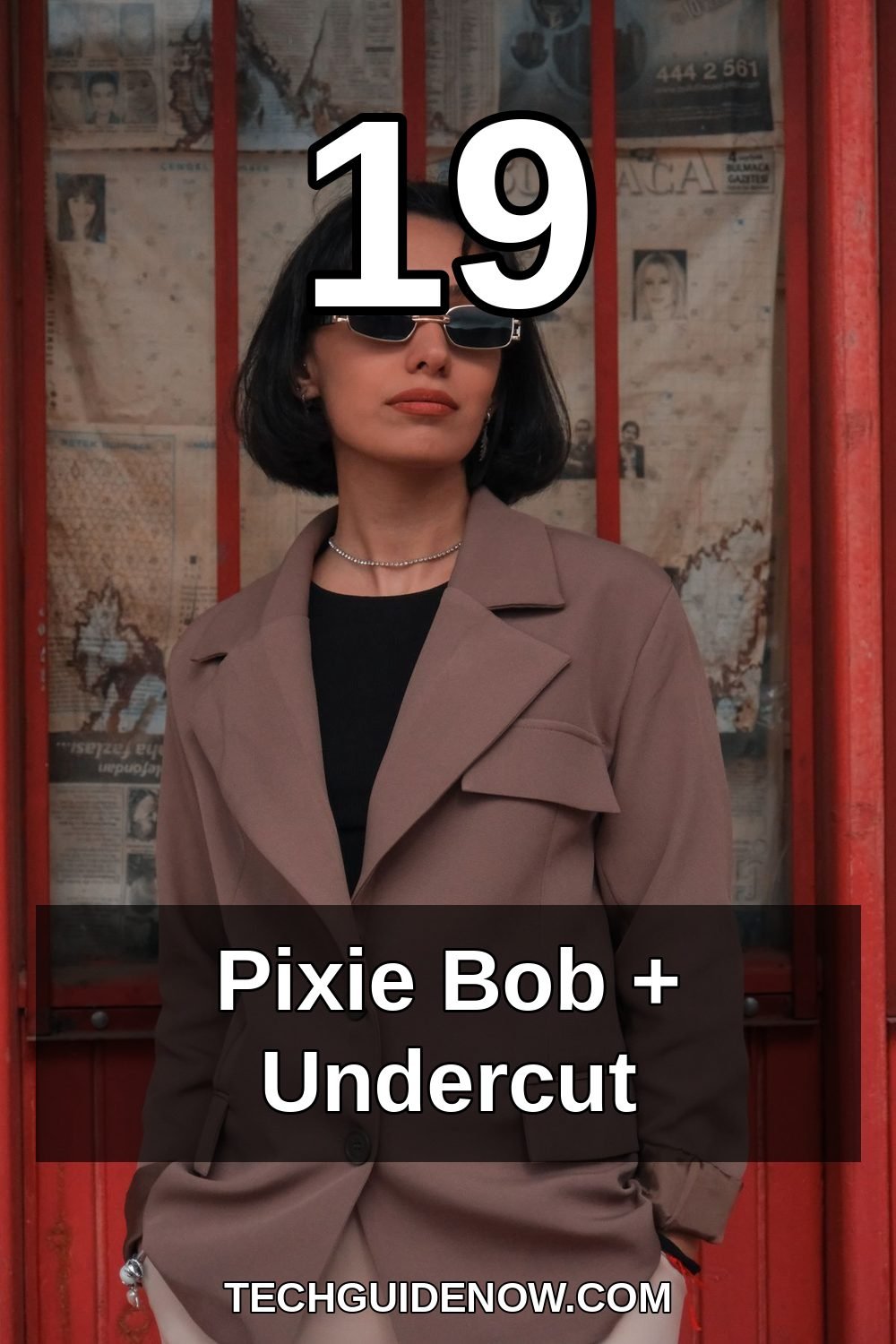

Want to write the perfect caption for your own pin? Try our free Pinterest Caption & Pin Generator to create a pin caption in seconds. And if you want more winter hair ideas, take a look at our polished pixie haircut ideas for women and our smoky mauve balayage hair color ideas for women, and follow Nova Fashion on Pinterest for a new look every day.