
Winter hair color ideas for women with a milk tea brown balayage start with the softest brown you can imagine. Milk tea brown is like your hair, only warmer and shinier, a milky, creamy brown that looks like you were born with it and then spent a very good afternoon at the salon. It is the brown for the woman who wants a change that does not shout, a colour that makes people say you look well rather than asking what you did to your hair.
Winter is the perfect season for milk tea brown. The low, soft light flatters warm, milky tones, and the colour looks rich against a dark coat and pale skin. It is also a forgiving colour: it grows out softly, it does not show roots harshly, and it keeps its shine even when the cold air is trying to dull everything. If you have been thinking about going lighter without going blonde, this is your colour.
In this guide you will find twenty-one milk tea brown balayage looks, from the classic soft blend to the version for dark hair and the version for light hair, plus how to keep the milky tone from fading and how it compares to teddy brown. Bring this guide to your colourist, and you will walk out with the softest brown of the winter.
What Milk Tea Brown Looks Like
Milk tea brown is a warm, creamy brown with a soft, milky finish, the colour of milky tea with a little honey stirred in. It sits between a light brown and a dark blonde, and the balayage technique paints it through the hair in soft, hand-painted strokes, so the colour melts from your natural base into the milky ends. There are no harsh lines and no stripes, just a gradual lightening that looks like the sun did it.
The key to milk tea brown is the gloss. Without a gloss, the colour can look flat and a little muddy, because the milky tone comes from a sheer, shiny finish laid over the brown. With a gloss, the hair looks lit from within, and the milky tone stays true. If your colourist does not suggest a gloss, ask for one. It is the difference between a good milk tea brown and a great one.
Milk Tea Brown for Warm vs Cool Skin
Milk tea brown suits almost everyone, but the exact shade should be tuned to your skin. If your skin is warm, with golden or peachy undertones, ask for a warmer milk tea with a little honey or caramel in the mix. The warmth will make your skin glow and your eyes look brighter. If your skin is cool, with pink or blue undertones, ask for a cooler, more neutral milk tea, with the ash kept very soft so the colour does not look grey.
The way to test it is simple: hold a swatch or a photo up to your face in natural light. If the colour makes your skin look brighter, it is right. If it makes you look tired or washed out, it is too warm or too cool for you. A good colourist will adjust the toner, not the whole colour, and that small adjustment is what makes the shade look like it was made for you.
1. The Classic Milk Tea Brown Balayage and 2. The Soft Milk Tea Brown with Face-Framing Highlights
Look one is the classic: a milk tea brown balayage painted softly through the mid-lengths and ends, with the colour melting from a natural brown base into milky, creamy ends. It is the version to show your colourist if you want a safe, beautiful change. The balayage grows out softly, so you can go ten weeks between appointments, and the colour looks good at every stage.
Look two adds face-framing highlights in the same milky tone, painted around the front sections so the colour brightens your face. The highlights are fine and close to the milk tea shade, so they blend rather than stripe. It is the most flattering version of the colour, because the lightness falls exactly where the light hits your face. Ask for the highlights to start at the cheekbones and get lighter toward the ends.

The classic milk tea brown balayage melts from a natural base into milky ends.
3. The Milk Tea Brown Balayage on Dark Hair and 4. The Milk Tea Brown Balayage on Light Brown Hair
Look three is the version for dark hair, and it is the most dramatic of the twenty-one. On a dark brown or black base, the milk tea balayage creates a beautiful contrast, with the milky ends glowing against the dark roots. The colourist will lift the ends gradually, so the transition is soft rather than stark, and the result is a rich, dimensional brown that looks expensive.
Look four is the version for light brown hair, and it is the most natural. On a light brown base, the milk tea balayage is a gentle lift, a tone or two lighter, with the milky tone adding warmth and shine. It looks like your hair, only better, and it is the version to choose if you want a change that your friends will notice without being able to name. The grow-out is nearly invisible.

On dark hair the milk tea balayage glows, and on light brown hair it is beautifully natural.
5. The Warm Milk Tea Brown and 6. The Cool Milk Tea Brown
Look five is the warm milk tea, with honey and caramel tones stirred through the balayage. It is the version for warm skin and for anyone who wants their hair to look sun-kissed even in January. The warmth makes the colour look rich and golden in the low winter light, and it pairs beautifully with a warm coat and gold jewellery.
Look six is the cool milk tea, with the warmth dialled back and a soft, neutral finish. It is the version for cool skin and for anyone who finds warm browns too orange on them. The cool milk tea is still creamy, not ashy, and it looks sophisticated and modern. A purple shampoo once a week will keep the cool tone from warming up over time.

Warm milk tea is honeyed and golden, and cool milk tea is soft and sophisticated.
7. The Milk Tea Brown Balayage with a Gloss Finish and 8. The Subtle Milk Tea Brown
Look seven is the gloss finish, and it is the look that shows off what a gloss can do. The milk tea brown is painted on, then a clear or milky gloss is laid over the top, and the result is hair that looks wet with shine even when it is dry. It is the most reflective version of the colour, and it photographs beautifully. Book the gloss every six weeks and the colour will stay milky and bright.
Look eight is the subtle version, where the balayage is so soft you have to look twice to see it. The milk tea is only a shade lighter than the base, and the difference is in the shine and the warmth rather than the lightness. It is the version for the woman who wants a change she can feel more than see, and it is the easiest to maintain, because the grow-out is completely invisible.

A gloss finish makes milk tea brown shine, and the subtle version is barely-there beautiful.
9. The Milk Tea Brown Balayage with Layers and 10. The Milk Tea Brown Balayage with Curtain Bangs
Look nine pairs the milk tea balayage with long layers, and the combination is the reason balayage was invented. The layers give the colour somewhere to fall, so the milky ends catch the light as the hair moves, and the colour looks dimensional from every angle. It is the most dynamic version of the colour, and it looks best with a little wave through the lengths.
Look ten adds curtain bangs, painted in the same milky tone so the fringe blends into the balayage. The bangs frame the face in the lightest part of the colour, which brightens the eyes and softens the features. It is the most flattering version of the colour, and the one to choose if you want both a cut and a colour change in one appointment.

Layers make the milky colour move, and curtain bangs frame the face in the lightest tone.
11. The Milk Tea Brown Balayage for Short Hair and 12. The Milk Tea Brown Balayage for Long Hair
Look eleven is the short-hair version, and it proves that balayage is not just for long hair. On a lob or a bob, the milk tea balayage is painted through the ends and around the face, and the colour gives a short cut the dimension it needs to avoid looking flat. It is the version that makes a short cut look expensive, and it grows out beautifully.
Look twelve is the long-hair version, where the balayage has room to melt gradually from the roots to the ends. The milk tea gets lighter and creamier as it moves down, and the ends look sun-kissed. It is the most romantic version of the colour, and it looks best with loose waves that show off the gradient. A gloss on the ends will keep them from looking dry.

Milk tea balayage gives short hair dimension, and on long hair it melts beautifully.
13. The Milk Tea Brown Balayage with a Middle Part and 14. The Milk Tea Brown Balayage with Loose Waves
Look thirteen is the middle-part version, and it is the most symmetrical way to wear the colour. The balayage falls evenly on both sides, the face-framing pieces are balanced, and the whole look is calm and polished. It suits oval and heart-shaped faces best, and it is the version to choose if you want a clean, modern colour.
Look fourteen is the loose-wave version, and it is the one that shows off the balayage best. The waves bend the hair so the milky ends catch the light, and the colour looks like it has movement even when you are standing still. Style it with a large curling iron and brush the waves out with your fingers, and the balayage will do the rest.

A middle part is calm and balanced, and loose waves show off the balayage best.
15. The Milk Tea Brown Balayage for Warm Skin and 16. The Milk Tea Brown Balayage for Cool Skin
Look fifteen is tuned for warm skin, with a honeyed milk tea that makes golden undertones glow. The warmth in the colour picks up the warmth in the skin, and the result is a healthy, radiant look that needs very little makeup. Wear it with gold jewellery and a warm coat, and the whole outfit will feel harmonious.
Look sixteen is tuned for cool skin, with a neutral milk tea that does not fight pink undertones. The colour is creamy without being warm, and it makes cool skin look bright rather than washed out. Wear it with silver jewellery and a cool-toned coat, and the colour will look like it was chosen just for you. A colourist who tunes the toner to your skin is worth their weight in gold.

Tuned for warm skin the colour glows, and tuned for cool skin it stays bright and neutral.
17. The Low-Maintenance Milk Tea Brown Balayage and 18. The Milk Tea Brown Balayage with Dimension
Look seventeen is the low-maintenance version, and it is the smartest choice on this list. The balayage starts lower down the hair, the roots are left natural, and the grow-out is so soft you can go twelve weeks between appointments. It is the colour for the woman who loves her hair but does not want to live at the salon, and it looks good at every stage of the grow-out.
Look eighteen is the dimensional version, where the colourist paints in two or three shades of milk tea, a lighter one around the face and a deeper one underneath. The result is a colour with depth, so the hair does not look flat in winter light. It is the most expensive-looking version of the colour, and it is worth asking for by name: ask for dimension, not just a single shade.

A low-maintenance balayage grows out softly, and dimension makes the colour look expensive.
19. The Milk Tea Brown Balayage with a Root Smudge, 20. The Milk Tea Brown Balayage for Winter, and 21. The Milk Tea Brown Balayage with a Shine Finish
Look nineteen uses a root smudge, where the colourist blends the roots into the balayage so there is no line at all. It is the softest grow-out you can get, and it is the version to choose if you hate the feeling of roots showing. The smudge makes the colour look like it grew out of your head that way, which is the highest compliment a balayage can get.
Look twenty is the winter version, and it is the one this guide was written for. The milk tea is a touch deeper than the summer version, so it holds its richness in low light, and the gloss is refreshed so the colour does not look dull in the cold. It is the colour that looks good under a beanie, under a coat collar, and in the weak January sun.
Look twenty-one is the shine finish, where the colour is secondary to the gloss. The milk tea brown is painted on, then a shine gloss is layered over it, and the hair looks like glass. It is the version for the woman who wants her hair to look healthy above all else, and it is the perfect way to finish a winter colour appointment.

A root smudge gives the softest grow-out, and a shine finish makes the colour look like glass.
Milk Tea Brown on Dark vs Light Hair
On dark hair, milk tea brown is a transformation, and the colourist will need to lift the ends to get the milky tone to show. The lift should be gradual, in two sessions if your hair is very dark, so the hair stays healthy. The result is a beautiful contrast between the dark roots and the milky ends, and it is the version that gets the most compliments. Be patient with the process, because a rushed lift is what causes brassiness.
On light hair, milk tea brown is a gentle shift, and the colourist will mostly be toning rather than lifting. The milk tea will add warmth and creaminess to a light brown or dark blonde base, and the result is a soft, expensive-looking colour that needs very little maintenance. The grow-out is nearly invisible, and a gloss every six weeks will keep the tone milky and true.

On dark hair the lift is gradual, and on light hair the milk tea is a gentle, creamy shift.
Keeping Milk Tea Brown from Fading
Milk tea brown fades faster than a darker brown, because the milky tone is a sheer finish laid over the hair. The way to keep it is simple: wash less often, wash in cool water, and use a sulfate-free shampoo made for colour-treated hair. A colour-depositing conditioner in a warm brown tone, used once a week, will top up the milky colour between appointments.
The gloss is the other half of the maintenance. Book a gloss at the salon every six weeks, and the milky tone will stay true instead of fading to a flat brown. At home, a shine spray or a light hair oil on the ends will keep the hair looking glossy, and a hat in cold wind will protect the colour from the weather. Milk tea brown rewards a little care with a lot of shine.

Cool water, sulfate-free shampoo and a regular gloss keep milk tea brown milky.
Milk Tea Brown vs Teddy Brown
Milk tea brown and teddy brown are cousins, and it is worth knowing the difference before you choose. Teddy brown is deeper, warmer and richer, the colour of a teddy bear, with a cosy, chocolatey warmth. Milk tea brown is lighter, milkier and softer, with a creamy finish that looks more delicate. If you want a rich, warm brown, choose teddy. If you want the softest brown, choose milk tea.
The maintenance is different too. Teddy brown holds its colour longer because it is deeper, while milk tea brown needs a gloss to keep its milky tone. The grow-out is softer on milk tea, because the colour is lighter and closer to a natural brown. If you cannot decide, ask your colourist to show you both, and choose the one that makes your skin look brighter in natural light. Our teddy brown hair color ideas for women will help you compare the two side by side.

Teddy brown is deeper and richer, while milk tea brown is lighter, milkier and softer.
What to Ask Your Colourist for Milk Tea Brown Balayage
Walk into the salon with a clear request and you will walk out with the colour you actually wanted. Ask for a milk tea brown balayage, hand-painted softly through the mid-lengths and ends, with a milky gloss on top. Tell your colourist whether your skin is warm or cool, so they can tune the toner. Bring two or three photos from this guide and point to the melt, the lightness around the face, and the shine you like.
Also ask about the maintenance before you commit. Ask how often you will need a gloss, what shampoo to use at home, and how the colour will grow out. A good colourist will be honest about the upkeep, and will tell you if your hair needs two sessions to get the milky tone safely. And book your gloss appointment before you leave, because milk tea brown looks its best when the gloss is fresh. If you want to style the colour with soft waves, our glossy 90s blowout hairstyles will show you how to get that bouncy, shiny finish.

Ask for a hand-painted balayage with a milky gloss, and book your gloss before you leave.
Frequently Asked Questions About Milk Tea Brown Balayage
Here are the two questions we hear most about winter hair color ideas for women with a milk tea brown balayage, answered honestly.
Does milk tea brown balayage work on dark hair?
Yes, and it is one of the most beautiful versions of the colour. On dark hair, the colourist will lift the ends gradually to reach the milky tone, which may take two sessions if your hair is very dark. The contrast between the dark roots and the milky ends is gorgeous, and the grow-out is soft. Just be patient with the lift, because a gradual lift keeps the hair healthy and avoids brassiness.
How often does milk tea brown balayage need a gloss?
Every six weeks is the sweet spot. The milky tone is a sheer finish, so it fades faster than a deeper brown, and a gloss tops it up and restores the shine. Between glosses, a colour-depositing conditioner once a week and a sulfate-free shampoo will keep the tone true. If you skip the gloss, the colour will fade to a flat brown, so book it before you leave the salon.
Save This Milk Tea Brown Balayage Guide on Pinterest
Save this pin:
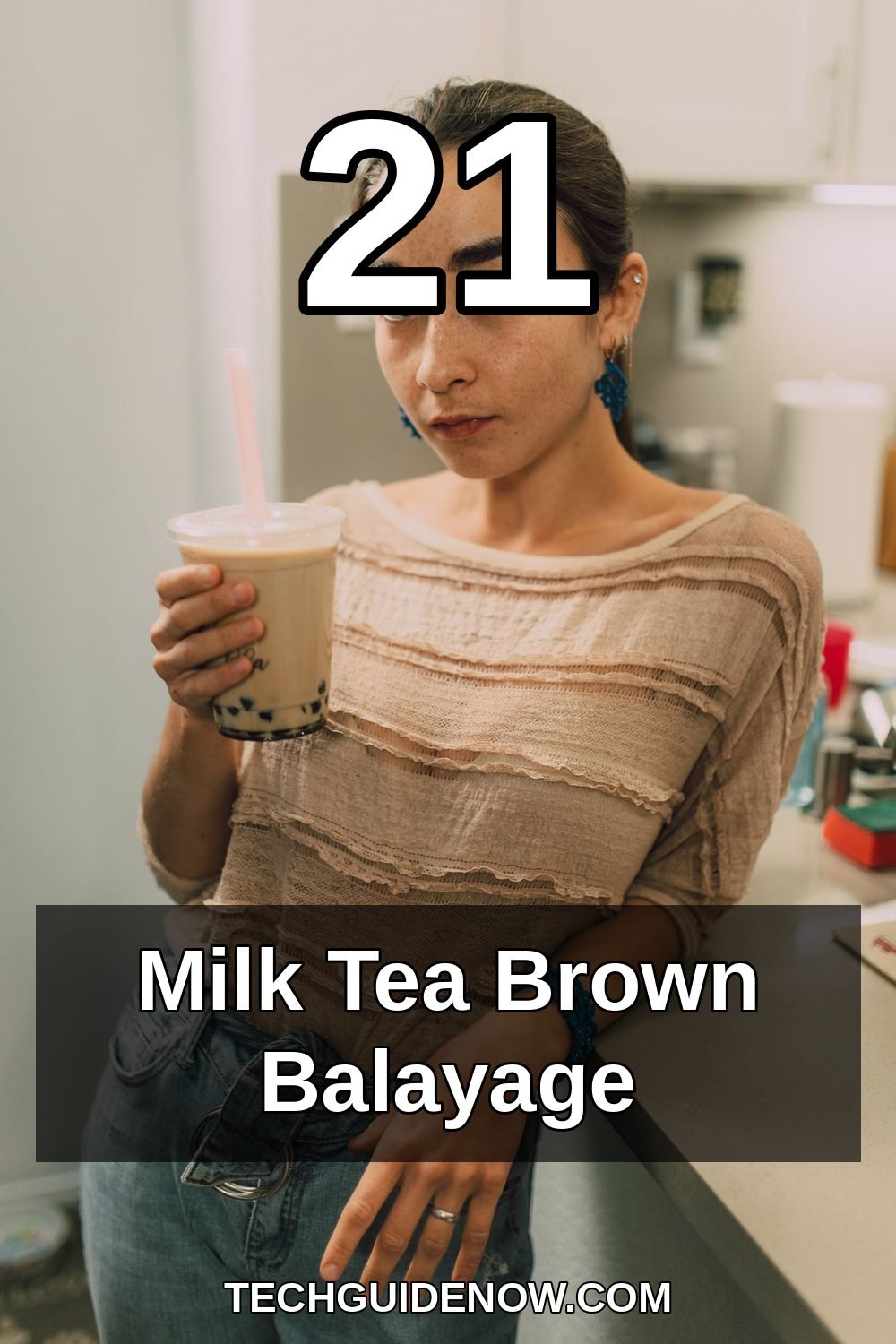
Love this look? Save this milk tea brown balayage guide on Pinterest.

Want a caption for your own pin? Try our free Pinterest Caption & Pin Generator to create a caption for your milk tea brown look in seconds.
If you are torn between two soft browns, our teddy brown hair color ideas for women will help you choose. And when you are ready for a soft winter brown, save this guide and show your colourist the look you love. Follow Nova Fashion on Pinterest for more winter hair ideas.