
If you have long hair, you already know that winter is the hardest season for it. Your winter hair care routine for women with long hair has to deal with dry ends, tangles under coats, static that makes every strand stand on end, and a scalp that seems to flake the moment the heating comes on. In summer your hair practically takes care of itself. In winter it needs a routine — a real one, with a wash day that works, a plan for protecting the ends, and a weekly treatment that actually gets done. This is that routine, written the way I would explain it to a friend over coffee: honest, practical, and built around the five steps that matter most.
The good news is that long hair is forgiving in one important way. Unlike a bob, which shows every flaw, long hair can hide a bad day in a braid or a bun. But hiding is not caring, and by February the damage shows: split ends creeping up the length, a dullness that no shine spray can fix, and breakage every time you brush. Follow this routine and your hair will come out of winter in better condition than it went in — which is more than most of us can say.

Step 1: Why Winter Hurts Long Hair
Long hair has more surface area to dry out, more length to tangle, and ends that are often two or three years old. Those ends have survived hundreds of washes, countless brush strokes and several summers of sun — and winter is the season that finally pushes them over the edge. Understanding why helps you stop blaming your shampoo and start fixing the real causes.
Dry Ends
The ends of long hair are the oldest part of your hair, and they are the furthest from the scalp’s natural oils, which never travel all the way down a long length. In winter, cold dry air and indoor heating pull even more moisture out of those ends, leaving them rough, frizzy and prone to splitting. That is why your hair can feel fine at the roots and like straw at the ends. The answer is not to wash more — it is to protect the ends with moisture and to keep them away from the things that dry them out, like wool scarves and coat collars.
Real-life example: Run your fingers down a strand of your hair. If the last few inches feel rougher than the rest, those ends are dehydrated. A pea-sized amount of hair oil or a leave-in conditioner smoothed over just the ends, every morning, will make a visible difference within a week. It is the single cheapest, fastest improvement in this whole routine.

Tangles and Static
Winter creates tangles in two ways. First, dry hair is rougher, so the strands catch on each other instead of sliding past. Second, everything you wear in winter — wool coats, chunky scarves, high collars — rubs against the length of your hair all day, matting it into knots at the nape of your neck. Add static, which makes the hair fly apart and then cling together in the wrong places, and you have a recipe for a daily battle with your brush. The fix is part product and part habit: smoother fabrics, a silk pillowcase, and a detangling routine that works with the hair instead of against it.
Real-life example: If you always get a knot at the nape of your neck, your scarf is probably the culprit. Try wearing your hair in a low loose braid under your coat, or tucking the length inside your coat so it is not rubbing against the scarf. It looks just as good, and you will spend far less time picking knots out in the evening.

Step 2: Washing Less, Conditioning More
This is the step that changes everything for long hair in winter. Most women wash too often and condition too little, and winter punishes both mistakes. Washing strips the oils your hair needs; conditioning replaces the moisture it has lost. Flip the balance — wash less, condition more — and your hair will be softer, shinier and far less tangled within two weeks.
Wash-Day Routine
Wash your hair two or three times a week in winter, not every day. On wash day, wet the hair with lukewarm water — never hot, which strips the scalp and roughs up the cuticle. Shampoo the scalp only, massaging with your fingertips, and let the lather run down the length as you rinse. Then condition generously from the ears down, and leave it on for three to five minutes while you finish your shower. That extra time matters: conditioner needs a few minutes to actually penetrate the hair shaft, and most of us rinse it out far too fast.
Real-life example: If your hair feels greasy at the roots on day two, try dry shampoo at the roots instead of washing again. Spray it on, wait a minute, then brush it through. Your hair will look freshly washed, and you will have saved your ends another round of shampoo and hot water. It takes a little practice, but it is worth it.

Conditioning More
In winter, your conditioner is doing the heavy lifting, so treat it like the most important product in your routine — because it is. Use more than you think you need on the length and ends, and consider adding a leave-in conditioner after every wash. A leave-in seals in the moisture from the shower and protects the hair from the dry air outside. If your hair is very dry, try the reverse-wash method once a week: condition first, then shampoo the scalp only. It sounds odd, but it leaves the ends softer without making the roots greasy.
Real-life example: The ends of your hair are thirsty in winter, so give them a drink. Once a week, smooth a little extra conditioner or a hair mask over the last few inches only, and leave it on while you do the rest of your shower. Rinse it out last. That tiny habit — five minutes, once a week — is often the difference between ends that split and ends that survive the winter.

Step 3: Protecting Ends Under Coats
This is the step most long-haired women skip, and it is the one that saves the most hair. Your ends spend all day rubbing against your coat collar, your scarf and the back of your chair. Every rub roughs up the cuticle a little more, and by the end of winter the last few inches are frayed beyond saving. Protecting the ends is not about vanity — it is about keeping the length you have worked so hard to grow.
Ends Under the Coat
The simplest protection is also the most effective: keep your ends inside your coat. Tuck the length of your hair inside your coat collar before you zip up, or wear it in a low loose braid that sits inside the coat rather than hanging outside it. A braid is better than a ponytail here, because a ponytail still swings and rubs, while a braid keeps the hair contained. If you wear your hair down, at least pull it forward over one shoulder so it is not trapped between your back and your coat all day.
Real-life example: Think of your coat as a windbreak for your hair, not just for your body. On a windy day, hair left loose outside a coat whips around, tangles and dries out. The same hair tucked inside the coat stays smooth and warm. It takes five seconds to tuck it in, and it saves you ten minutes of detangling later.

Scarves and Collars
Scarves are the worst offenders for long hair, because wool and acrylic catch on the hair cuticle and create friction with every turn of your head. Choose a scarf with a smooth lining, or wear a silk scarf underneath your wool one — it looks chic and your hair will slide instead of snag. High coat collars do the same damage at the nape, so if your coat has a rough collar, consider a silk scarf as a buffer between the collar and your hair. Small changes, big difference.
Real-life example: If you love a particular chunky wool scarf, you do not have to give it up. Just wear your hair in a low braid on scarf days, so the scarf rubs the braid instead of loose hair. A braid distributes the friction across the whole plait, and the ends are tucked safely away at the bottom.

Step 4: Detangling Without Breakage
Detangling is where most long hair gets damaged in winter, because dry, tangled hair breaks far more easily than healthy hair. Yanking a brush through a knot does not remove the knot — it snaps the hair. The right technique takes a few minutes longer, but it is the difference between keeping your length and losing it a few strands at a time, every single day.
The Right Brush
Use a wide-tooth comb on wet hair and a flexible paddle brush or a detangling brush on dry hair. Never use a fine-tooth comb on long hair, and never brush wet hair with a stiff brush — wet hair stretches and snaps far more easily than dry hair. Keep a small detangling brush in your bag for midday touch-ups, and clean your brushes regularly: product build-up on the bristles makes them drag, which causes more breakage.
Real-life example: If your brush is full of broken hairs, the brush is not the problem — the technique is. Try this: hold the section of hair above the knot with one hand, so you are not pulling on the roots, and work the knot out from the bottom up with the other hand. It feels slow at first, but you will be amazed how much less hair ends up in the brush.

Detangling Step by Step
Here is the routine. First, finger-comb the hair to find the worst knots. Second, apply a little leave-in conditioner or detangling spray to the tangled sections. Third, hold each section above the knot and work it out from the ends upward, a little at a time. Fourth, once the knots are out, brush through gently from the roots to the ends. Do this every evening, not just on wash day, and your hair will be far easier to manage in the morning. Never detangle in a rush — that is when the breakage happens.
Real-life example: The evening detangle is the most underrated habit in long-hair care. Five minutes before bed, with a little leave-in on the ends, means you wake up with hair that is already mostly smooth. Skip it, and you wake up with a night’s worth of tossing and turning compressed into a single knot at the back of your head.

Step 5: Weekly Treatments
A weekly treatment is the deep-conditioning step that keeps long hair healthy through winter. It is not a luxury; it is maintenance, like oiling a door hinge. Once a week, give your hair twenty minutes of real moisture, and it will repay you with shine, softness and far fewer split ends.
Hair Mask
Choose a rich hair mask — not a light conditioner, but a proper mask — and apply it generously from the ears down, never on the scalp. Leave it on for at least twenty minutes, longer if you can. For a deeper treatment, wrap your hair in a warm towel or a shower cap while the mask works; the gentle heat helps it penetrate. Rinse with cool water to seal the cuticle. Do this every week without fail, and by spring your hair will feel like a different head of hair.
Real-life example: The best time for a hair mask is a Sunday evening, when you are not in a rush. Apply it, put on a shower cap, and do something relaxing for half an hour. It feels like a treat, but it is actually the most practical thing you can do for your hair all week. If you only do one thing from this whole article, make it this.

Split-End Prevention Checklist
Split ends are the enemy of long hair, and winter is their favourite season. Once a hair splits, the split travels up the shaft unless it is cut off — so prevention is everything. Run through this checklist once a week and your ends will stay intact far longer. First, keep the ends moisturised with a leave-in or a drop of oil every day. Second, never brush dry, tangled hair without a detangling product. Third, sleep on a silk or satin pillowcase, or in a loose braid, so the hair is not rubbing against cotton all night. Fourth, trim the very ends every eight to ten weeks, even if you are growing your hair — a tiny dusting removes splits before they travel. Fifth, keep heat styling to a minimum, and always use a heat protectant when you do style.
Real-life example: Check your ends in bright light once a month. Hold a small section up and look at the tips. If you see tiny white dots or little forks, those are splits starting. A quick dusting at the salon — just a few millimetres — will remove them before they climb. Waiting until the splits are obvious means losing centimetres instead of millimetres.

What to Avoid
A few habits quietly undo all the good work of a long-hair routine in winter. Washing with very hot water strips the scalp and roughs the cuticle, making the whole length look dull. Brushing wet hair with a stiff brush snaps it. Tight ponytails and buns pull at the same spot every day, causing breakage where the elastic sits. And skipping trims to save length always backfires, because split ends travel upward and you end up losing more length than a trim would ever have taken. If your hair is misbehaving, the answer is almost never a new product. It is usually a gentler habit, plus a trim.
Real-life example: The tight high ponytail is the most common cause of breakage I see in long hair. The elastic sits in the same place every day, and the hair snaps there. Switch to a loose low ponytail or a braid, use a soft fabric scrunchie instead of a thin elastic, and vary where you tie it. Your hair will be noticeably fuller at the tie point within a month.

Frequently Asked Questions
Here are the questions long-haired women ask me most often about winter hair care, answered honestly.
How often should I wash long hair in winter?
Two or three times a week suits most long hair in winter. If your scalp gets oily quickly, use dry shampoo on the in-between days rather than washing again. And remember that the ends do not need shampoo at all — the lather running down the length as you rinse is enough to clean them.

Should I trim my hair in winter if I am growing it?
Yes — a small dusting every eight to ten weeks is the fastest way to grow long hair, because it stops split ends travelling up and forcing a big cut later. Tell your stylist you are growing it and ask for the smallest possible trim. You will keep your length and your ends will look healthy, which makes the hair look longer, not shorter.

What is the best way to sleep with long hair in winter?
In a loose braid on a silk or satin pillowcase. The braid keeps the hair from tangling overnight, and the silk reduces friction so you wake up with far fewer knots. Never sleep with wet hair, and avoid tight buns for sleeping — they pull at the roots all night and cause breakage at the hairline.
Long hair in winter is not about buying more products or spending more time. It is about five simple steps, done consistently: wash less and condition more, protect the ends under your coat, detangle gently, treat weekly, and trim on time. Do those five things and your winter hair care routine for women with long hair will carry your length through the coldest months in better condition than it started. If you found this helpful, take a look at our guide to winter hair care for dry, damaged hair next — the two routines work beautifully together. And for more winter hair ideas, follow Nova Fashion on Pinterest, where we share new looks every day.
Save this for later on Pinterest!
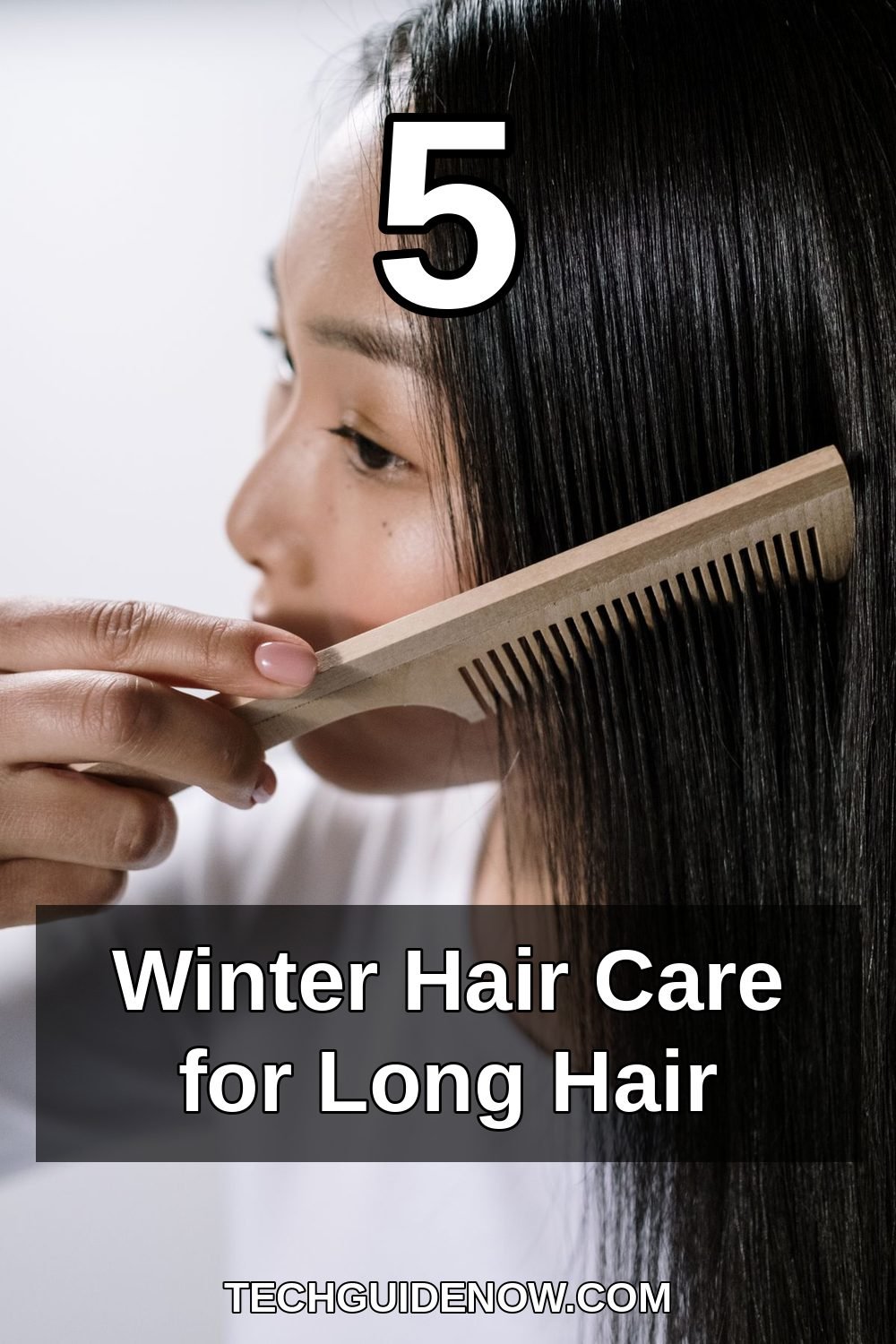
Want a caption for your own pin? Try our free Pinterest Caption & Pin Generator to create a caption for your winter long-hair look in seconds.
A final word, friend to friend: the best winter hair care routine for women with long hair is the one you will actually do. You do not need to buy ten new products or spend an hour on your hair every morning. Start with the three habits that make the biggest difference — washing less and conditioning more, tucking your ends inside your coat, and a weekly hair mask — and add the rest once those feel natural. Give the routine two weeks before you judge it, because hair needs time to recover from months of dry air and rough treatment. You will notice the change first at the ends, which will feel softer and look smoother, and then along the length, which will tangle less and shine more. Keep a little bottle of leave-in conditioner and a wide-tooth comb in your bag, keep your trims booked, and be gentle with your hair on the coldest days. Winter is long, but it does not have to be hard on your hair. Treat it kindly, protect the ends, and by the time spring arrives you will have the length you worked for — healthy, shiny and ready for whatever the new season brings.