
Some haircuts never really leave. They just wait for the right winter, the right coat, the right red lipstick — and then they are everywhere again. The retro bob is having that moment right now. Flipped ends, soft volume, a little old-Hollywood polish: retro bob hairstyles for women this winter are the chicest cut of the season, and they suit almost everyone. If you have been thinking about going shorter, or if your bob has grown out and lost its shape, this is your sign. The retro bob is back, and it is better than you remember it.
What makes this bob feel so right for winter? For one thing, it sits above your coat collar, so it never gets squashed by a scarf or tangled in a zip. It frames your face beautifully under a beanie, it looks polished with almost no effort, and it has a way of making the simplest outfit — a roll-neck, a wool coat, a pair of boots — look like you planned it for hours. A retro bob is the haircut equivalent of a perfectly tailored coat: it does the work for you.
In this guide I will explain what makes a bob retro, how flipped ends differ from soft curls, which length suits your face, and how to style it with rollers and a round brush at home. Then we get to the nineteen looks: one for every occasion, from work to parties to lazy Sundays. Find yours, save it, and book the cut.
What Makes a Bob “Retro”?
A bob becomes retro when it borrows its shape from another decade. The fifties gave us the flipped bob, with ends that kick outwards and a neat, polished finish. The sixties gave us volume at the crown and a swingy, geometric line. The seventies softened everything into feathered ends and face-framing layers. What they all share is intention: a retro bob is never accidental. It has a clear shape, a clean line and a finish that looks deliberate, whether that finish is a sharp flip or a soft curl.
The details are what sell it. A deep side part, a little volume at the roots, ends that turn under or out on purpose, and a shine that says you used a serum and a round brush, not just a towel. Modern retro bobs are softer than the originals — nobody is setting their hair in pin curls overnight any more — but the spirit is the same. It is a haircut with manners: neat, flattering and quietly confident.

Flipped Ends vs Soft Curls
The two classic retro bob finishes are flipped ends and soft curls, and choosing between them changes the whole mood of the cut. Flipped ends are the playful one: the ends kick outwards, away from the face, giving the bob a swingy, sixties energy. They suit straight hair beautifully, because the flip is just a flick of the round brush, and they look fantastic with a headband or a pair of statement earrings. If you want your bob to feel fun and a little bit cheeky, flip the ends.
Soft curls are the romantic one. The ends turn under, the length bends in gentle waves, and the whole shape looks like old Hollywood — think of the polished curls in black-and-white films. Curls suit wavy and thick hair, because the hair already wants to bend, and they soften a strong jaw or a square face. You can have both, by the way: many women flip the front sections out and curl the back under, which gives the bob movement from every angle.

Lengths: Chin vs Jaw
The difference between a chin-length bob and a jaw-length bob is only an inch or two, but it changes everything about how the cut sits. A chin-length bob is the classic: it ends right at the chin, it shows off your jawline, and it has enough length to flip or curl. It suits most face shapes, and it is the easiest retro bob to grow out, because the next stop is a lob and the in-between stage still looks good.
A jaw-length bob is shorter, sharper and bolder. It ends at the jaw, it makes your cheekbones look higher, and it has a graphic, almost architectural quality. It suits oval and heart-shaped faces best, and it is the one to choose if you want your bob to be the first thing people notice. The trade-off is maintenance: a jaw-length bob needs a trim every four to six weeks to keep its line, while a chin-length bob forgives an extra week or two.

Styling with Rollers and a Round Brush
Retro bobs are styled, not just cut, and the good news is that the styling is simple once you know it. Start with damp hair and a little mousse at the roots. Rough-dry until your hair is about eighty per cent dry, then take a medium round brush and work in sections. For a flipped finish, roll the brush outwards at the ends and hold the heat for a few seconds. For a curled-under finish, roll the brush inwards instead. The direction of the brush is the whole difference, and it takes about two minutes to learn.
Rollers are the retro secret weapon. After blow-drying, set the top and side sections in large Velcro rollers while the hair is still warm, and leave them in while you do your makeup. Ten minutes is enough. Take them out, brush through gently with your fingers, and you will have volume and a soft bend that lasts all day. If you are in a hurry, skip the rollers and use the cold-shot button on your dryer instead: cold air sets the shape, and a shape set cold stays put.

Which Retro Bob for Your Face Shape
Face shape is where a retro bob really earns its keep, because small changes in length and parting flatter different faces. A round face looks best with a chin-length bob and a deep side part, which adds height at the crown and length beside the cheek. Keep the ends flipped out rather than curled under, because the outward flick draws the eye down and makes the face look longer. Avoid a centre part with a very short bob if your face is round — it can make the width the first thing people see.
A long face loves the opposite: width at the cheekbones and a fringe or soft bangs to shorten the forehead. A jaw-length bob with curled-under ends is perfect here. A square face softens under soft curls and a side part, which breaks up the strong jawline. An oval face can wear any of them, so choose by mood: flipped for fun, curled for glamour. And a heart-shaped face, with a wider forehead and a narrower chin, looks lovely with volume at the ends, which balances the top half of the face.

19 Retro Bob Hairstyles for Women This Winter
Now for the looks. Below are nineteen retro bob hairstyles for women this winter, from the classic flipped bob to the softest old-Hollywood curl. Each one uses the cut and the styling above, so pick the version that matches your face, your hair and your morning, and save it before you forget it.
1–2. The Classic Flipped Bob and the Soft Curled Bob
1. The Classic Flipped Bob. The flipped bob is the original retro bob: chin length, a deep side part, and ends that kick outwards with attitude. It suits straight hair best, and it looks wonderful with a headband, a beret or a pair of gold hoops. Style it with a round brush, flicking the ends out, and finish with a light-hold spray. It is the bob to wear to a party, because it moves when you dance and it photographs from every angle.
2. The Soft Curled Bob. The soft curled bob turns the ends under and bends the length into gentle waves. It is the most romantic version in this guide, and it suits wavy hair and thick hair, because the hair already wants to curl. Use a large round brush or a curling iron on the ends only, then brush through with your fingers so the curls soften into waves. Pair it with a red lip and a wool coat and you have instant old-Hollywood polish.

3–4. The Chin-Length Retro Bob and the Jaw-Length Retro Bob
3. The Chin-Length Retro Bob. This is the workhorse of retro bobs. It ends at the chin, it frames the jaw, and it is long enough to tuck behind one ear, which instantly changes the look from polished to casual. It suits almost every face shape, it grows out gracefully, and it takes about ten minutes to style. If you have never had a bob before, start here — it is the least scary and the most flattering version of all.
4. The Jaw-Length Retro Bob. Shorter, sharper and bolder, the jaw-length retro bob ends right at the jawline and makes your cheekbones the star of the show. It has a graphic, sixties quality, especially with a centre part and a little volume at the crown. It needs a trim every four to six weeks, but in return it gives you a haircut that looks deliberate from the moment you wake up. Wear it with a roll-neck and a statement coat.

5–6. The Retro Bob with Bangs and the Side-Part Retro Bob
5. The Retro Bob with Bangs. Add a straight fringe or soft curtain bangs to a retro bob and the whole cut changes character. A straight fringe gives you a sixties, almost mod feeling, and it is perfect for a long face. Curtain bangs are softer: they part in the middle and blend into the bob, framing the eyes without hiding them. Either way, keep the fringe dry and styled first — bangs set the tone for the rest of the bob.
6. The Side-Part Retro Bob. A deep side part is the easiest way to make a bob feel retro. It adds volume at the crown, it gives the bob an asymmetric sweep, and it suits round and square faces because it breaks up the symmetry. Blow-dry the hair away from the part with a round brush, tuck the shorter side behind your ear, and let the longer side fall forward. It is a five-minute style that looks like a salon finish.

7–8. The Voluminous Retro Bob and the Sleek Retro Bob
7. The Voluminous Retro Bob. Some retro bobs are all about volume. This one uses rollers, mousse and a round brush to build height at the crown and fullness at the sides, until the bob has a soft, rounded silhouette. It suits fine hair surprisingly well, because short hair lifts more easily than long hair, and it is the version to choose for a wedding or a winter party, when you want your hair to be noticed from across the room.
8. The Sleek Retro Bob. The sleek retro bob is the opposite: smooth, shiny and precise, with ends that turn under in one clean line. It is the most office-friendly version in this guide, and it looks expensive with very little effort — a flat iron, a shine serum and a good cut are all you need. It suits straight hair best, and it is the bob to choose if you like your hair to look polished rather than playful.

9–10. The Wavy Retro Bob and the Curly Retro Bob
9. The Wavy Retro Bob. Wavy hair and a retro bob are a natural match. Let your waves do the work: scrunch in a little mousse, diffuse on low heat, and let the ends bend where they want to. The result is a soft, lived-in bob that looks like you spent an hour on it and actually took ten minutes. It suits every face shape, and it is the most forgiving version in the guide, because a little mess only makes it look better.
10. The Curly Retro Bob. A curly retro bob is pure joy: short, bouncy curls that frame the face and move when you move. The trick is to cut it dry, so the curls fall where they actually live, and to use curl cream rather than a brush. Diffuse on low heat, shake the roots, and never brush it dry. It suits round and heart-shaped faces beautifully, and it is the bob with the most personality in this whole guide.

11–12. The Retro Bob with a Headband and the Retro Bob with a Beret
11. The Retro Bob with a Headband. A headband is the fastest way to make a retro bob feel intentional. A slim velvet band keeps the front sections back and shows off the bob’s clean line, while a wide padded band gives you a sixties, almost mod feeling. It also solves the growing-out fringe problem in one move, and it keeps the hair off your face on windy winter days. Choose a band that matches your coat and you have a whole outfit, not just a hairstyle.
12. The Retro Bob with a Beret. Nothing says winter like a beret, and a beret loves a bob. Wear the beret tilted to one side, let the bob’s ends peek out underneath, and keep the front sections soft around the face. The combination is pure Paris in January, and it works with a wool coat, a trench or a puffer. The trick is to put the beret on after you have styled the bob, not before, so you do not squash the volume you just built.

13–14. The Old-Hollywood Retro Bob and the Sixties Swing Bob
13. The Old-Hollywood Retro Bob. This is the most glamorous retro bob in the guide: deep waves, a side part and a shine you can see across the room. Set the hair in large rollers, brush the waves out with a soft brush until they fall into one smooth wave, and finish with a shine spray. It is the bob for a winter wedding, a gala or any evening when you want to look like you stepped out of a film — and it is easier than it looks, because the rollers do most of the work.
14. The Sixties Swing Bob. The sixties swing bob is all movement: a geometric line, volume at the crown and ends that swing when you turn your head. It suits straight hair best, and it looks wonderful with a bold eyeliner flick and a shift dress. Blow-dry it with a round brush, turning the ends under, and add a little backcombing at the crown for height. It is the bob with the most energy in this guide, and the one that gets the most compliments.

15–16. The Retro Bob for Work and the Retro Bob for a Party
15. The Retro Bob for Work. For work, a retro bob should be polished, neat and out of your way. The sleek version with curled-under ends is ideal: it looks professional, it stays put through a long day, and it frames your face beautifully on video calls. Keep a small brush in your desk drawer for a quick midday refresh, and tuck one side behind your ear when you need to look extra sharp. It is the bob that says you mean business, without saying a word.
16. The Retro Bob for a Party. For a party, go bigger. Add rollers to the top sections, flip the ends out, and finish with a light-hold spray and a pair of statement earrings. A retro bob with flipped ends and a red lip is the winter party look that never fails, and it photographs beautifully under fairy lights. It also survives dancing, which is more than you can say for most party hairstyles — so you can enjoy the evening instead of babysitting your hair.

17–18. The Retro Bob with Highlights and the Dark Retro Bob
17. The Retro Bob with Highlights. Highlights make a retro bob look dimensional, because every layer catches the light differently. Soft, face-framing highlights are the safest choice: they brighten the bob without changing its character, and they grow out gracefully. Ask your colourist for a few lighter pieces around the face and through the ends, and keep them warm — golden or honey tones suit the retro mood far better than icy ones, especially in winter light.
18. The Dark Retro Bob. A dark retro bob — deep brunette or soft black — is the most dramatic version in the guide. The dark colour makes the shape itself the star: the line, the shine, the swing. It suits almost every skin tone, it looks expensive with very little effort, and it pairs beautifully with a red lip and a camel coat. Keep it glossy with a shine serum and a weekly mask, because dark hair shows dullness faster than any other colour.

19. The Retro Bob with Soft Waves
19. The Retro Bob with Soft Waves. Our final look is the softest of all: a chin-length bob with gentle waves through the length, a centre part and ends that turn under just slightly. It is the bob for you if you want retro without the drama — romantic, easy and flattering on everyone. Style it with a large curling iron on the mid-lengths only, brush through with your fingers, and finish with a texture spray. It works for work, for weekends and for everything in between, and it is the perfect note to end on. If you try only one look from this guide, make it this one — and then, when you are ready, try the flip.

How to Keep Your Retro Bob Looking Polished All Winter
A retro bob is a precision cut, and precision needs upkeep. Book a trim every four to six weeks, because even half an inch of growth changes the line of a bob. Between appointments, keep the ends healthy with a weekly mask and a drop of oil on the ends, and protect the shape from your coat collar by tucking the hair inside your scarf rather than letting the collar crush it. A silk pillowcase helps too: it stops the ends from kinking overnight, so you wake up with the shape you went to sleep with.
On hat days, wear your beanie a little loose and a little further back, and revive the bob afterwards with a quick blast of dry shampoo at the roots and a flick of the round brush on the front sections. If your bob starts to look tired by Friday, a set of Velcro rollers while you do your makeup will bring the whole shape back to life in ten minutes. Small habits, sharp bob — that is the whole secret, and it is what keeps a retro cut looking salon-fresh between appointments.
Retro Bob Hairstyles for Women This Winter: FAQs
How often should I trim a retro bob?
Every four to six weeks if you want to keep the line sharp, especially for a jaw-length bob. A chin-length bob forgives a little more, and you can stretch it to eight weeks if you are growing it out. The moment the ends start to flip in different directions on their own, it is time to book — and if you are not sure, ask your stylist to show you where the line should sit, so you can judge it yourself next time.
Can I style a retro bob without heat?
Yes, with rollers. Set damp hair in large Velcro rollers, let it dry naturally or with a diffuser on low, and take the rollers out once the hair is completely dry. You will get soft volume and a gentle bend with no hot tools at all. A little mousse before you roll, and a light spray after, is all you need — and your hair will thank you for the break from the heat, especially in dry winter air.
If you love a bob with a flick, do not stop here. Our guide to flipped bob hairstyle ideas for winter has even more ways to wear the flip, from subtle to dramatic, and it pairs beautifully with everything in this guide.
Save this pin:
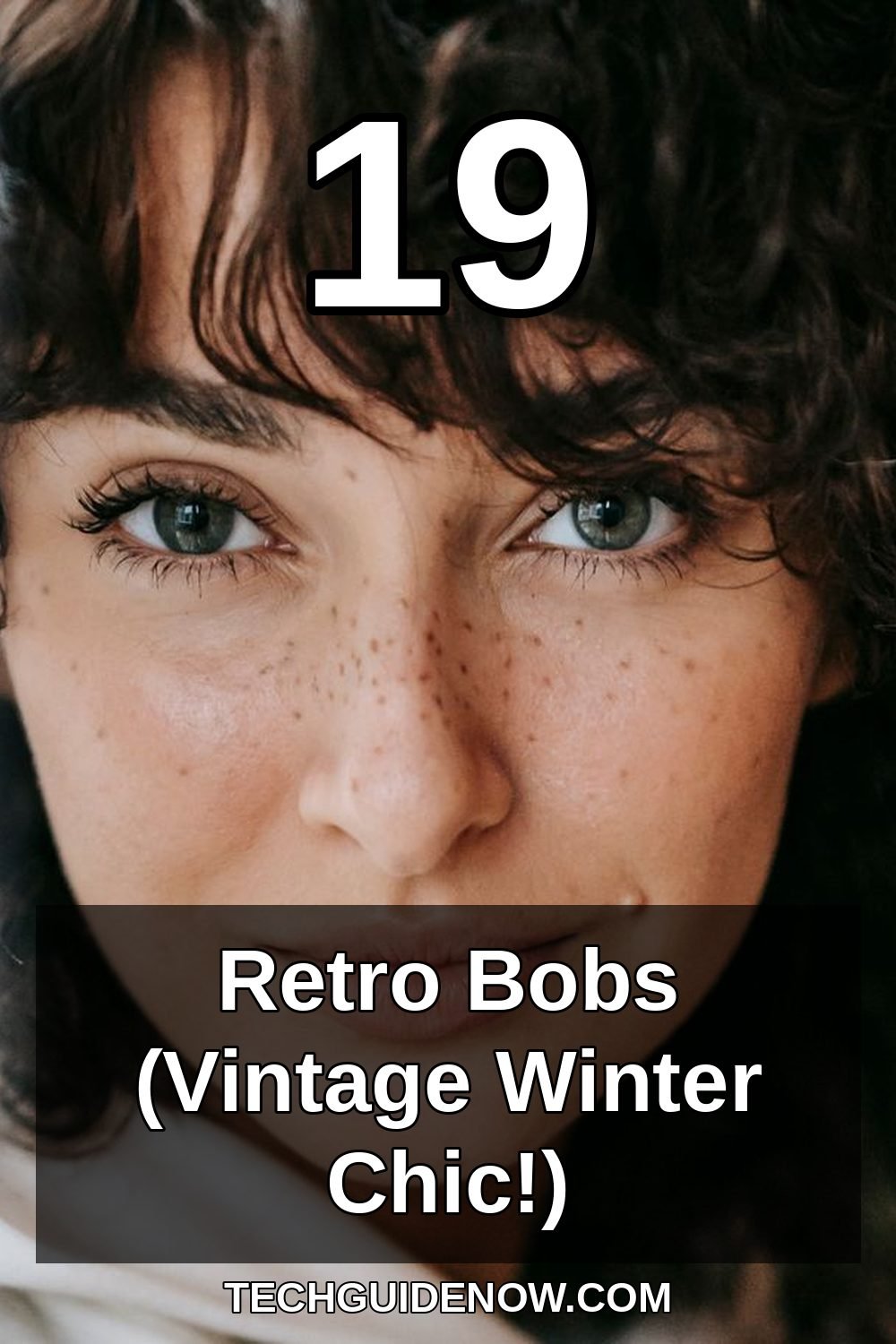
Love this look? Save it on Pinterest and try the free Pinterest Caption & Pin Generator to create your own pin caption in seconds.

Follow Nova Fashion on Pinterest for more winter hair ideas, and tell us in the comments which retro bob you are trying first — and which decade you are channelling.