
There is a haircut that walks into the room before you do, and this winter it is the power bob. If you have been looking for power bob haircut ideas for women this winter, you have found the right place: the power bob is winter 2026’s sharpest cut, a strong blunt line that says you mean business before you have said a word. It is the haircut of women who run meetings, close deals, raise families and still make it to the salon on time — polished, deliberate and completely unbothered by the cold.
The appeal is simple. A power bob is short enough to feel modern and long enough to feel feminine, and it works with a coat, a scarf and a wool hat without falling apart by lunchtime. It frames the face, sharpens the jawline and makes even a plain black roll-neck look intentional. In this guide you will find 14 power bob haircut ideas for women, plus honest advice on partings, fine and thick hair, five-minute sleek styling and the grow-out — everything you need before you sit in the stylist’s chair.

What a Power Bob Is
A power bob is a blunt bob cut with conviction. It sits somewhere between the jaw and the shoulder, it is cut to one clean length with no graduation at the back, and the ends are left deliberately heavy so the outline reads as a single strong line. There is no wispy layering to hide behind and no softening to apologise for the shape. That is the whole point. Where a soft bob whispers, a power bob states its case, and the result is a cut that looks expensive even when the rest of your outfit is simple.
The cut has been around in one form or another for a century, but the winter 2026 version is sharper and more wearable than the versions that came before it. Stylists are cutting it slightly longer than the classic chin bob, which means it still tucks behind the ears, still goes into a tiny low ponytail on gym days, and still looks good when a beanie has flattened it. If you love the idea of a jet black blunt bob, think of the power bob as its confident older sister: same blunt DNA, more versatility, and a shape that works on far more hair types than people expect.
The Cut, Explained
Ask your stylist for a one-length bob with a blunt perimeter, cut dry or finished dry so the line is exact. The back should sit at the same length as the front, or a fraction shorter — never stacked, never graduated, never thinned out at the ends. The interior can carry a whisper of invisible layering to stop very thick hair from puffing out into a triangle, but the outline must stay solid. Bring a photo of the exact length you want, because “bob” means chin-length to one person and shoulder-length to another, and a picture removes all doubt. A good stylist will also check how your hair falls naturally before cutting, since a power bob lives or dies on its line, and a line cut against the hair’s natural fall will never sit straight.
Why the Power Bob Works in Winter
Winter is the power bob’s natural season. Long hair spends December trapped under coats, caught in scarves and frizzing in the damp, while a bob sits neatly above the collar and keeps its shape all day. The blunt ends hold up to static far better than layered ends, which fly away the moment you take a hat off, and the shorter length means less time with a hairdryer on dark mornings. It also pairs beautifully with winter’s best textures: a camel coat, a cashmere roll-neck, a wool scarf and a pair of gold hoops are all the styling a power bob needs. Add a deep red lip and the whole look reads intentional, even if you got dressed in six minutes.

The 14 Power Bob Haircut Ideas for Women
Fourteen ways to wear the cut, from the purest classic to the boldest statement. Some are about length, some are about the parting, and some are about the finish — but every one of them keeps the blunt line that makes a power bob a power bob. Save the ones you love and show your stylist the whole list, not just one photo: a good stylist will mix two or three of these ideas into a version that fits your face, your hair and your life.
Looks 1–5: The Sharp Classics
The first five are the foundation of the whole trend. They are the versions that work on almost everyone, photograph beautifully, and never look dated, because they rely on the cut itself rather than on styling tricks. If you are getting a power bob for the first time, start here. The jaw-length classic is the safest entry point, the chin-length version is the boldest of the five, and the glass-hair finish is the one to ask for if you want the sharpest possible line. These are also the easiest to grow out, because the shape is so clean that every stage of the grow-out still looks deliberate.

Looks 6–10: Soft Power
Not every power bob has to be severe. The middle five looks soften the line just enough to make the cut feel friendly: a curtain bang here, a textured end there, a version cut specifically for fine hair that needs all the help it can get. These are the power bobs for women who love the idea of a blunt cut but want to keep a little movement in it, and they are the best choices if your hair has a natural wave you would rather work with than fight. The trick is to soften the styling, never the cut itself — keep the blunt perimeter and let the softness come from how you finish it.

Looks 11–14: The Statement Finishes
The last four are for women who want their haircut to be the outfit. An undercut nape, a micro fringe, an asymmetrical line or an old-money finish turns the same blunt bob into something people remember. These versions need a stylist you trust and a little more upkeep — the undercut needs re-shaving every few weeks and the micro fringe needs regular trims — but the payoff is a cut that looks completely your own. If your style is already bold, these are the looks that will feel most like you.

- The Classic Jaw-Length Power Bob. The original and still the best: one clean length, jaw-skimming, centre or side part, ends like a ruler. It suits oval, square and heart faces and looks razor sharp with a black coat.
- The Chin-Length Blunt Bob. Shorter, bolder and impossible to ignore. This one sharpens the jawline instantly and shows off earrings, so wear your best hoops with it.
- The Power Bob With a Middle Part. Perfectly symmetrical, perfectly polished. The middle part makes the blunt line look even stronger, and it is the most boardroom-ready version of the cut.
- The Power Bob With a Deep Side Part. All the drama, all on one side. The deep side part adds volume at the crown and a sweeping fringe effect without cutting a single bang.
- The Sleek Glass-Hair Power Bob. Straightened to a mirror shine with a flat iron and a drop of serum. The glass finish is the power bob at its most glamorous, and it photographs like a dream.
- The Power Bob With Curtain Bangs. A soft, face-framing fringe that takes the edge off the blunt line. Ideal if you want the power bob but worry a one-length cut will feel too severe.
- The Textured-End Power Bob. The outline stays blunt but the very tips are point-cut for a feathered finish. You keep the strong shape and gain movement, which is a good compromise for wavy hair.
- The Power Bob for Fine Hair. Cut dead straight with zero thinning, because fine hair needs every strand it has. The blunt ends make fine hair look twice as thick.
- The Power Bob for Thick Hair. Invisible interior layers remove the bulk while the outline stays solid. Ask for the weight to come out underneath, never from the ends.
- The Asymmetrical Power Bob. Longer on one side by an inch or two, which gives a classic cut a modern edge. It works best with a deep side part and a sleek finish.
- The Power Bob With an Undercut Nape. A hidden undercut at the nape removes weight and adds a secret edge. Nobody sees it until you put your hair up — and then everyone does.
- The Shoulder-Grazing Power Bob. The longest version, just brushing the collarbone. It is the easiest power bob to tie back, the most forgiving grow-out, and the best choice if you are nervous about going short.
- The Power Bob With a Micro Fringe. A short, blunt fringe worn with a sharp bob is the most fashion-forward combination on this list. It needs confidence and a good brow, and it rewards both.
- The Old-Money Power Bob. Smooth, glossy and slightly tucked behind the ears, worn with a side part and a gold hoop. Quiet luxury in haircut form, and the most elegant version of all.
Power Bob + a Parting
The parting is the cheapest way to change a power bob, because it costs nothing and takes ten seconds. A middle part makes the cut look symmetrical, modern and a little bit strict, which is exactly right for work and for formal occasions. A side part softens the same cut, adds volume at the roots and gives you a sweep of hair across the forehead that works like a fringe. Most power bob wearers end up switching between the two depending on the day, and that flexibility is one of the reasons the cut is so popular.
The Middle Part: Clean and Modern
A middle part is the power bob’s natural partner. It shows off the symmetry of the blunt line, it suits oval and heart-shaped faces particularly well, and it looks best when the hair is sleek and straight. To get it right, part the hair while it is damp and use the tail of a comb, not your fingers, so the line is exact. If your hair has a strong natural part on one side, a middle part will need a little blow-drying to train it over the first two weeks, but it will learn. Keep the roots flat and the ends sharp, and let the symmetry do the talking.

The Deep Side Part: Instant Drama
If the middle part is the boardroom, the deep side part is the evening. Part the hair above the arch of one eyebrow and sweep the longer side across the forehead for instant volume, instant glamour and a shape that flatters round faces beautifully. A deep side part also rescues a power bob on flat-hair days, because the weight of the hair falling to one side creates lift at the crown without any teasing. Finish with a little texture spray at the roots and a shine spray on the lengths, and the whole thing looks like you spent an hour on it.
Power Bob for Fine vs Thick Hair
Here is the good news: the power bob works for both fine and thick hair, but the cutting technique is completely different, so tell your stylist which camp you are in before they pick up the scissors. Fine hair needs bluntness and density; thick hair needs invisible weight removal. Get the technique right and the cut looks effortless. Get it wrong and fine hair looks thinner than it is, while thick hair turns into a triangle. The advice below will help you ask for the right version.
Fine Hair: Density Without Weight
For fine hair, the power bob is genuinely transformative. One blunt length makes the ends look twice as thick, and the shorter length means your hair no longer gets dragged down by its own weight. Ask for absolutely no thinning scissors and no razoring, and keep the length at the jaw or just below it, where fine hair looks fullest. A root-lifting spray and a rough blow-dry upside down will give you all the volume you need, and a little dry shampoo on day two keeps it there. If you have ever been told your hair is too fine for a bob, the power bob is the answer to that.

Thick Hair: Taming the Triangle
Thick hair can absolutely wear a power bob, but it needs a stylist who understands internal layering. The weight has to come out from underneath the top layer, so the outside stays smooth and blunt while the inside stops the shape from widening at the ends. A slight bevel under at the ends helps the hair tuck in rather than flick out, and a smoothing cream on damp hair will keep frizz down in winter damp. Avoid the chin-length version if your hair is very thick and very straight, as it can look boxy; the jaw-length or shoulder-grazing versions are more forgiving. For more ideas on strong blunt shapes, see the polished espresso bob — the same blunt DNA in a rich, glossy colour.
Styling It Sleek in Five Minutes
The power bob’s reputation for being high-maintenance is mostly a myth. Yes, the glass-hair version takes a flat iron and ten minutes, but the everyday version takes five. The secret is to do the work while the hair is damp, because a blunt cut sets its shape as it dries. Work with your hair’s natural direction, not against it, and let the cut do most of the work. On a good hair day, all you need is a brush and a drop of serum.
The Five-Minute Sleek Routine
Start with damp hair and a pea-sized amount of smoothing cream, combed through from roots to ends. Rough-dry the hair until it is about eighty percent dry, then use a round brush or a flat brush to dry the front sections forward and under, which trains the ends to tuck in. A quick pass of the flat iron over the top layer and the ends is all the heat you need — never iron the whole head, or you will flatten the shape completely. Finish with a drop of shine serum smoothed over the surface and a light mist of flexible hairspray. If your hair is very straight already, you can skip the iron entirely and just brush it out.

Second-Day Power Bob
Day two is when the power bob really earns its keep. Sleep with your hair loose, not in a bun, so the blunt line does not kink overnight. In the morning, shake the roots with dry shampoo, brush through, and use a straightener for ten seconds on any ends that have flicked out. A silk pillowcase helps more than any product, because it stops the friction that roughs up blunt ends. If the ends have gone wavy from a scarf or a hat, a quick blow-dry with a brush puts them right in under a minute. And if all else fails, tuck one side behind your ear, add a gold cuff earring, and call it intentional.
The Grow-Out, Handled
Every bob grows out, and the power bob grows out more gracefully than most, because its line is so clean that each stage still looks like a choice. The awkward stage people fear — that in-between length where it is too long to be a bob and too short to be long hair — lasts about six weeks, and there are good ways through it. The key is to keep trimming the shape, not to abandon it: regular small trims keep the ends looking deliberate while the length increases.
The Grow-Out Plan
Once your bob reaches your shoulders, you have two good options. The first is to keep the blunt line and grow it into a lob, trimming the ends every eight weeks so the shape stays sharp as it lengthens. The second is to add long layers gradually, which softens the line and turns the bob into a layered cut over three or four appointments. Either way, book a trim every six to eight weeks and tell your stylist you are growing it out, so they take the minimum off the length and focus on keeping the shape tidy. A tiny trim is enough — you are maintaining the line, not restarting it.
Trims That Keep the Line
Between appointments, resist the urge to trim the ends yourself, because a blunt line shows every uneven snip. If the ends start to look straggly, a drop of serum and a smooth blow-dry will buy you another week. When you do go in for a trim, ask the stylist to dust the ends rather than cut a full length off, and to check the line from the back as well as the front. A power bob that is slightly longer on one side is the most common complaint after a home trim, and it is much harder to fix than to prevent. For a softer classic shape while you grow it out, the side-parted classic bob is a graceful next step.
Frequently Asked Questions About the Power Bob
Does a power bob suit a round face? Yes, especially with a deep side part or a slightly longer length. The side part creates a diagonal line that slims the face, and a jaw-length or shoulder-grazing version elongates it. Avoid a chin-length bob with a middle part if your face is very round, as the symmetry can widen it.
How often do I need a trim? Every six weeks is ideal, eight at the outside. The blunt line is the whole look, and it grows out visibly faster than a layered cut. A quick dusting trim keeps the ends looking sharp without losing length.
Can I wear a power bob with curly hair? You can, but ask for a stylist experienced with curls. The cut needs to account for shrinkage, and the ends may need to be cut slightly longer so the curls spring up to the right length. A textured-end version is usually the best choice for curly hair.
Is the power bob hard to style? No — it is one of the easiest short cuts to style. Five minutes with a brush and a dryer is enough on most days, and the cut holds its shape so well that second-day hair often looks better than first-day hair. The only version that takes real effort is the glass-hair finish, which needs a flat iron.

Save this look on Pinterest. Love this bob? Pin it for your next salon visit.
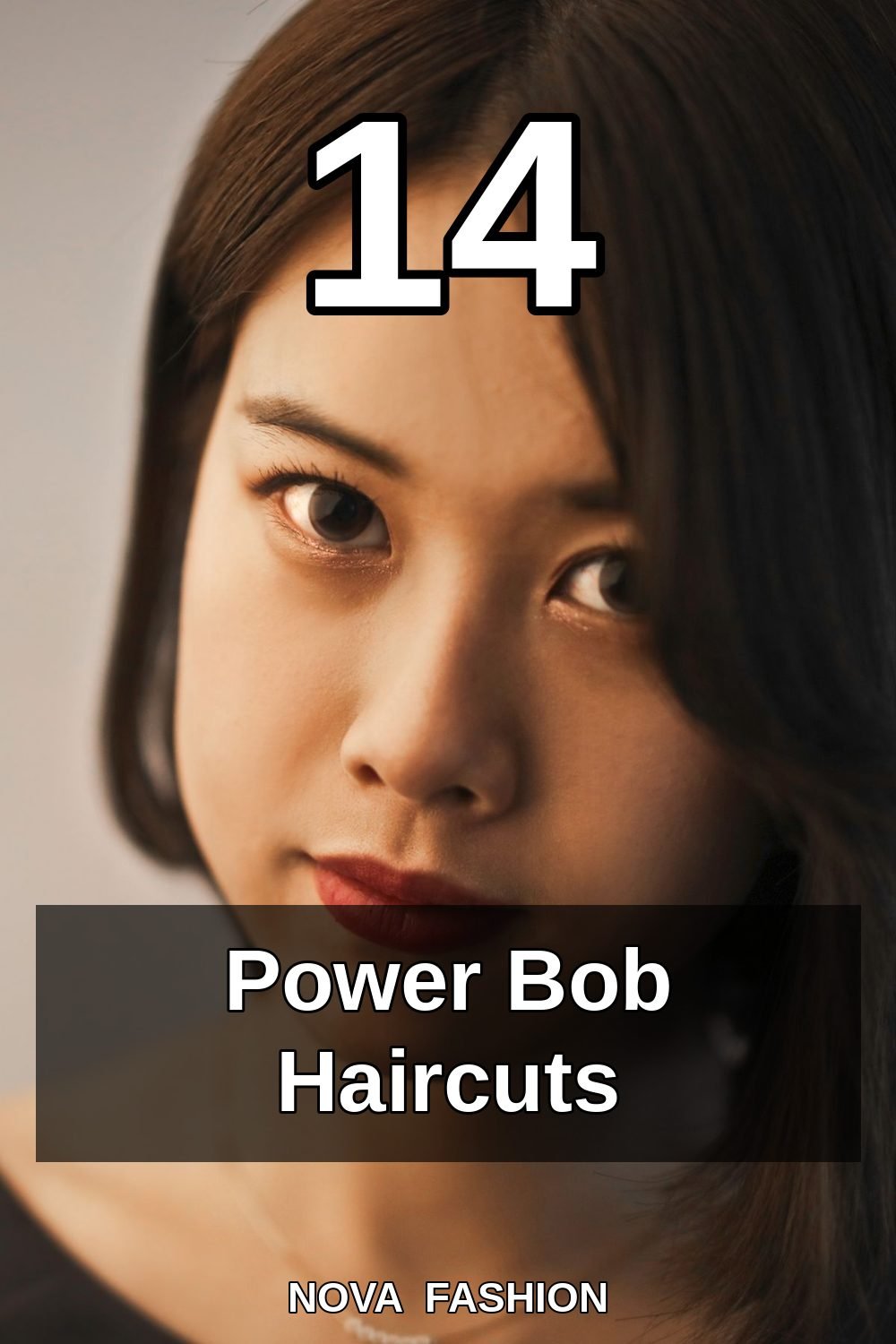
Want a caption that does your pin justice? Try Nova Fashion’s free Pinterest Caption & Pin Generator and create your own pin caption in seconds.
The power bob is not just a haircut, it is a decision. It says you know what you like, you know what suits you, and you are not waiting for permission to look polished. Book the appointment, take this list with you, and show your stylist the version that feels most like you. Then enjoy the strange pleasure of a haircut that makes getting dressed easier, mornings shorter and every coat you own look better. And when you love it — and you will — save this guide on Pinterest and follow Nova Fashion on Pinterest for more winter hair ideas, because the best haircut is the one you never have to think about twice.
Before you book, here is the short version. If you only remember five things from this guide, make them these: keep the line blunt, because the blunt line is the whole haircut; choose your length by your lifestyle, not by a photograph, because a jaw-length bob and a shoulder-grazing bob behave very differently on a busy morning; tell your stylist whether your hair is fine or thick before they cut, because the technique changes completely; buy a decent brush and a smoothing cream, because a power bob is styled with tools, not with hope; and book the next trim before you leave the salon, because six weeks passes faster than you think. Get those five things right and the cut will look after itself.
It also helps to walk in knowing exactly what to say. Try this: “I would like a one-length power bob, blunt all the way around, sitting at my jaw” — then point to the spot with your finger, because words like “short” mean different things to different people. Add your parting preference, mention whether you want it sleek or textured, and say whether you are planning to grow it out, so your stylist cuts with the future in mind. Bring two or three photos from this guide rather than one, and be honest about how much time you actually spend on your hair in the morning. A good stylist would rather hear “five minutes, maximum” than discover it at your next appointment, and they will cut you a version of the power bob that fits the life you really live, not the life you wish you lived.
Enjoy your power bob — and follow Nova Fashion on Pinterest for the next winter hair idea before it trends.
Pingback: Winter Haircut Ideas for Women with a Midi Bob and Blunt Ends: 19 Chic Looks Nova Fashion