
Face-framing layers are the instant facelift, no surgery, just smart cutting, and these face framing layers haircut ideas for women winter will show you how a few well-placed pieces can change your whole face. The right layers open up your eyes, soften a strong jaw, and make your cheekbones look higher, all while your hair stays long and full. If you have ever looked in the mirror and thought your hair was hiding you instead of flattering you, this is the cut to ask for.
In this guide you will find 21 face framing layers haircut ideas for women, each with a description, who it suits, and a simple styling tip. We start with what face-framing layers really do, then cover long hair, medium hair, bangs, winter styling, and what to ask your stylist, before the full list of looks. Save your favourites, show them at your appointment, and frame your face beautifully all winter.

What Face-Framing Layers Really Do
Face-framing layers are shorter pieces cut around the front of your hair, starting near your cheekbones or chin and blending into the longer lengths behind. They draw the eye to your best features, because the eye follows the line of the hair, and a soft curve at the cheekbone makes cheekbones look higher and eyes look bigger. They also add movement where a one-length cut looks heavy, so your hair swings instead of sitting flat.
Unlike a full layered cut, face-framing layers leave the back mostly alone, which means you keep your length and your hair still feels thick. The trick is the blend. The front pieces should melt into the back, with no hard step where one length ends and another begins. Ask your stylist to cut them a little longer than you think you want at first, because you can always go shorter, and wet hair springs up as it dries, especially if your hair is wavy.

Face-Framing Layers on Long Hair
On long hair, face-framing layers are the difference between hair that hangs and hair that moves. Start the shortest piece at your chin or cheekbones, then let the layers fall in a gentle slope to your shoulders and beyond. The front of your hair will look styled even when the back is simply brushed out, which is a gift on cold winter mornings. Long hair also hides the layers beautifully when you wear it up, because the short front pieces fall softly around your face.
This length suits every face shape, because you can change where the shortest layer starts to suit your features. Round faces look slimmer with layers starting at the chin, while long faces look wider and more balanced with layers starting at the cheekbones. In winter, long face-framing layers sit nicely over a coat collar and do not get crushed by a scarf the way a blunt front does. Add a little texturising spray to the front pieces and they will hold their curve all day.

Face-Framing Layers on Medium Hair
Medium hair, around the shoulders, is where face-framing layers look most polished. The layers have enough length to curve, but not so much that they disappear, so the frame around your face is clear and pretty. A medium cut with face-framing layers is also wonderfully easy in winter. It dries fast, fits under a beanie, and still looks finished when you pull it back into a low ponytail with the front pieces left out.
Try layers that start at your cheekbones and end at your shoulders, with the back kept a touch longer for a soft, forward shape. This works with a centre part, which shows the frame evenly on both sides, or a side part, which gives you a sweep of hair across one cheek. For an evening look, curl the front pieces away from your face with a large-barrel wand. For a weekday, a quick blow-dry with a round brush is all you need.

Face-Framing Layers with Bangs
Face-framing layers and bangs are a natural pair, because the bangs frame the top of your face and the layers frame the sides. Curtain bangs are the easiest match, since they blend straight into the layers and grow out without an awkward stage. A wispy fringe works well too, softening the forehead while the layers soften the jaw. Together they create a frame all the way around your face, which is very flattering in photos.
If you are trying bangs for the first time, ask for curtain bangs that start at your cheekbones, so they are really just the shortest face-framing layer. You can wear them parted in the middle, swept to one side, or pinned back, and each way looks different. Style the bangs first while they are damp, using a small round brush, and let the layers fall naturally. A little dry shampoo at the roots keeps bangs fresh on day two, which matters in winter when hats flatten them.

Styling Face-Framing Layers in Winter
Winter is hard on the front pieces of your hair, because they are the first to frizz in cold air and the first to go flat under a hat. Protect them with a leave-in conditioner, focusing on the pieces around your face, and blow-dry them first while they are still damp. Use a round brush and turn the pieces away from your face, so they curve outward and open up your features. Finish with a drop of hair oil smoothed over the surface, never at the roots.
When you wear a hat, put it on loosely and pull it back from your hairline, so it does not crush the front layers. When you take it off, shake the roots with your fingers and the layers will spring back into place. A silk scarf under a wool hat stops static, which is the enemy of fine front pieces. On second-day hair, a spritz of dry shampoo at the roots and a quick pass with a straightener on the front pieces will refresh the whole frame in two minutes.

What to Ask Your Stylist
Go to your appointment knowing where you want the shortest layer to start, and say it clearly, at my cheekbones, at my chin, or at my collarbone. Show your stylist a photo from this guide and point to the exact piece you love. Ask whether they will cut the front pieces dry, because dry cutting shows how your hair really falls, and ask how the layers will grow out over the next two months.
Be honest about your morning routine, because a cut that needs daily blow-drying is the wrong cut if you air-dry your hair. Ask what products they used on the front pieces, and how much, so you can copy the finish at home. Finally, ask them to show you how to style the layers yourself, with the brush and the dryer, before you leave the chair. Five minutes of teaching in the salon saves you weeks of guessing at home.

Face-Framing Layers for Your Face Shape
The starting point of your layers should suit your face shape. Round faces look longer when the shortest layer starts at the chin, drawing the eye downward. Oval faces can wear layers at any length, so try a bold cheekbone layer. Square faces soften with layers that start at the jaw and curve inward, while heart-shaped faces suit layers that add fullness around the chin. Long faces look wider with cheekbone layers that add width where the face is narrowest.
If you are unsure, ask your stylist to look at your face with your hair pulled back and to choose the starting point for you. Moving the shortest layer by an inch or two changes the whole balance, so it is worth deciding carefully. The good news is that face-framing layers grow out gracefully, so if you try a cheekbone layer and prefer a longer one, you will get there in a few weeks without a bad hair phase.

Face Framing Layers Haircut Ideas 1 to 4
1. Classic Face-Framing Layers. Soft pieces starting at the cheekbones and blending into long hair, the timeless version of this cut. It suits every face shape and hair type, and it is the best first try. Style it with a round brush, turning the front pieces away from your face.
2. Chin-Length Face-Framing Layers. Shorter front pieces that end at the chin, creating a clear, pretty frame. This suits round and square faces best, because it draws the eye down and softens the jaw. Curl the ends inward for a polished finish.
3. Cheekbone Face-Framing Layers. A bolder, shorter start at the cheekbones that opens up the eyes and makes cheekbones look higher. It suits oval and long faces, and it looks stunning with a centre part. Blow-dry the pieces outward for lift.
4. Face-Framing Layers with Curtain Bangs. Curtain bangs that flow straight into the layers, framing the whole face. It suits heart-shaped and oval faces, grows out beautifully, and works with long or medium hair. Style the bangs with a round brush, flicking them outward.

Face Framing Layers Haircut Ideas 5 to 8
5. Face-Framing Layers with a Side Part. A deep side part sweeps the front layers across one cheek, adding drama and volume. It suits thick hair and long faces, and it is perfect for winter parties. Set the part while your hair is damp for the best hold.
6. Face-Framing Layers with Loose Waves. Soft waves through the front layers are romantic and effortless, and they flatter every face shape. Wrap large sections around a curling wand, leave the ends out, and brush through gently for a lived-in wave.
7. Face-Framing Layers with a Blowout. The full salon blowout, with volume at the roots and the front pieces turned under, shows off the frame beautifully. It suits thick hair best and lasts two or three days in cold, dry air. Use a round brush and a cool shot of air to set it.
8. Face-Framing Layers with Blonde Balayage. Lighter pieces on the front layers brighten the face in dull winter light, like sunshine around your features. It suits medium to thick hair, and a purple shampoo once a week keeps the blonde fresh and bright.

Face Framing Layers Haircut Ideas 9 to 12
9. Face-Framing Layers with Caramel Highlights. Warm caramel pieces on the front layers add depth and glow, especially on dark brown hair. It suits warm skin tones and is a softer change than going fully blonde. Style it straight to show the colour, or curl the ends to blend it.
10. Sleek Straight Face-Framing Layers. Pin-straight layers with a glassy shine, cut so the frame is almost invisible until the hair moves. This suits fine to medium straight hair and looks incredibly chic with a winter coat. Use heat protectant, straighten in small sections, and finish with shine serum.
11. Face-Framing Layers with a Centre Part. A clean centre part shows the frame evenly on both sides, balanced and modern. It suits oval and heart-shaped faces and is the easiest part to maintain. Blow-dry the front layers away from your face so they frame it evenly.
12. Face-Framing Layers with a Low Ponytail. Layers make a simple low ponytail look styled, because the short pieces frame the face while the rest falls back. It suits everyone and is the perfect winter work look. Wrap a small section of hair around the elastic to hide it.

Face Framing Layers Haircut Ideas 13 to 16
13. Face-Framing Layers with a Half-Up Style. Pull the top layers back into a half-up twist and let the rest fall loose, and the frame stays soft around your face. It suits thick hair best, keeps hair out of your eyes, and works for the office and a night out. Secure it with a claw clip.
14. Face-Framing Layers with a Braid. A loose braid through layered hair looks fuller than a braid through blunt hair, because the layers add texture and soft pieces around the face. It suits wavy and straight hair, and it is a beautiful winter weekend look. Pull a few pieces loose at the front.
15. Face-Framing Layers with a Beanie. The honest winter test, and face-framing layers pass it, because they spring back when the hat comes off. It suits everyone and is the most practical cold-weather style. Style the layers first, wear the beanie loosely, and refresh the roots with dry shampoo.
16. Face-Framing Layers with a Silk Scarf. Tie a silk scarf at the base of a low ponytail and the front layers catch the colour beautifully. It suits every hair type, adds elegance to a simple cut, and protects the ends from a wool coat collar. Choose a scarf that picks up a colour in your outfit.

Face Framing Layers Haircut Ideas 17 to 21
17. Face-Framing Layers with Dark Roots. Keeping darker roots under lighter lengths adds depth and makes the frame stand out, while stretching the time between colour appointments. It suits busy women who love low-maintenance colour. Ask for a soft, blended root rather than a hard line.
18. Face-Framing Layers with a Winter Party Blowout. Full volume, soft curls, and layers that move every time you turn your head. It suits thick and medium hair and is made for holiday parties. Blow-dry with a large round brush, curl the ends away from your face, and finish with light-hold hairspray.
19. Face-Framing Layers with a Curtain Fringe. A longer, softer fringe that blends into the layers, giving you bangs without the commitment. It suits most face shapes, grows out gracefully, and softens a high forehead. Pin the fringe back on busy days and let it fall forward on dressier ones.
20. Face-Framing Layers with a V-Cut Back. The back is cut into a soft V shape, with face-framing layers at the front, so the cut looks dramatic from behind and pretty from the front. It suits thick, straight hair best and looks stunning in a low ponytail.
21. Face-Framing Layers with a Feathered Finish. Light, feathery ends that flick outward, giving the cut a soft, airy feel around the face. This suits fine hair best, because the feathered ends create movement without removing too much weight. Blow-dry the ends outward with a large round brush.

How to Style Face-Framing Layers at Home in Winter
You do not need a salon visit to make face-framing layers look good. Start with damp hair and a pea-sized amount of leave-in conditioner, focusing on the front pieces. Blow-dry the front layers first, lifting the roots with your fingers, then work through the lengths with a round brush, turning the ends away from your face. If you are short on time, dry the front pieces only and let the back air-dry, because the front is what people see first.
For curls, use a large-barrel wand and wrap the front sections away from your face, leaving the last inch straight for a modern, undone look. For straight hair, a flat iron in small sections gives a sleek finish, but always use a heat protectant first. On second-day hair, dry shampoo at the roots and a quick pass with the brush will refresh the frame without a full wash. Keep your products light, your hands out of your hair once it is styled, and the layers will hold their shape all day.
Best Winter Products for Face-Framing Layers
Winter hair needs moisture, and face-framing layers need light products that do not weigh the front pieces down. A good leave-in conditioner is the most useful product, followed by a lightweight hair oil for the ends and a volumising mousse for the roots. Use a deep conditioning mask once a week, especially if you colour your hair, and rinse it out thoroughly so the layers stay bouncy. A heat protectant is non-negotiable if you blow-dry or straighten your hair.
Keep dry shampoo in your bag for hat days, and a small bottle of shine spray for evenings out. Avoid heavy waxes on the front layers, because they flatten the movement you paid for, and save them for smoothing flyaways at the ends instead. Buy the smallest size first, try it for two weeks, and only then commit to the full size, because the right product for your hair type is worth finding.

Common Mistakes to Avoid with Face-Framing Layers
The most common mistake is cutting the front layers too short, too fast. Once a layer is cut, you cannot put it back, so ask your stylist to cut less than you think you want, then take more off if you love it. Another mistake is cutting layers into very fine hair without keeping the ends blunt, which makes the hair look thinner. A third mistake is skipping the trim, because split ends travel up the layers and make the whole cut look rough.
At home, the biggest mistake is over-styling. Too much heat, too much product, and too much brushing all flatten the front pieces and dry out the ends. Brush gently, from the ends upward, and use a wide-tooth comb on wet hair. Do not wash your hair every day in winter unless you need to, because the natural oils protect the layers. And do not cut your own front layers at home, however tempting a tutorial looks, because the front is the part everyone sees.
Keeping Your Face-Framing Layers Fresh Between Appointments
Face-framing layers grow out gracefully, which is one of their best features, but a trim every eight to ten weeks keeps them looking sharp, especially the front pieces, which show growth first. Between appointments, protect the ends with a little oil, sleep on a silk pillowcase to reduce tangles, and wear your hair in a loose braid at night to stop breakage. If the front layers start to fall into your eyes, pin them back or sweep them to the side rather than cutting them yourself.
If you loved these face framing layers haircut ideas for women, you may also like our guide to long layers haircut ideas for women winter, and our round-up of winter hairstyles for women with a round face. Both will help you choose the exact cut and style that suits you best this winter.

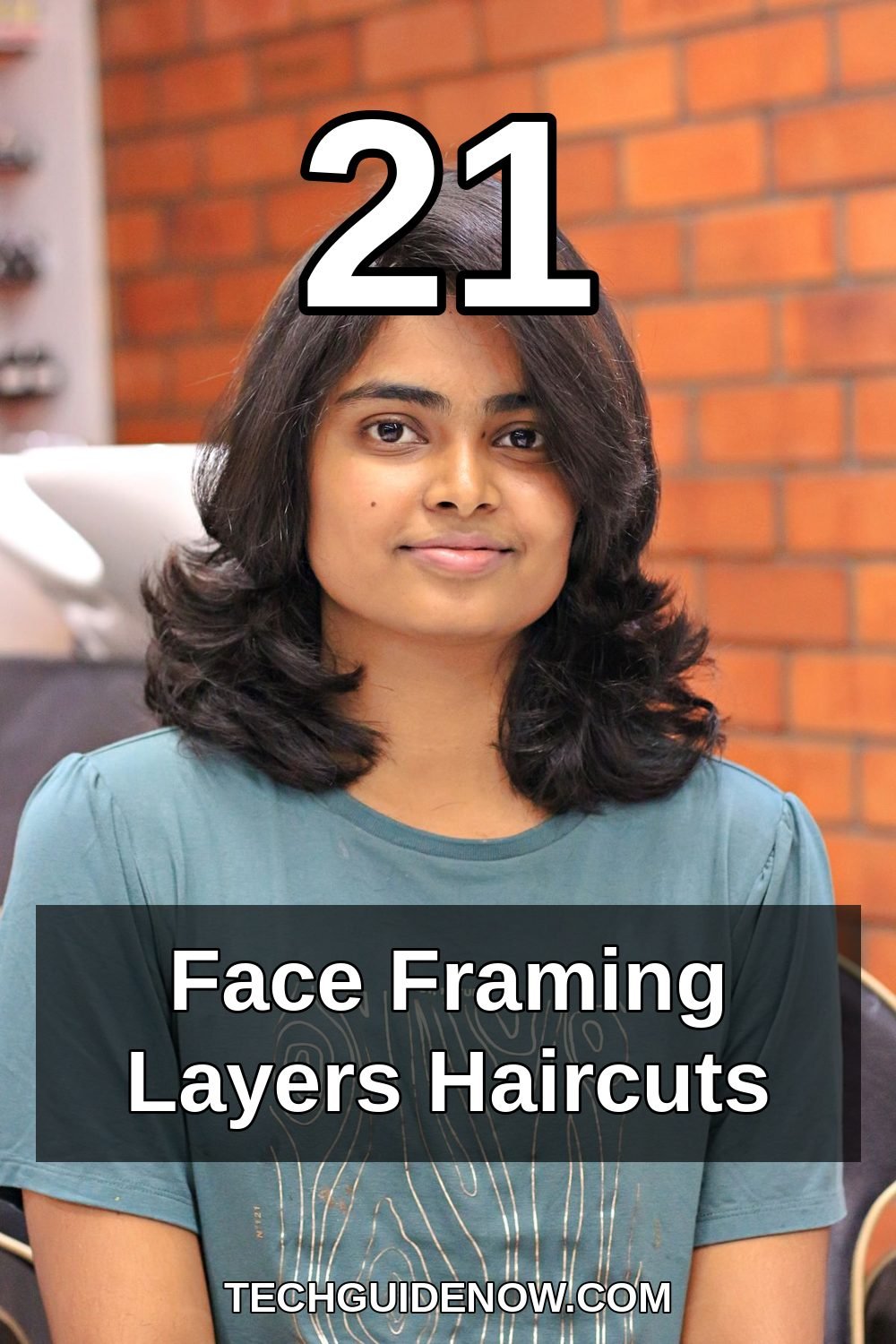
Love these face framing layers haircut ideas for women? Save this pin to Pinterest and come back to it whenever you need a fresh idea. You can also use our free Pinterest Caption & Pin Generator to write the perfect caption for your pin in seconds.

Frequently Asked Questions
Do face-framing layers suit everyone?
Almost everyone, because the starting point can be moved to suit your face shape. Round faces suit chin-length layers, long faces suit cheekbone layers, and oval faces can wear almost any length. The key is to choose the starting point with your stylist, rather than copying a photo without thinking about your own features.
How often should I trim face-framing layers?
Every eight to ten weeks is ideal, because the front pieces show growth first and can start to fall into your eyes. If your hair grows slowly, you can stretch it to twelve weeks, as long as the ends still look healthy and the layers still curve nicely.
Can I get face-framing layers if my hair is curly?
Yes, and curly hair often looks its best with face-framing layers, because the layers stop the hair from forming a heavy shape around the face. Ask your stylist to cut your hair dry, or in its natural curl pattern, so the layers fall correctly when your hair dries naturally.
Save your favourite cut from this list, book your appointment, and frame your face beautifully all winter long. Face-framing layers are a small change with a big payoff, and once you have tried them, you will wonder why you waited so long. Follow Nova Fashion on Pinterest for more winter hair ideas, and come back soon for our next round of seasonal styles.