
If your hair has been feeling like one long, heavy sheet — flat on top, limp at the ends, and somehow too much and not enough at the same time — you are not imagining it. One-length hair can look lovely, but without any shape cut into it, it tends to hang there, hiding your face and swallowing all the movement your hair actually has. The good news is that you do not need to lose your length to fix it. Layered haircuts for women are the answer, and this guide rounds up 21 of them.
So what are layered haircuts, exactly? They are simply haircuts where your stylist cuts the hair at different lengths, so the top pieces are shorter than the ones underneath. Those shorter pieces lift, curve and move, while the longer pieces underneath keep your length. The result is shape, bounce and a style that actually looks like something when you walk out of the salon — and, just as importantly, when you style it yourself on a normal Tuesday morning. Layers work on straight, wavy, curly, fine and thick hair, and they can be cut to flatter every face shape. The trick is picking the right kind of layers for your hair, and that is what the 21 cuts below will help you do.
Think of this as a chat with a stylist friend before your appointment. For every cut, I will tell you who it suits best, how to style it at home, and how often you will need a trim to keep it looking its best. Screenshot your favourites, save this page, and show your stylist the one that makes your heart skip a little. Let’s find your layers.
1. Long Layers for Long Hair
If you love your length and the thought of a big chop makes you nervous, long layers are your safest first step into the layered world. The layers start around your collarbone and fall gradually through the ends, so your hair keeps every inch of its length while gaining swing and shape. It suits long, straight and wavy hair best, and it is especially kind to oval and heart-shaped faces, where the longer pieces frame the jaw without closing it in. Styling tip: rough-dry your hair upside down for volume, then smooth the ends with a round brush, turning them under just a touch so the layers flick out as you move. Upkeep: a trim every 10 to 12 weeks keeps the ends from thinning out, and that is all this cut really asks of you.

2. Face-Framing Layers
Face-framing layers are the shortest pieces in the cut, and they do the most work. Starting at your cheekbones or chin, they fall forward around your face, softening a strong jaw, opening up round cheeks and drawing attention to your eyes. They suit every hair length, from a bob to waist-length hair, and every face shape — your stylist simply starts them where your face needs them most. They are also the layers to ask for if you wear your hair up a lot, because the loose pieces left out around your face keep a ponytail from looking severe. Styling tip: blow-dry the front pieces forward and away from your face with a round brush, and they will fall into a soft curtain on their own. Upkeep: because these pieces grow out fastest, ask your stylist to dust them at every second appointment.

3. The Butterfly Cut
The butterfly cut is the one all over your feed right now, and it earns the hype. It is really two haircuts in one: long layers underneath that keep your length, and much shorter, bouncy layers on top — around the chin and collarbone — that flip and flutter like wings when you move. It suits long, thick or wavy hair best, and oval, long and heart-shaped faces, because the shorter top layers add width where you want it. Ask for it if your hair is heavy and you want volume without a short cut. Styling tip: blow-dry the top layers with a big round brush, rolling them away from your face, then finish with a light texturising spray so the “wings” hold their shape. Upkeep: the short top layers need a trim every 6 to 8 weeks or the butterfly starts to look like a mullet, so book your next appointment before you leave the salon. And if you love this bouncy, layered look in a shorter length, take a peek at our butterfly bob ideas, which take the same idea to shoulder length.

4. Long Layered Bob
A long layered bob — the lob’s layered cousin — sits between the chin and the collarbone, and it is the cut I suggest most to women who want change without commitment. The layers stop the bob from looking like a helmet and give it that piecey, lived-in edge that makes it look expensive with almost no effort. It suits straight, wavy and slightly curly hair, and it is wonderful on round and square faces, because the length below the chin stretches the face while the layers soften the edges. Styling tip: a flat iron waved through the mid-lengths, bending the ends in alternate directions, gives you that undone, expensive texture in about ten minutes. Upkeep: a trim every 6 weeks keeps the shape crisp; this is one cut that shows regrowth quickly. If you are torn between a bob and a lob, our guide to shoulder-length haircuts for women will help you pick your length.

5. Short Layered Bob
The short layered bob is the bob for women who like their hair to do something. Cut around the jaw with layers stacked through the back, it has built-in lift, so it rarely falls flat — even on fine hair. It suits straight to wavy hair, and oval, heart and long faces, where the shorter length opens up the neck and cheekbones. It is also a lovely choice if your hair is fine, because the stacked layers make it look thicker than it is. Styling tip: work a pea-sized amount of volumising mousse through damp hair and blow-dry with your fingers, lifting at the roots, for a soft, piecey finish that looks styled without looking done. Upkeep: short layers grow out fast, so plan on a trim every 5 to 6 weeks to keep the shape.

6. Layers for Curly Hair
Curls and layers are a match made in heaven — as long as the layers are cut into dry, curly hair, so your stylist can see where each curl actually falls. Good curly layers take weight out of the inside of the hair, which lets the curls spring up instead of being dragged down into a triangle. This cut suits all curl patterns, from loose waves to tight coils, and every face shape, because the layers can be placed to widen or lengthen your face exactly where you need it. Styling tip: scrunch a curl cream into soaking wet hair, then diffuse on low heat or air-dry without touching it — the layers will do the shaping for you. Upkeep: curly layers hold their shape for a long time, so you can often stretch trims to 12 weeks, but never let a stylist thin your curls with a razor — that is how frizz happens.

7. Layers for Wavy Hair
Wavy hair is the hair type layers were invented for. Without layers, waves tend to go flat on top and puffy at the ends; with them, the wave pattern lifts and the hair falls into soft, beachy pieces that look effortless. This cut suits natural waves and permed waves alike, and it flatters every face shape — the layers can be cut longer around the face for round faces, or shorter for long faces. Styling tip: on damp hair, twist a few face-framing pieces around your finger and let them dry, or use a salt spray and scrunch; either way, the layers will catch the wave and hold it. Upkeep: a trim every 8 to 10 weeks is enough, and a drop of hair oil on the ends keeps the layers from looking dry.

8. Layers for Fine Hair
If your hair is fine, you have probably been warned away from layers — and that warning is only half right. Heavy, long layers can make fine hair look thinner, but short, soft layers cut close together do the opposite: they create movement and the illusion of fullness. The trick is keeping the layers long enough that the ends stay blunt and full, while the top layers add lift. This cut suits fine, straight and wavy hair, and oval and heart-shaped faces. Styling tip: blow-dry with a round brush, lifting at the roots, and finish with a light volumising spray — never a heavy oil, which will flatten fine layers in minutes. Upkeep: a trim every 6 to 8 weeks keeps the ends looking thick, and a clarifying shampoo once a week stops product build-up from weighing the layers down.

9. Layers for Thick Hair
Thick hair can feel like a blanket you carry around on your head — heavy, hot and hard to style. Layers are the way to take that weight off without losing the fullness you love. By cutting shorter pieces through the interior of the hair, your stylist removes bulk from the inside, so the outside still looks lush but the hair moves, dries faster and holds a style. It suits thick, straight, wavy and curly hair, and every face shape. Styling tip: ask your stylist to point-cut the ends so they feather instead of sitting in a solid shelf, and dry your hair in sections — it will take half the time once the weight is gone. Upkeep: thick hair grows fast and the layers can get bulky again, so book a trim every 8 weeks, and do not be afraid to ask for the interior to be thinned again.

10. Layers with Curtain Bangs
Layers with curtain bangs are the softest way to change your whole face without changing your hair. The bangs part in the middle and sweep to each side like curtains, blending straight into the face-framing layers, so nothing looks like a separate fringe. They suit long and medium hair, straight or wavy, and they are magic on round and square faces, where the diagonal line of the bangs makes the face look longer and slimmer. Styling tip: blow-dry the bangs with a round brush, rolling them away from your face on each side, and they will fall into that perfect curtain sweep. Upkeep: curtain bangs grow out gracefully into layers, so you can stretch trims to 8 weeks, but keep them out of your eyes by trimming the very centre piece yourself — or ask your stylist to show you how.

11. Layers with Wispy Bangs
Wispy bangs are the low-commitment fringe. They are thin, feathered and deliberately see-through, so they soften your forehead without hiding it, and they blend into layered hair so seamlessly that nobody can tell where the bangs end and the layers begin. They suit fine to medium hair, straight or wavy, and they are lovely on long and oval faces, where a heavy fringe would shorten the face too much. Styling tip: blow-dry wispy bangs with a small round brush and a little texture spray, and let a few pieces fall where they want to — perfection is not the point here. Upkeep: wispy bangs need a tiny trim every 3 to 4 weeks to stay wispy, but they grow out into face-framing layers, so there is no awkward phase.
12. Shaggy Layers
Shaggy layers are the rock-and-roll cousin of the classic layered cut — choppy, textured and deliberately undone. The layers are cut at different lengths with lots of texture, so the hair has a tousled, lived-in look that is meant to be a little messy. It suits wavy and curly hair best, and medium to thick hair that can hold texture, and it flatters oval, round and heart-shaped faces, because the choppy pieces break up the outline of the face. Styling tip: the shag loves air-drying — scrunch in some mousse or salt spray and let it dry on its own, and the layers will fall into that effortless, slept-in shape. Upkeep: the shag is famously low maintenance, and if your hair is on the low-maintenance side generally, our low-maintenance haircuts for women have more ideas in the same spirit; a trim every 8 to 10 weeks is plenty.
13. Feathered Layers
Feathered layers are the seventies classic that never really went away — soft, flipped-out ends that look like feathers falling away from the face. The layers are cut so the ends flick outward, giving the hair a light, airy swing that works beautifully on long and medium hair. It suits straight and wavy hair best, and oval and long faces, because the outward flick adds width at the sides. Styling tip: blow-dry the ends with a round brush, rolling them outward instead of under, and finish with a light-hold hairspray so the feathers stay lifted without going stiff. Upkeep: feathered ends show split ends faster than a blunt cut, so keep up with a trim every 8 weeks and a weekly conditioning mask.

14. Layers for Round Faces
If your face is round, layers are your best friend — as long as they are placed in the right spots. Long layers that start below the chin make the face look longer, while a few shorter pieces at the crown add height on top, which also lengthens the face. Avoid layers that end right at your cheekbones, because they add width exactly where you do not want it. This cut suits every hair type, from fine to thick, and it works at any length from a lob to long hair. Styling tip: a side part instantly makes a round face look longer, and layers cut on a diagonal will follow that line beautifully. Upkeep: keep the shape with a trim every 8 weeks, and ask your stylist to keep the weight at the ends rather than the sides.
15. Layers for Oval Faces
Oval faces are the lucky ones — almost every layered cut suits them, because the face is already balanced. That means you can choose your layers for your hair type and your mood, not for correction. Long layers, a butterfly cut, a layered bob, curtain bangs: all of them work. If you want to make the most of that balance, ask for layers that show off your cheekbones — face-framing pieces that start at the cheek and fall to the jaw are especially pretty on oval faces. Styling tip: because your face can carry almost anything, play with texture — a wavy, piecey finish shows off layers best on an oval face. Upkeep: with no correction needed, your trim schedule depends on your hair type, not your face — every 8 to 10 weeks is a good default.
16. Layers for Women Over 40
After 40, hair often changes — it can get finer, drier or a little less bouncy than it used to be — and layers are the simplest way to put the life back in. Soft, face-framing layers lift the hair at the roots and bring light to the face, while longer layers keep the style looking elegant rather than severe. This cut suits every hair type, and it is especially good on fine or thinning hair, where the layers create the illusion of fullness. Styling tip: a root-lifting spray and a round brush at the crown will give you that lifted, polished look in minutes, and a few face-framing layers will do more for your face than any cream ever could. Upkeep: a trim every 6 to 8 weeks keeps the layers fresh, and a gloss treatment once in a while keeps the colour shiny.

17. Layers for Women Over 50
Layers after 50 are about softness and movement — nothing too sharp, nothing too heavy. A layered cut with soft, feathered ends flatters the face, works with grey or silver hair beautifully, and is easy to style on busy mornings. It suits every hair type, including hair that has gone finer with age, and every face shape. Short layered cuts are especially lovely here, because they show off the face and the earrings, and they dry in minutes. Styling tip: if you have gone silver, a purple shampoo once a week keeps the tone bright, and a little texture cream will stop the layers from looking fluffy. Upkeep: a trim every 6 weeks keeps the shape, and because short layers grow out fast, keep your appointments regular.

18. Layers for Square Faces
Square faces have a strong, beautiful jawline — and layers are the gentlest way to soften it without hiding it. The trick is to keep the layers soft and textured around the jaw, so the line of the face is blurred rather than boxed in. Long layers that fall past the jaw, or a layered bob with soft, rounded ends, both do this beautifully. Avoid blunt, one-length cuts that end right at the jaw, because they underline the squareness. This cut suits straight, wavy and curly hair, and it works at any length from a lob down. Styling tip: waves are your friend — a soft bend through the mid-lengths breaks up the straight lines of the face, and the layers will hold that bend all day. Upkeep: a trim every 8 weeks keeps the softness in place.
19. Layers for Heart-Shaped Faces
Heart-shaped faces are wider at the forehead and narrower at the chin, so the goal is to balance the top and bottom — and layers do that better than almost anything. Layers that add width around the jaw and chin fill out the narrower lower half, while keeping the top softer and less heavy. A layered lob or long layers with volume at the ends are both lovely here. Styling tip: curl the ends of your layers outward at jaw level, and the width they create will balance your forehead beautifully. Upkeep: a trim every 8 to 10 weeks, and if your layers are long, ask your stylist to keep the ends full so the balance stays.
20. The Layered Lob
The layered lob is the long bob with layers — and it might be the most flattering haircut on this whole list. It sits between the chin and the collarbone, the layers give it movement, and it works on almost every hair type and face shape. It is the cut to choose if you want to look polished with very little effort, because it air-dries beautifully and takes about five minutes to style. Styling tip: a little texture spray and a quick scrunch is genuinely all this cut needs on most days; for a smarter finish, smooth the ends with a flat iron and bend them under. Upkeep: a trim every 6 to 8 weeks keeps the lob from turning into a shag, and the layers make regrowth very forgiving.
21. Choppy Layers for a Modern Edge
Last but not least, choppy layers are for the woman who wants her hair to have an opinion. The layers are cut with lots of texture and uneven, piecey ends, so the hair looks edgy and modern instead of smooth and safe. It suits straight and wavy hair best, and it is wonderful on fine hair, because the choppy texture makes it look much thicker. It flatters oval, heart and square faces, and it is a great choice if you are growing out a pixie or you just want a change that feels brave. Styling tip: a matte texture paste, worked through the ends with your fingers, is all you need — the choppier it looks, the better it works. Upkeep: choppy layers need a trim every 5 to 6 weeks to keep the texture sharp, or they just look grown out.

How to Ask Your Stylist for Layers
Walking into the salon with a photo is the single best thing you can do — words like “layers” mean different things to different stylists, but a photo does not lie. Save two or three photos of the cut you love, from different angles if you can, and show them before your stylist picks up the scissors. Then use your own words for the rest: how long you want to keep it, whether you want volume or less bulk, how much time you spend styling it in the morning, and how often you are willing to come back for a trim. A good stylist will translate all of that into the layers that suit you. And if something in the chair worries you, say so while the cut is happening — it is much easier to adjust layers mid-cut than after.
How to Style Layers at Home
Layers are only as good as the way you style them at home, and the secret is to work with the layers, not against them. Blow-dry the top layers first, lifting at the roots with a round brush, then let the underneath layers dry naturally or with a diffuser — they will fall into place on their own. A pea-sized amount of styling cream or mousse is usually enough; too much product is what makes layers look heavy and greasy. On second-day hair, a quick blast of dry shampoo at the roots and a twist of the face-framing pieces around your finger will bring the whole cut back to life in about two minutes. And if your layers ever feel flat, flip your part to the other side — it is the oldest trick in the book, and it still works.
Frequently Asked Questions
Do layered haircuts suit every hair type?
Yes — that is the whole point of layers. Fine hair gets volume from short, soft layers; thick hair gets relief from interior layers; curly hair gets shape and bounce; and wavy hair gets definition. The layers themselves change for each hair type, but the idea works for all of them.
Will layers make my hair look thinner?
Only if they are cut wrong. Long, heavy layers on fine hair can make the ends look wispy, which is why fine hair needs shorter, more blended layers and a blunt-ish finish. On thick hair, layers do the opposite — they remove weight and make the hair look fuller and more mobile. Tell your stylist if thinness is your worry, and they will place the layers accordingly.
How often do layered haircuts need a trim?
It depends on the length of the layers. Short, choppy layers need a trim every 5 to 6 weeks; medium layers every 6 to 8 weeks; and long, soft layers can go 10 to 12 weeks. Face-framing layers grow out fastest, so they may need a quick dust between full appointments.
Can I get layers without losing my length?
Absolutely — that is what long layers are for. The shortest layer can start at your collarbone, so you keep all of your length while the hair gains movement and shape. Show your stylist exactly where you want the shortest layer to start, and they will work from there.
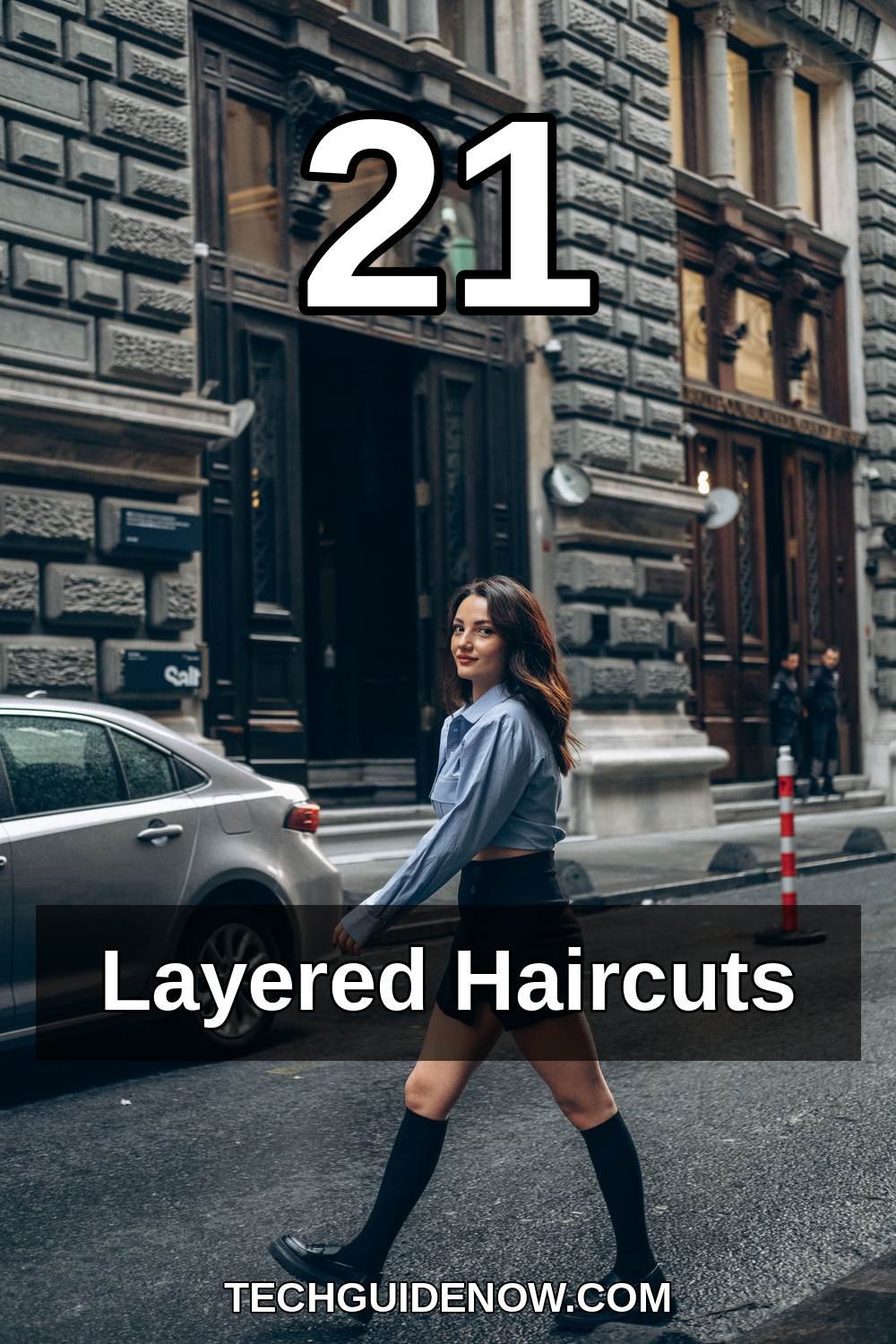
Want a caption that does your pin justice? Try our free Pinterest Caption & Pin Generator and create your own pin caption in seconds.
Layers really do work all year round, on every hair type and at every age — that is why they never go out of style. Whether you go for the butterfly cut, a layered bob or just a few face-framing pieces, you will leave the salon with hair that moves, shines and actually feels like yours. So save your favourite cut from this guide on Pinterest, show it to your stylist at your next appointment, and enjoy the best hair days of your year. And if you found your cut here, come back and tell us which one you chose — we love hearing which layered haircut made the shortlist.