
Three colours. Eighteen outfits. Zero morning panic. If your winter wardrobe feels like a rail of almost-right pieces, these burgundy chocolate and cream winter colour palette outfits are the simplest reset you will try this season. No new capsule to buy, no colour-theory degree required — just three shades that already live in most wardrobes, combined in a ratio that makes everything look deliberate.
I came to this palette the way most of us do: standing in front of a full wardrobe with nothing to wear. Burgundy was the coat I kept reaching for, chocolate was the boot I already owned, and cream was the knit that made both of them look softer. Put together, they do something none of them manages alone — they make a winter outfit look calm, warm and quietly expensive. This guide shows you how the trio works, the 60/30/10 ratio that keeps it balanced, and an 18-outfit grid you can build from pieces you probably own already. Think of it as the winter version of the classic capsule wardrobe: the same timeless idea, in the season’s richest colours.

Why Burgundy, Chocolate and Cream Work So Well Together
Some colour trios fight each other all day. This one does not, and the reason is not luck — it is shared warmth. Burgundy, chocolate and cream are all warm colours, and warm colours sit next to each other the way friends do on a sofa: comfortably, without elbowing anyone out of the frame. That is why the palette reads as calm even when it is bold, and why it suits so many skin tones. It never looks like you tried too hard, because the colours are doing the hard work for you.
The undertone logic that makes the trio feel expensive
Look closely and the three shades are related. Burgundy is a red with brown folded into it. Chocolate is a brown with red folded into it. Cream is a white with warmth folded into it. Because they share that warm, brownish base, nothing in the trio clashes — the eye moves across the outfit instead of stopping at a jarring edge. That is the whole secret of expensive-looking colour: not the price of the pieces, but the absence of friction between them. Cool-toned grey or icy blue would fight this trio; warm cream and warm chocolate simply agree with it. If you ever wondered why some outfits look rich and others look random, undertone agreement is usually the answer.
What each colour brings to an outfit
Each colour has a job, and knowing the job makes the outfits easy. Burgundy is the personality: it brings depth, richness and the sense that you actually thought about this outfit. It is the colour people notice first, which makes it perfect as a coat, a dress or a single bold piece. Chocolate is the anchor: it grounds the look and gives it weight, dark without the harshness of black, and it makes everything around it look warmer and more considered. Cream is the light: it lifts the darkness, stops winter outfits from feeling heavy, and gives you a place to play with texture — chunky knits, shearling, soft fleece — in a shade that photographs beautifully.

The 60/30/10 Ratio Rule (and Why It Saves Your Mornings)
Here is the rule that turns three nice colours into an actual system: wear them in a 60/30/10 ratio. Sixty per cent of the outfit is your base colour, thirty per cent is your second colour, and ten per cent is your accent. That is the entire system, and it is the reason this palette can produce eighteen outfits instead of three. Without a ratio, three strong colours compete for attention and the outfit looks busy. With a ratio, they take turns — one leads, one supports, one sparks — and the look feels considered even when you put it together in four minutes.
60% — your base colour
Your base colour is the one that covers the most fabric: the coat, the knit, the trousers or the boots. Pick the one you already own most of, or the one you feel most like yourself in. For most people that is chocolate or cream, because both are easy to live in. A chocolate wool coat with cream underneath is a 60% chocolate outfit; a cream knit with chocolate trousers is a 60% cream one. The base sets the mood of the outfit, so if you want to feel cosy and light, start with cream; if you want to feel grounded and polished, start with chocolate.
30% — your supporting colour
The second colour covers the next-largest area, and its job is to stop the base from feeling flat. If your base is chocolate, your 30% might be a cream roll-neck or a pair of cream trousers; if your base is cream, your 30% might be a chocolate skirt or a pair of chocolate boots. This is the layer that gives the outfit its rhythm. A useful test: if you took the 30% away, the outfit should still work but feel a little plainer. That means the proportion is right — the second colour is earning its place without shouting.
10% — your accent
The last ten per cent is the smallest area with the biggest job: the bag, the scarf, the lipstick or the boots. Burgundy is brilliant as a 10% accent, because a small amount of it reads as deliberate rather than loud. A burgundy bag against chocolate and cream, a burgundy scarf over a cream coat, burgundy boots under a chocolate skirt — each one says ‘I chose this’ in a way that a fully burgundy outfit cannot. And if you are burgundy-shy, this is your way in: use it at 10% for a month and see how quickly it becomes your favourite part of the outfit.

The Outfit Grid: 18 Outfits From 3 Colours
Here is the grid, and it is simpler than it looks. Think of three columns — cream-led, chocolate-led and burgundy-led — with six outfits in each. You do not need eighteen new outfits. You need the idea, the ratio, and a handful of pieces you probably already own: one good coat, one chunky knit, one pair of wide-leg trousers, one midi skirt, one pair of knee boots and one bag in the accent colour. Everything below is a combination of those pieces, and once you see how the grid works, you will start making your own combinations without thinking about it.

Cream-led outfits (1–6): light, cosy, fresh
Cream-led outfits are the ones to reach for on grey mornings, because they put the lightest colour where your face is and let the darker shades anchor the bottom half. Try these: (1) a cream chunky knit with chocolate wide-leg trousers and burgundy boots; (2) a cream roll-neck with a burgundy midi skirt and chocolate knee boots; (3) a cream shearling jacket with chocolate jeans and a burgundy scarf; (4) a cream knit dress with chocolate tights and a burgundy bag; (5) a cream coat over a chocolate knit with cream trousers, letting chocolate be the 30%; and (6) a cream sweater with a burgundy corduroy skirt and chocolate loafers. The trick with cream is texture: a cream knit, a cream coat and cream trousers in the same outfit only work if the textures differ, so mix knit with wool, wool with leather, and let the fabric do the talking. For more ways to wear the lightest shade, see these cosy cream sweater outfit ideas — the same logic, stretched across a whole season.

Chocolate-led outfits (7–12): rich, grounding, polished
Chocolate-led outfits are the most grown-up corner of the grid, and the easiest to wear to work. Try these: (7) a chocolate wool coat with a cream polo neck and burgundy trousers; (8) chocolate leather trousers with a cream silk shirt and a burgundy coat; (9) a chocolate knit and chocolate skirt worn tonally, with a cream coat and a burgundy bag as the 10%; (10) a chocolate suit with a cream camisole and burgundy heels; (11) a chocolate teddy coat with cream jeans and a burgundy beanie; and (12) chocolate boots with a burgundy dress and a cream scarf. Chocolate is the colour that makes the palette feel expensive, because it reads as a considered choice rather than a default neutral — it is the brown you chose on purpose, not the brown you settled for. These chocolate brown outfits for women show how far the shade goes on its own, and every one of them gets better with a touch of burgundy or cream.

Burgundy-led outfits (13–18): the statement maker
Burgundy-led outfits are for the days you want the colour to do the talking. Try these: (13) a burgundy faux fur coat with a cream knit and chocolate trousers; (14) a burgundy knit with chocolate wide-leg trousers and a cream coat; (15) a burgundy midi dress with chocolate boots and a cream scarf; (16) a burgundy coat with a cream roll-neck and a chocolate skirt; (17) a burgundy leather skirt with a cream chunky knit and chocolate knee boots; and (18) a burgundy scarf with a cream coat and chocolate jeans, which proves the palette works even when burgundy is only the 10%. The rule for burgundy-led looks is simple: let burgundy be the only loud thing. Everything else stays calm — cream softens it, chocolate grounds it — and the outfit reads as confident instead of costumey.

How to Layer the Palette Without Looking Bulky
The honest fear with any winter palette is bulk: three colours plus winter layers can feel like wearing a duvet. Four rules keep it in check. First, one bulky piece only — if the coat is big, the knit underneath is fine-gauge; if the knit is chunky, the coat is tailored. Second, keep the base slim: whatever is closest to your body should be the smoothest layer, so a fine cream roll-neck under a burgundy coat reads as one clean line, not three. Third, match the tone of your layers: a cream knit under a cream coat with chocolate trousers looks longer and leaner than three unrelated shades fighting under one coat. And fourth, let the coat do the volume — a belted coat over a slim base gives you the silhouette without the padding. The palette helps here more than most, because its colours are deep and dark enough to recede; you are layering tones, not adding visual noise.
Adding One Metallic: Gold Jewellery That Ties It Together
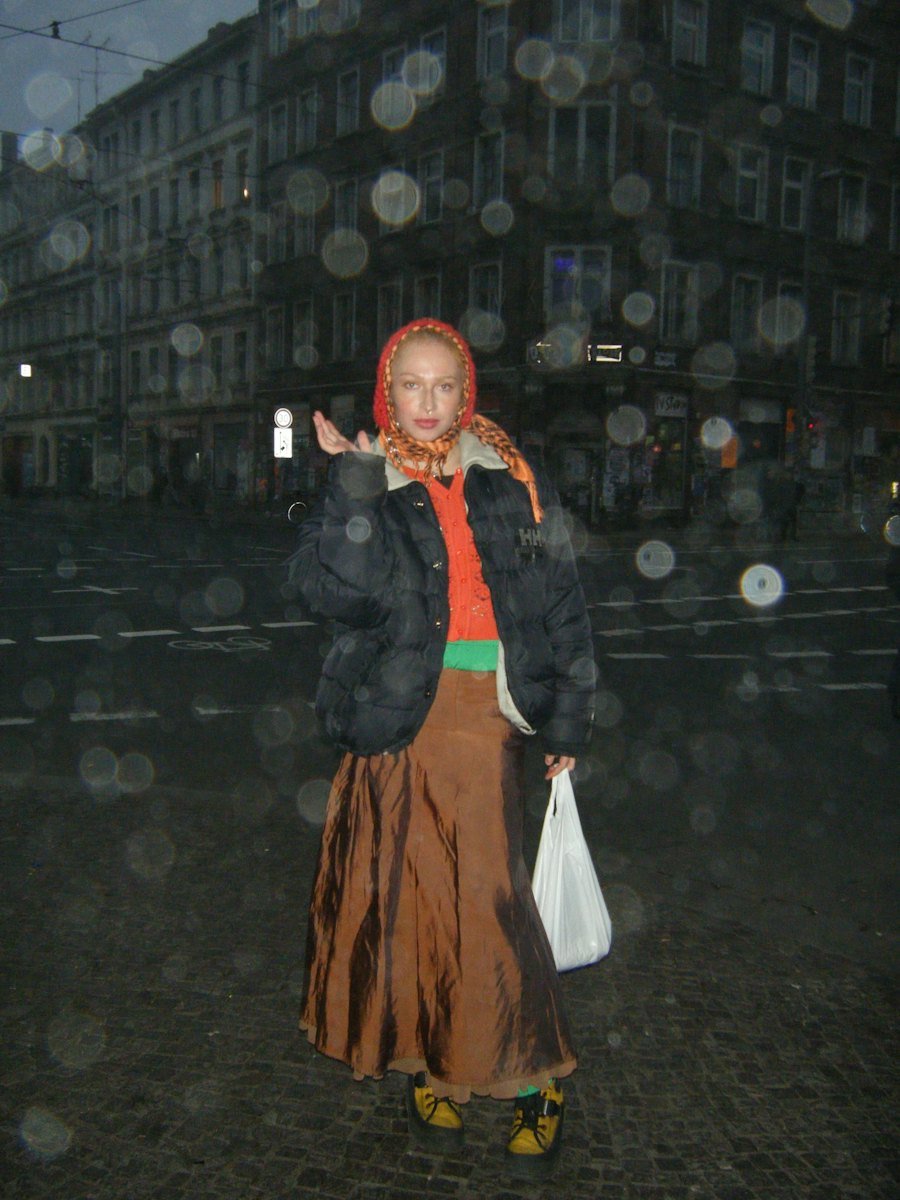
Gold is the unofficial fourth colour of this palette. Warm gold picks up the warmth in burgundy and chocolate and stops cream from looking flat, which is why a gold hoop or a gold watch can finish an outfit that felt almost-there. It works on skin, on bags and on belts, and it is the single easiest way to make a burgundy, chocolate and cream outfit look finished rather than assembled.
The one-metallic rule
Keep it to one metal: gold. A pair of gold hoops, a gold watch and a belt with a gold buckle is plenty; adding silver splits the warmth of the palette and makes the outfit feel undecided. Match the metal to your bag hardware where you can — if the bag has gold clasps, wear gold jewellery — and stop at two or three pieces. The metallic should be the quietest part of the outfit: a glint at the ear, a glint at the wrist, and nothing competing with it. If you wear a lot of silver normally, this palette is the one excuse to switch for the season.

Shoes, Bags and Tights: Finishing the Palette
The accessories are where this palette quietly wins, because they are the cheapest way to change the ratio. Chocolate knee boots are the quiet hero of the whole system — they go with cream, with burgundy and with chocolate itself, and they make every skirt in the grid wearable in January. Burgundy boots are the statement version: one pair turns a cream-and-chocolate outfit into a burgundy outfit without changing anything else. For bags, one burgundy bag is the single best investment in the palette; it is the 10% accent you can carry across all eighteen outfits. And tights are worth a second thought: chocolate tights under a burgundy skirt look softer and more deliberate than black, while cream tights only work when the rest of the outfit is dark enough to anchor them.

What to Wear It To: Work, Weekends and Evenings
The same three colours change register completely depending on the pieces you choose, which is what makes the palette a genuine wardrobe system rather than a single look. For work, try a chocolate suit with a cream shirt and a burgundy bag — polished, warm, and a long way from the usual black-and-white office uniform. For weekends, a cream knit with a burgundy skirt and chocolate boots is comfortable, flattering and takes about three minutes to put together. For evenings, a burgundy dress with chocolate heels and gold hoops needs nothing else; the palette does the dressing up for you. One set of colours, three versions of your life — that is the point of a system, and it is why you will reach for these three shades more than any others this winter.
Swap Rules If Burgundy Isn’t Your Colour
Love the palette but not sure burgundy loves you back? You do not have to abandon the system — you just swap the part that does not suit you. If burgundy is too strong near your face, keep it at 10% only: a bag, a scarf, a pair of boots, never the coat. If you want the same depth in a softer shade, try oxblood, berry or deep plum — they share burgundy’s warmth but sit differently on different skin tones. If you want a lighter version altogether, swap burgundy for rust: same warm family, less drama, and it still plays beautifully with chocolate and cream. And if chocolate feels too dark for you, swap it for camel or tan — the same brown family, a few shades lighter, and the ratio still works exactly the same way. The palette is a framework, not a prescription; the colours that suit you are the ones you will actually wear.
Frequently Asked Questions
Can I wear burgundy and chocolate together?
Yes — that pairing is the whole point of this palette. The trick is proportion: let one of them lead and the other support, and add cream to lift the combination. A chocolate coat with a burgundy knit and cream trousers is the classic version. The only version that struggles is a strict 50/50 split of burgundy and chocolate with nothing to break them up, which can look muddy; the 60/30/10 ratio fixes that every time.
Does cream work in the middle of winter?
Yes, and it is at its best in deep winter. Cream reads as a winter colour when it comes as knitwear, shearling and wool coats — it is the shade that stops a dark winter wardrobe from feeling heavy. Keep it in the 60% or 30% spot, pair it with chocolate rather than black, and accept that cream gets dirty faster; that is what the washing machine is for, and a cream knit that is actually worn always looks better than a pristine one kept for best.
Save the Grid: Your 3-Colour Cheat Sheet
If you remember one thing from this guide, make it the ratio: 60% base, 30% support, 10% accent, in burgundy, chocolate and cream. Screenshot the grid, pick the column that matches what you already own, and try one outfit this week. Three colours, eighteen outfits, zero morning panic — that is the whole promise of the palette, and it is a promise your wardrobe can keep.
Save this palette for later
Save on Pinterest

Love this palette? Make your own pin caption with our free Pinterest Caption Generator — write a caption in seconds and save this look to your board.
For more winter palettes, outfit grids and timeless wardrobe ideas, follow Nova Fashion on Pinterest — new inspiration lands there every week.
Building the Palette From Pieces You Already Own
Before you buy a single thing for this palette, do the ten-minute audit — because the chances are you already own most of it. Pull out everything burgundy, chocolate and cream in your wardrobe and lay it on the bed: coats, knits, skirts, trousers, boots, bags and scarves. Count them by colour. Most people find they own the bones of the system already — a chocolate coat, a cream knit, a pair of dark boots — and the palette only feels new because nobody has ever put the three colours together on purpose. The audit is the whole trick: once you can see the three piles side by side, the outfits start assembling themselves, and you will spot the gaps in seconds instead of guessing in a shop.
What you will usually find is that one colour is doing all the work and another is missing entirely. Cream is the colour most of us own in quantity — the knit, the shirt, the coat — while burgundy is the one we own least, often just a single lipstick or a bag bought on impulse. That is fine: the palette works with what you have, and the ratio bends to fit. A wardrobe that is heavy on cream and chocolate with only a little burgundy will live mostly in the cream-led and chocolate-led columns of the grid, and that is still eighteen outfits minus a few. The audit is not about perfection; it is about seeing what is already there.
The three gaps to fill first
If the audit leaves you short, fill the gaps in this order, because these are the pieces that multiply across the whole grid. First, chocolate knee boots: they are the single most versatile piece in the palette, they go with every column, and they make skirts wearable in January. Second, a burgundy bag: it is the 10% accent you can carry across all eighteen outfits, and it is the cheapest way to make a chocolate-and-cream outfit read as the full palette. Third, a cream chunky knit: the easiest 60% base in the system, and the piece that makes every other colour look softer. Buy them in that order and stop there — you do not need a new coat to start, because the coat you already own is probably chocolate, burgundy or cream, and any of the three will do.
And a note on what not to buy: another black coat, for a start. The whole point of this palette is that warm, dark colours replace black without losing any of the polish, so a new black coat pulls you straight back to the wardrobe you are trying to escape. Skip matching sets in a single colour, too — a burgundy suit might look striking on the rail, but it takes you out of the mix-and-match system that makes the palette work. And do not buy anything that only works with one outfit; every piece in a three-colour system should earn its place in at least three of the eighteen looks. If it does not, it is not a palette piece, it is a one-off.
Your starter kit, in one line: one chocolate coat, one cream chunky knit, one burgundy bag, chocolate knee boots, a cream roll-neck and a burgundy scarf. From those six pieces — plus the trousers, skirts and jeans you already own — you can build a full week of outfits without repeating a combination. Start there, wear it for a fortnight, and only then decide what else the palette needs. When you have tried one outfit from the grid, come and show us which column you built it from — follow Nova Fashion on Pinterest and share your version.
Pingback: Khaki Utility Outfits for Women: 13 Winter Ways to Wear the Khaki Coded Trend Nova Fashion