
If you have been searching for oversized baggy suit outfit ideas for women in winter, you have probably already felt the pull of the look and the worry that comes with it. Borrow the suit, keep the polish: that is the whole idea, and it is easier than the fear suggests. An oversized suit is not a costume and it is not a shapeless sack. Worn the Glamoratti way, with a clean line underneath, a boot that means business and a coat that respects the volume, it is the most put-together thing you can wear on a cold day, and the most comfortable too.
The trick is proportion. A baggy suit gives you room, and room only looks deliberate when something in the outfit is doing the shaping, whether that is a slim turtleneck underneath, a defined shoulder, a belt at the waist or a boot that finishes the long line. Get that one decision right and the rest of the look falls into place. Get it wrong and you look like you borrowed the suit from someone twice your size and forgot to give it back, which is the look nobody wants.
This guide gives you 14 winter ways to wear an oversized baggy suit, built on five simple rules: fit rules that stop oversized turning sloppy, the very best things to wear underneath, the boots-versus-heels question settled once and for all, the coat question answered, and separates formulas for the days you want only half the suit. Browse more Outfit Ideas on Nova Fashion while you read, and save your favourite formula at the end, because the best way to wear a big suit is to have the plan ready before the cold morning arrives.
1. Oversized vs Sloppy: The Fit Rules That Keep a Baggy Suit Polished
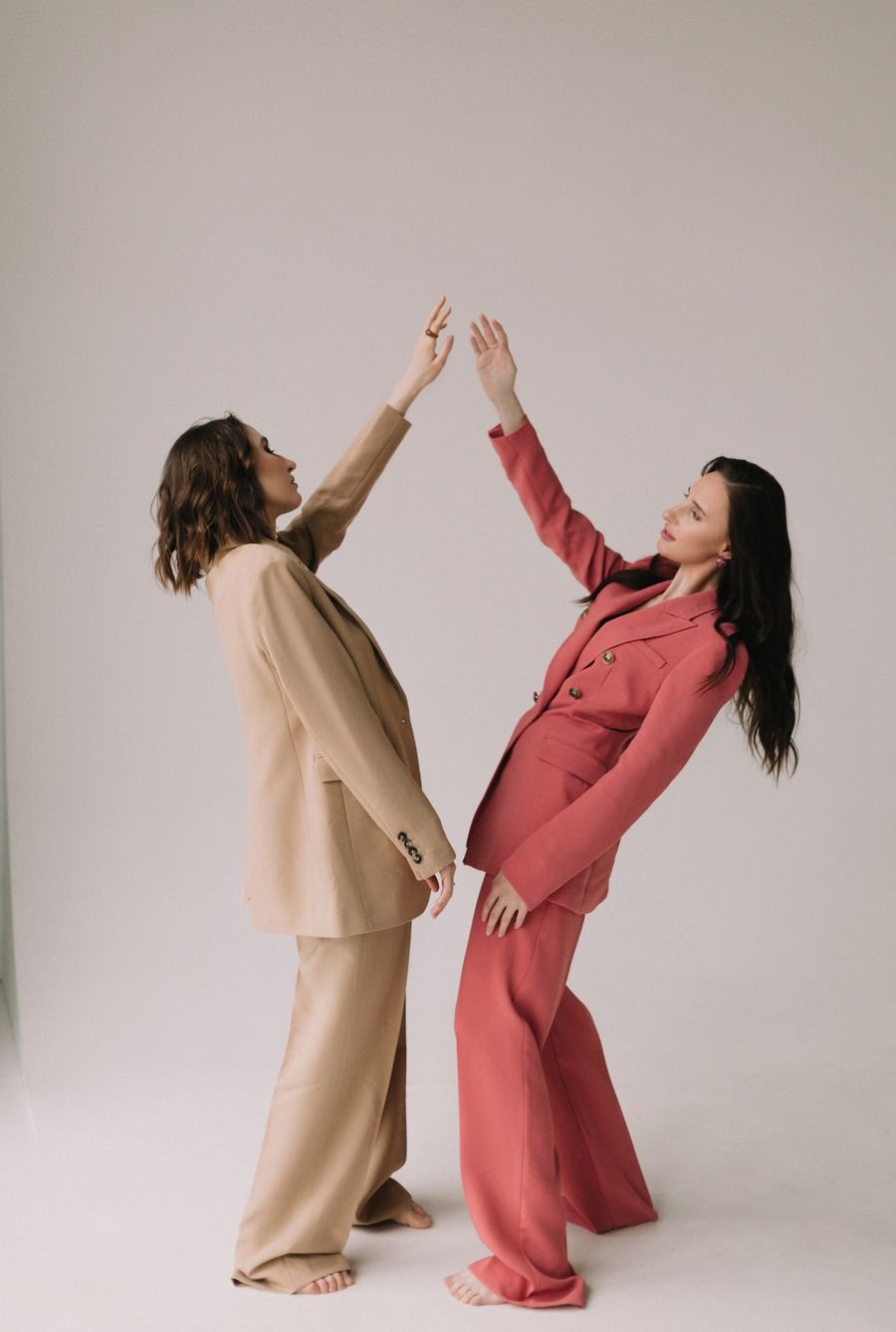
Oversized and sloppy are not the same thing, and the difference lives in four places: the shoulder, the sleeve, the trouser break and the fabric. A good oversized suit has a shoulder seam that sits just past your own shoulder, by a centimetre or two, not halfway down your arm. The sleeve should end at the wrist bone when your arms hang naturally, and the trousers should skim the shoe rather than pooling into a puddle. If all three of those are right, the suit reads as designed, not borrowed.
Fabric is the quiet fourth rule. A heavier wool holds the oversized shape beautifully and keeps it looking intentional, while a thin, floppy fabric collapses and looks accidental. When you try a suit on, walk in it, sit in it and look at it from the side, not just face-on, because a baggy suit is a three-dimensional shape and the mirror only tells half the story. If the jacket opens cleanly without pulling, the trousers hang straight and the whole thing moves like it was made for you, it is oversized. If it swallows you, it is simply too big, and no amount of styling will fix that.
2. Start With the Shoulders: Where an Oversized Suit Should Sit
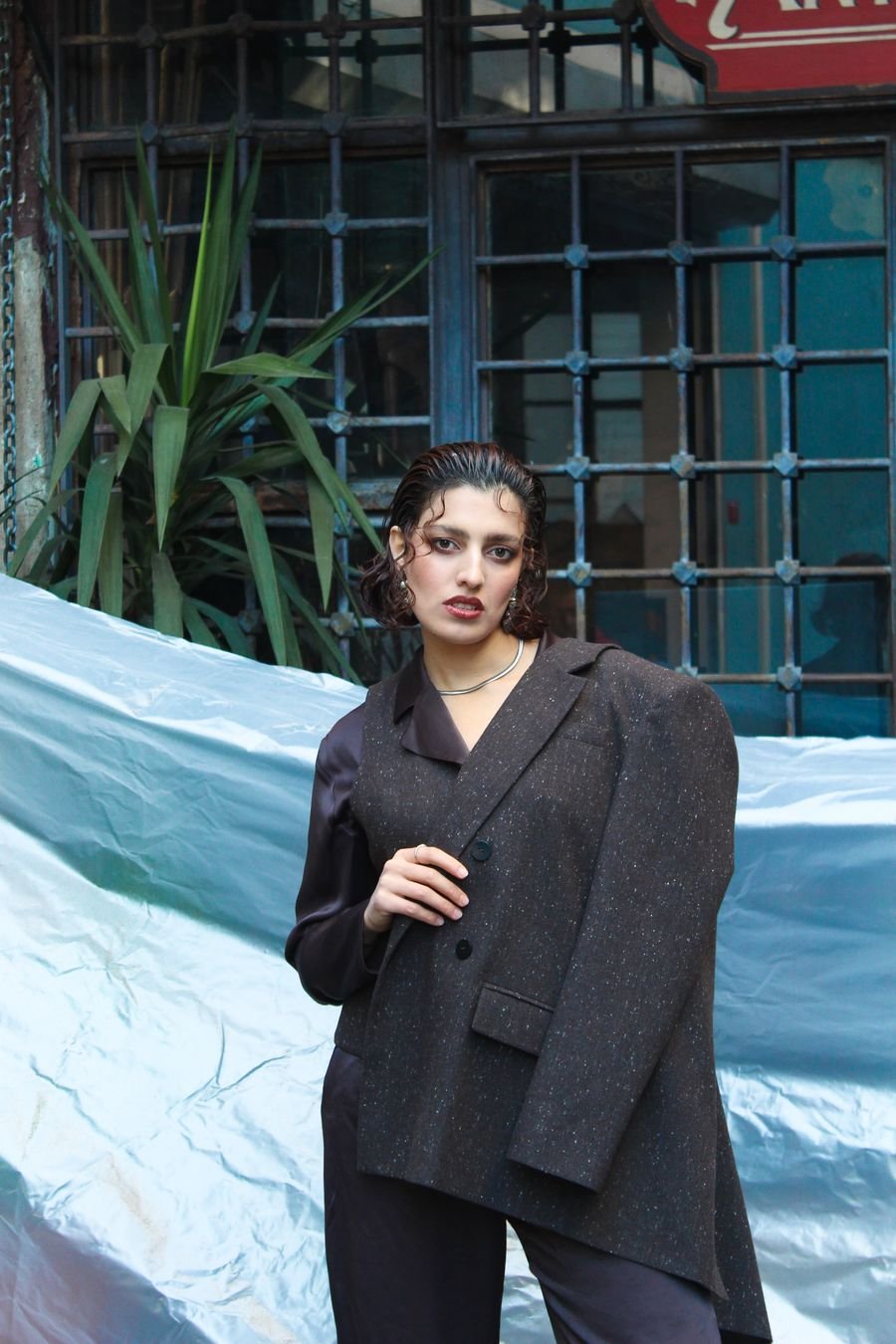
The shoulder is the anchor of the whole look, so start there and build everything else around it. In an oversized suit the shoulder should look strong and deliberate, a clean line from the neck to the upper arm, and that line is what keeps the volume looking like tailoring instead of a blanket. Too narrow and the jacket looks like the wrong size, too wide and you look like a child in a parent’s coat, so the sweet spot is a drop of one or two centimetres past your natural shoulder, with a sleeve that is full without being floppy.
When you shop, check the shoulders before anything else, because a tailor can shorten a sleeve and hem a trouser but rebuilding a shoulder is a different job entirely. Stand sideways in the mirror, check that the seam sits flat and the line from your neck is smooth, and then move your arms: a good oversized shoulder lets you reach for a coat, a bag and a coffee without the jacket riding up. It is also the reason the Glamoratti look works in photographs: the shoulder gives the eye a shape to follow, and everything below it is allowed to be generous.
3. The Turtleneck Underneath: Your Warmest, Easiest Layer
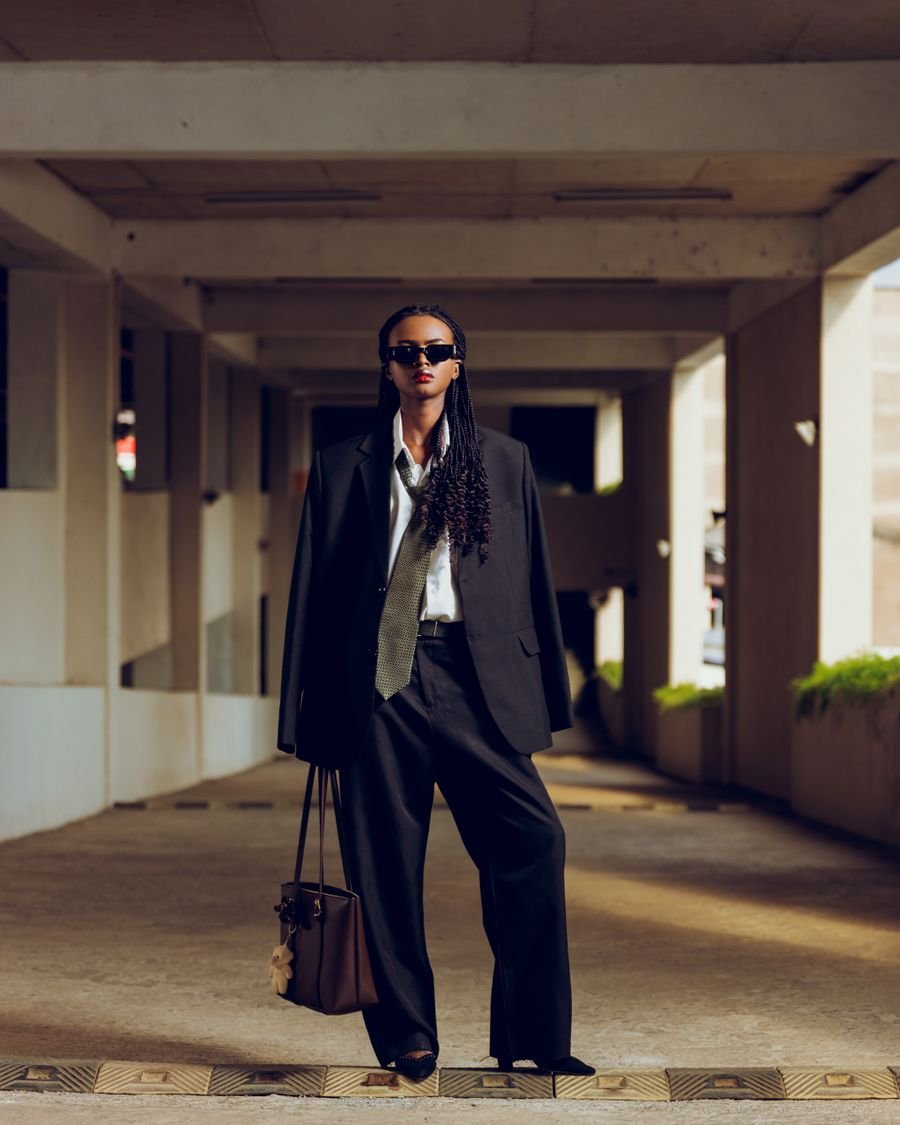
A fine-knit turtleneck is the single best thing to wear under an oversized suit in winter, and it solves three problems at once. It is warm, it is slim enough to keep the volume where it belongs, and it gives the open jacket a clean line to frame, so the suit looks styled rather than thrown on. Choose a fine knit rather than a chunky one, because bulk under a big jacket is the fastest route to a shapeless middle, and keep the colour simple: black, cream, charcoal or a deep burgundy does the work without competing.
The turtleneck also rescues the outfits that feel unfinished. A bare neck under a wide lapel can look cold and accidental, while a close-fitting roll neck turns the same jacket into a deliberate winter look. If turtlenecks bother your neck, a high funnel neck does the same job with a little more air, and a thin thermal layer underneath keeps you warm without adding a visible layer. This is also the coldest-day formula: suit, turtleneck, warm tights or thermal leggings under the trousers, and you are ready for a real winter walk while looking like you dressed with intent.
4. Funnel Necks and High Collars With a Big Suit
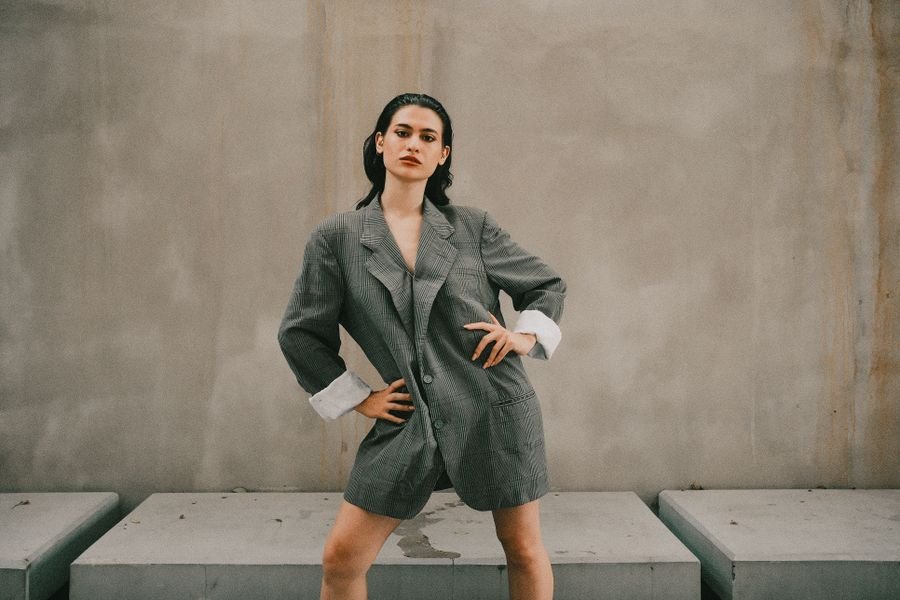
Where a turtleneck hugs, a funnel neck stands, and that upright collar is one of the most flattering shapes you can put under a big lapel. It frames the face, keeps the wind out without a scarf, and gives an oversized suit a sharp, modern line that feels very Glamoratti: borrowed from menswear, finished like womenswear. Look for a funnel neck in a fine knit or a technical fabric that holds its shape, in a colour that either matches the suit for a long, quiet line or contrasts it by one calm step, like cream against charcoal.
High collars also solve the scarf problem on most days, because the collar does the warming and a slim scarf can stay in the bag. If you do wear a scarf, keep it thin and let it sit inside the jacket rather than bulked on top, which would fight the lapel. And when the collar is up, keep everything else quiet: small earrings, a simple shoe, one calm colour. The collar is the statement here, and a big suit needs exactly one of those at a time to stay elegant rather than noisy.
5. Suit and Boots: The Winter Combination That Always Works
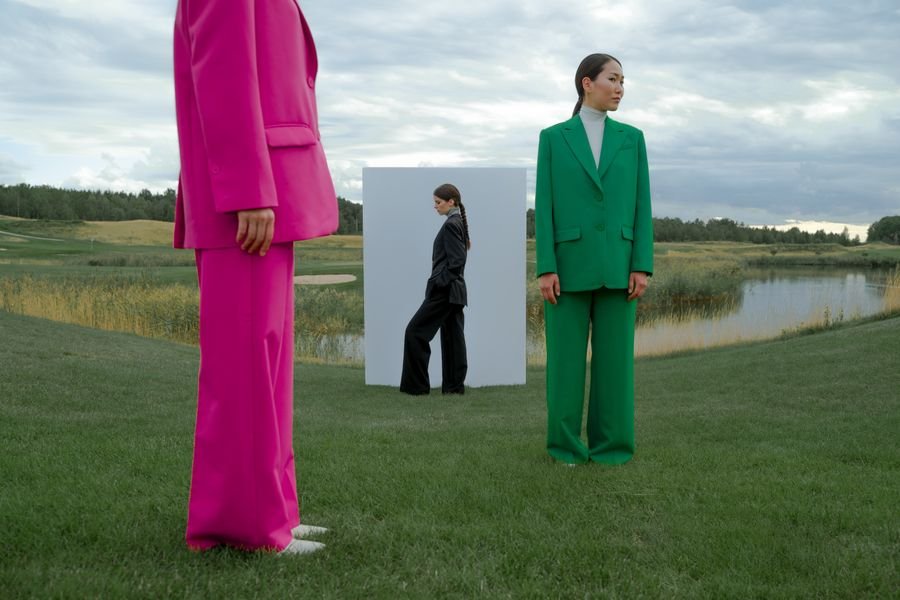
If there is one combination to trust in winter, it is an oversized suit with boots. A knee-high boot under a wide trouser gives the long line a finish, a pointed ankle boot sharpens it, and a sturdy lace-up boot makes the whole thing feel city-proof rather than precious. The key is the trouser hem: it should just cover the top of a knee boot or sit neatly on an ankle boot without bunching, so the boot reads as part of the outfit instead of something hiding underneath it.
Boots also do what heels cannot in cold weather, which is to keep you upright, warm and unhurried. Choose leather or a good water-resistant finish, because slush is not a style choice, and keep the heel low enough to walk in for a whole day: a block heel or a flat knee boot keeps the Glamoratti polish while your feet stay grateful. A good rule for the coldest days is that the boot and the bag should be the hardest-working pieces in the outfit, while the suit gets to be the beautiful one.
6. Suit and Heels: When to Dress It Up
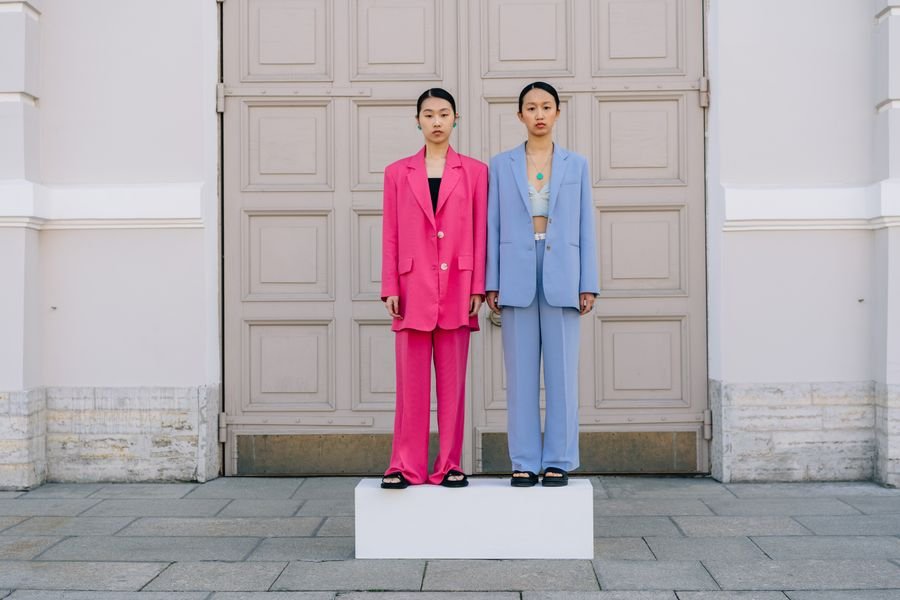
Heels have their place with an oversized suit, and that place is indoors, at night, or on dry days when the outfit needs to be dressed up rather than winter-proofed. A pointed-toe heel under a wide trouser makes the leg look very long, and a strappy evening heel turns the same suit into evening wear without a single change of clothing. The trick is the trouser length: with heels the hem can be a touch longer, pooling just at the toe, which is the one place where a little pooling looks intentional, because the heel holds the line.
Keep the heel in proportion to the suit: a slim or kitten heel keeps the balance elegant, while a heavy platform can make the whole look top-heavy. And if you are wearing heels with a baggy suit, keep the bag structured and small, because the shoes and the bag are the polished details against the generous tailoring. A good simple test is the front door: if you would happily walk to a restaurant in this outfit and forget about your feet by the second course, the heels are right. If you are already planning the taxi, change to boots.
7. The Coat Over a Big Suit: Layering Without the Bulk
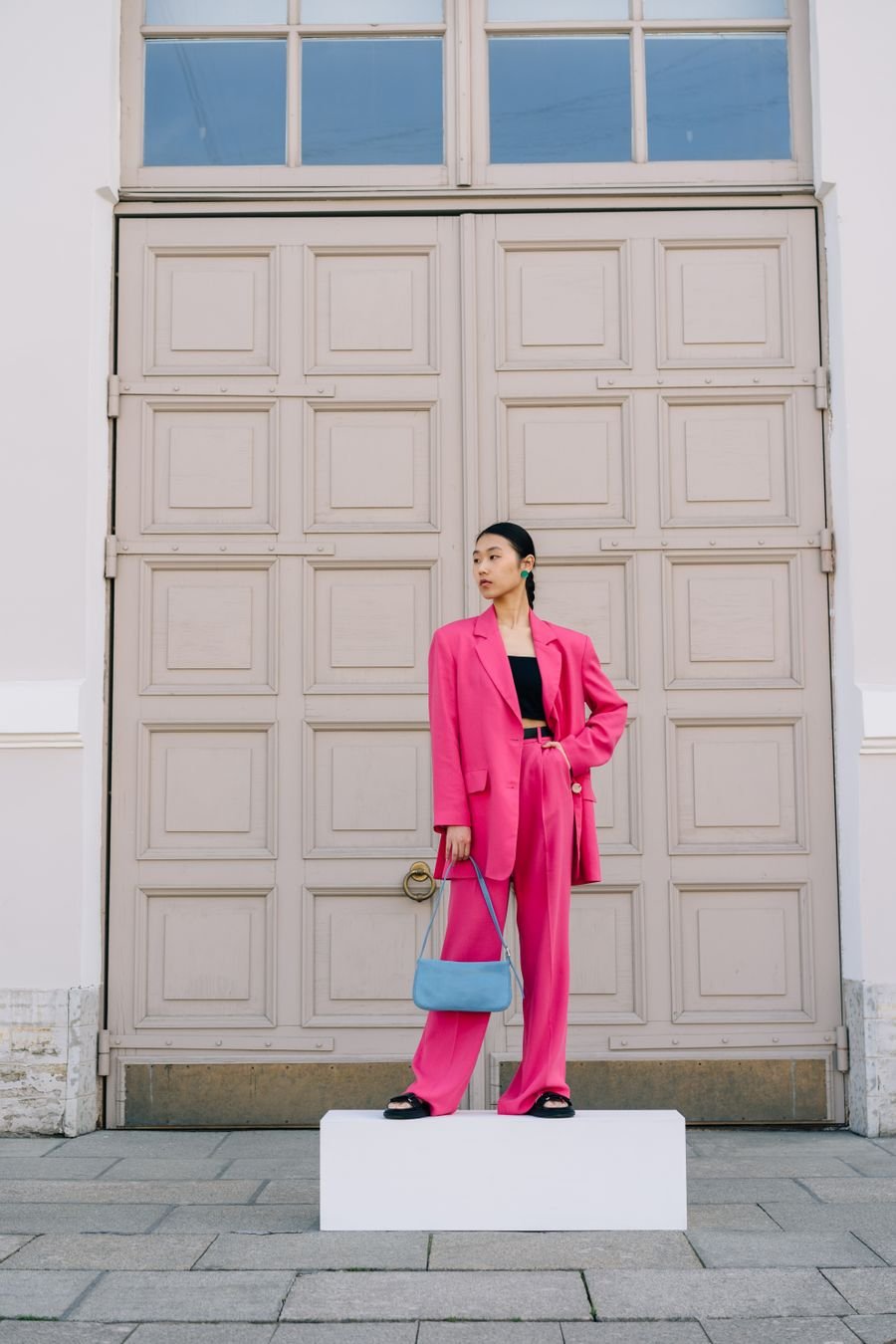
The coat question worries everyone who wears a big suit in winter, and the answer is simpler than it seems: the coat must be longer and roomier than the jacket, and it must be left open at least part of the time. A longline wool coat or a boxy topcoat that falls below the jacket hem lets the suit show underneath, and the two layers read as one deliberate look instead of a fight. What does not work is a shorter, fitted coat that ends at the jacket hem and makes everything below it bulge, or a coat so tight that the sleeves bind.
For the coldest days, a double-breasted long coat in a matching or tonal colour is the most forgiving choice, and wearing it open shows the suit, the turtleneck and the boots in one long line. A belted coat worn loosely also works, as long as the belt sits over the coat and not over the suit jacket underneath. And save the fitted puffer for other outfits: practical as it is, it argues with everything a beautiful suit is doing. If the wind is truly bitter, choose a soft oversized scarf tucked inside the coat for warmth instead of strangling the look with layers.
8. Separates Formulas: Blazer One Day, Trousers the Next
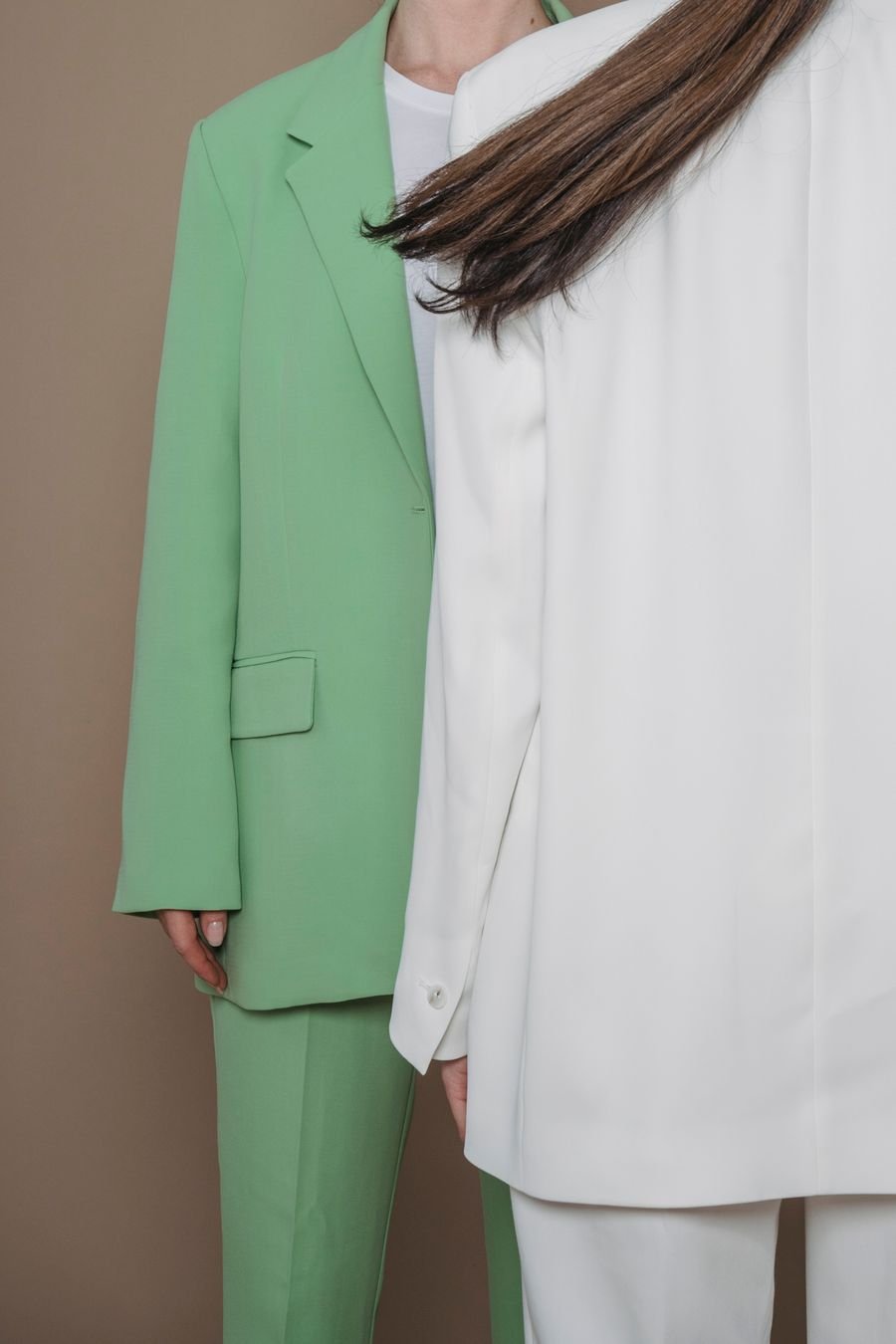
An oversized suit is really two outfits at least, and separates are how you get your money’s worth from it. The blazer works over a knit dress, with jeans and boots, or layered over a slip skirt, while the trousers become the hero with a fitted knit, a crisp shirt or a soft cardigan. This is the Glamoratti secret hiding in plain sight: the suits everyone admires are rarely worn as suits every day, they are worn in pieces, and the pieces make a whole wardrobe out of one purchase.
The separates rule is about contrast: a wide blazer needs a slim line underneath it, and wide trousers need a fitted or tucked top, so each half keeps the other looking intentional. Match the weights as well as the colours, because a heavy wool jacket over a thin jersey dress fights, while the same jacket over a fine knit dress feels considered. Keep the colour story calm so the halves can trade partners freely, and remember to press the trousers after wearing them with knitwear, because the trousers do the hard walking work and they show it first.
9. Colour Stories for Oversized Winter Suits
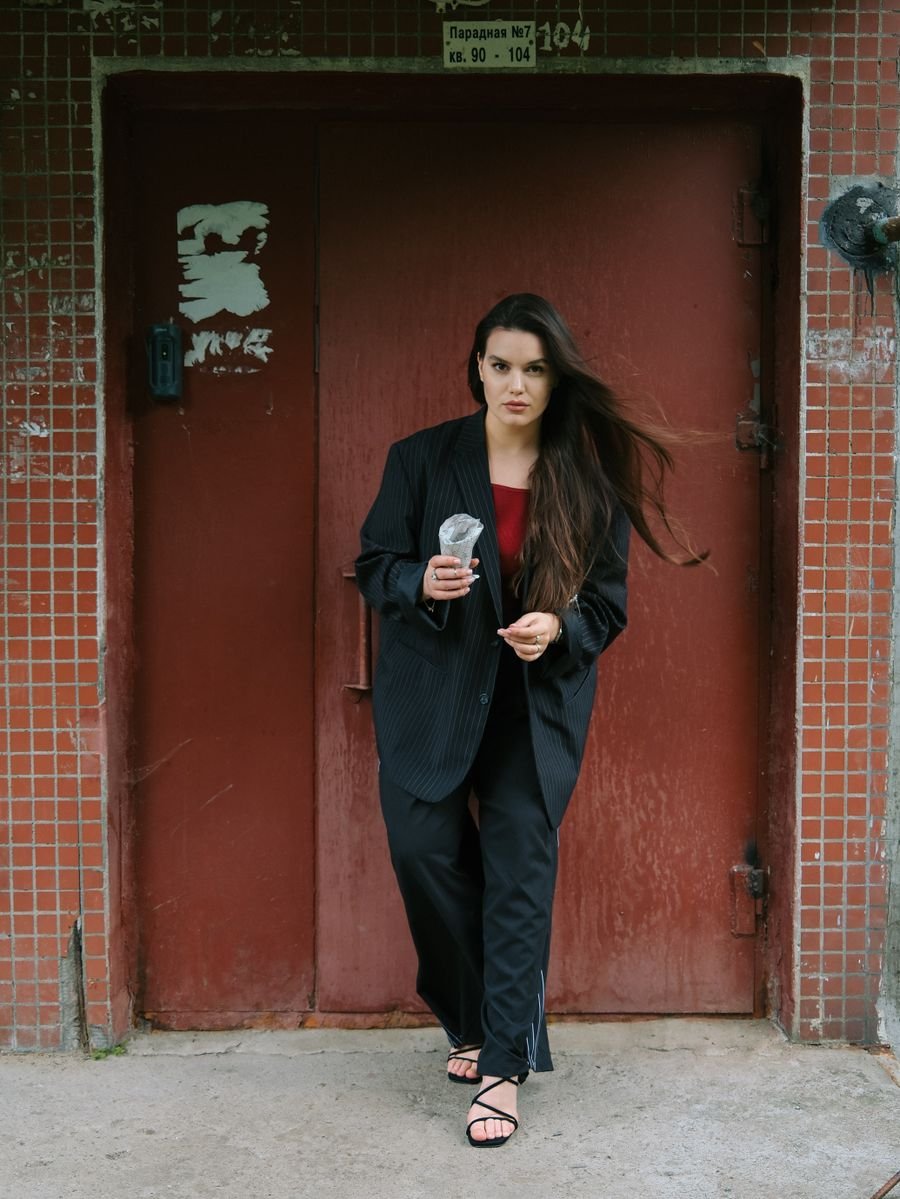
Colour turns a big suit from sensible into memorable, and winter is the season to be brave about it in a calm way. Charcoal and black are the safe foundations, but camel softens the whole look, a deep burgundy warms it, and a strong red or forest green makes it unmistakably yours. The Glamoratti way is one colour at a time: a coloured suit is the statement, and everything else stays in the same family, cream, charcoal or black, so the suit can be generous without being loud.
If you are not ready for a coloured suit, colour the details instead: a burgundy turtleneck under a charcoal suit, a camel coat over black trousers, red boots that are only just visible. And when you do go monochrome, mind the tones: a grey suit with a grey knit can look flat unless one of them is clearly lighter or darker, so add a white shirt edge or a dark boot to give the eye something to hold onto. A big suit is already a strong shape, and the colour story should support that shape, not compete with it for attention.
10. The Glamoratti Way: Borrowed, Polished, Never Costume
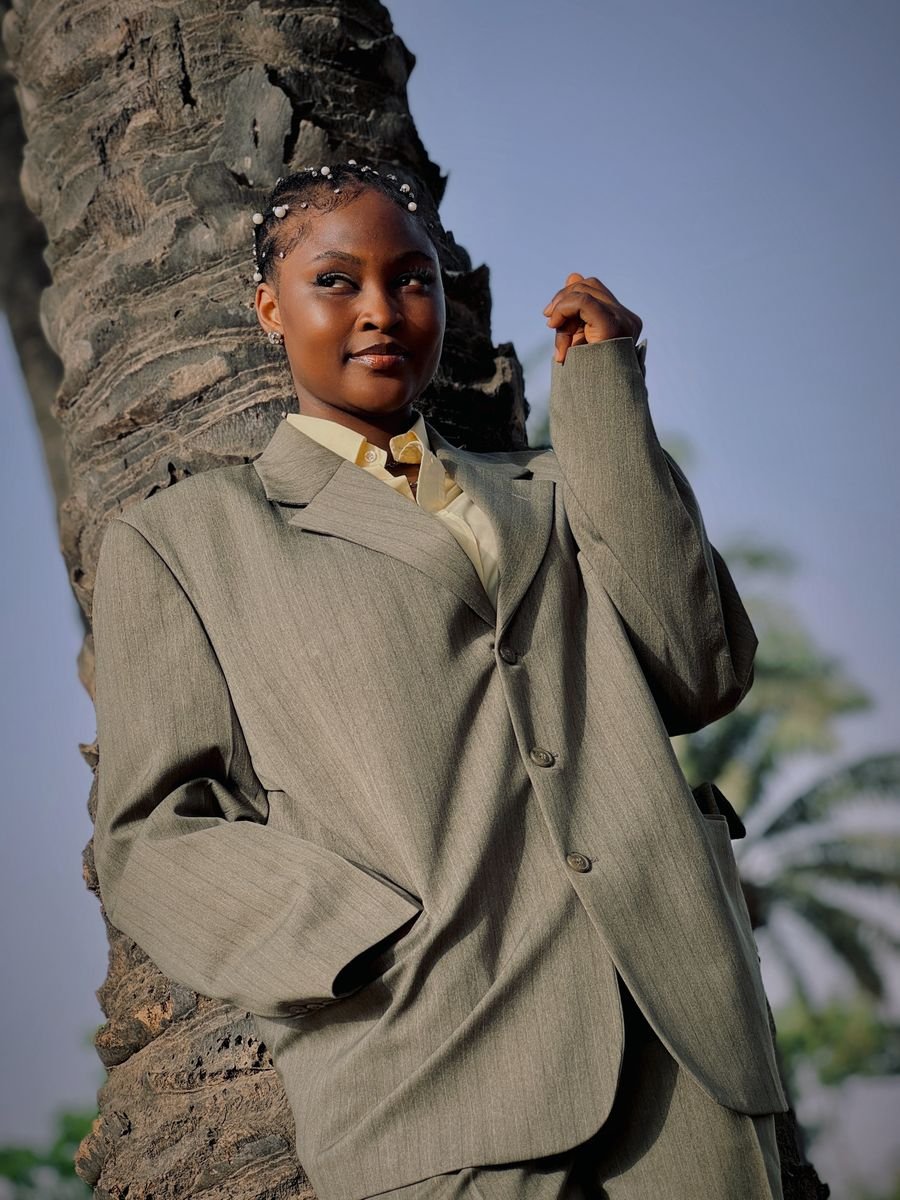
Glamoratti is not a brand, it is an attitude: borrowed tailoring, kept polished. The difference between that and a costume is the finishing. The hair is tidy, the makeup is calm, the shoes are clean, the bag is structured, and nothing in the outfit is competing with the suit for attention. A big suit worn the Glamoratti way feels like a woman who knows exactly what she is doing, and the secret is that she does: she chose the suit because of its shape, not in spite of it, and every other decision serves that shape.
To get there, add one deliberate detail and keep the rest quiet. A bold lip with a clean eye, a slicked-back style with small gold hoops, a leather tote that looks like it has somewhere to be. What tips a baggy suit into fancy dress is excess: a hat and a scarf and a statement necklace and embellished boots at once. Pick one, keep the others simple, and the suit stays the star. That restraint is what makes the look feel expensive, and it is also what makes it repeatable on days when you have five minutes and no patience.
11. What to Wear Underneath: Shirts, Knits and Nothing Showing
Underneath an oversized suit, three things work: a fine knit, a crisp shirt and, on the right day, very little at all. A white or cream shirt with the top button open gives the lapels a frame and looks polished in every season, while a thin silk camisole works for evenings if the jacket stays closed enough to be decent. The rule is that what is underneath should be slimmer than what is on top, and it should never bunch, wrinkle or pull at the buttons, because the underneath layer is invisible in a good outfit and only noticeable when it goes wrong.
Check the V where the jacket opens, because that triangle is the whole outfit in miniature: if the shirt is gaping, the knit is too thick or the top underneath is the wrong colour, the eye goes straight there. A simple fix is a small stitch or a fashion tape on a shirt, a camisole under a shirt that wants to open, and a knit in a colour that talks to the suit rather than arguing with it. In winter, warmth belongs in the thin thermal layer next to the skin, not in a chunky jumper fighting the jacket, and the suit will fit over it beautifully.
12. Belting a Baggy Suit: Yes, and Here Is How
Belting an oversized suit feels like cheating, and properly done, it is a very good cheat. A slim leather belt worn over the jacket at your natural waist turns a straight, borrowed shape into an hourglass line without changing anything else, and it is the fastest way to make a big suit look like it was made for you. The belt must be slim, dark and simple, because a heavy statement belt argues with the lapels, and it should sit over the closed jacket where the coat would not fight it.
There is a limit, though, and the limit is warmth: belting works best indoors or under an open long coat, because a belt over a thick coat makes a strange silhouette and is uncomfortable to sit in. In the coldest weather, keep the suit unbelted under the coat and save the belted version for offices, dinners and dry days. And if the suit does not close comfortably at the waist, a belt will not fix it: the jacket is simply too big, and the right move is a size down in the jacket and the oversized shoulders from the cut, not from sheer volume.
13. Trouser Lengths: Pooling, Cropped and Everything Between
Trouser length is the detail that makes or breaks a baggy suit, and winter gives you three good options. Full-length trousers that just cover the top of the shoe are the most formal and the most flattering, because the long line is unbroken. A slight crop that shows the ankle boot is the most practical, because wet hems are nobody’s friend in slush, and it shows off your boots. A cropped wide trouser with a chunky boot is the fashion-forward choice, and it works best when the top is fitted, so the volume is in one place at a time.
What does not work is the in-between length that neither covers the shoe nor shows the ankle, which is the length that makes legs look shorter than they are. When you buy, try the suit with the shoes you will actually wear, not the ones in the shop, and have the hem adjusted if needed, because a ten-dollar hem is the cheapest styling upgrade there is. In winter, ask the tailor to leave the trousers a touch longer than your summer suits, because boots need a bit more coverage than flat shoes, and the extra length is your friend on cold pavement.
14. Bags That Work With an Oversized Suit
A baggy suit needs a bag with a spine, because a slouchy bag next to slouchy tailoring tips the whole outfit into shapelessness. A structured tote or a top-handle bag holds the line, a leather cross-body worn across the body adds a useful diagonal, and a small shoulder bag keeps the hands free for coffee and gloves. The size should be close to the scale of the suit: a tiny clutch looks lost beside a big shoulder, while a huge carry-all adds volume where you do not need it.
Colour matters here more than with a slimmer suit. A bag in a matching tone keeps the long lines clean, a bag in the knit or shoe colour ties the small pieces together, and one deep, rich colour, burgundy, forest or oxblood, adds the warmth that black tailoring can lack. Keep the hardware quiet and the strap long enough to wear over the coat if you are carrying it that way, and remember that the bag is doing actual work in winter: it holds the gloves, the scarf and the extra layer, so it is allowed to be the practical piece, as long as it looks like it means it.
15. Hair and Makeup With Strong Tailoring
Strong tailoring loves a considered finish, and that does not mean heavy makeup, it means deliberate choices. A sleek style, a low ponytail or a tidy blow-dry holds its own next to a strong shoulder, while loose waves soften it if the look needs softening. Makeup follows the same rule: one feature is enough, a strong lip with a calm eye, or a clean face with a deep, smoky line. The suit is already making a statement, and a second statement on the face makes the whole thing noisy.
Keep skin calm and brows tidy, because the clean surfaces of a good suit make the face look like part of the design, and anything messy on the face reads doubly messy against it. In winter, a touch of colour on the cheek or the lip is your friend, since cold light flattens the complexion, and a good hand cream matters more than you think when your hands are the most photographed part of a coffee-holding outfit. The aim is not a made-up face. It is a finished one, the same calm polish that makes the whole Glamoratti look hang together.
16. From Desk to Dinner in the Same Suit
An oversized suit is the best day-to-evening outfit there is, because the changes are small and the effect is large. Start the day with the turtleneck and boots and a tote, then for the evening change three things: take off the turtleneck for a camisole or silk shirt, swap the boots for a pointed heel, and trade the tote for a small structured bag. Add a red lip or a bolder earring and the same suit reads as a different outfit altogether, without a change of clothes in the middle of the day.
Keep a small evening kit in your desk or bag for the days this matters: the lip colour, the earrings, a silk scarf to fold into the jacket pocket, and one pair of heels that live at the office. The trick is the timing: make the swap before you leave the office, because a suit that goes from desk to dinner needs five minutes of thought between the two. And if you know the day will run long, wear the silk shirt from the start with a light cardigan over it in the morning, so the evening version is simply the cardigan removed.
17. The 14 Winter Ways: Your Quick-Look List of Outfit Formulas
Here are the fourteen winter formulas in one place, so you can pick the one that matches tomorrow’s plans. One: charcoal suit, cream turtleneck, knee boots, long camel coat. Two: black suit, black turtleneck, pointed ankle boots, red lip. Three: camel suit, white shirt, straight trousers, cream funnel neck. Four: burgundy suit, charcoal knit, knee boots, structured tote. Five: grey suit, burgundy scarf, ankle boots, long navy coat. Six: navy suit, grey funnel neck, loafers, cross-body bag. Seven: red suit, black knit, black boots, camel coat, worn like a signature.
Eight: suit trousers alone, fitted cream knit, knee boots, belt at the waist. Nine: suit blazer over a knit dress, tights, knee boots, long coat. Ten: suit blazer over jeans, fine knit, ankle boots for the weekend. Eleven: full suit belted at the waist, silk camisole, pointed heels for dinner. Twelve: full suit with a crisp white shirt, loafers, and a top-handle bag for the office. Thirteen: grey suit, forest green knit, brown boots, rust scarf for the days you want colour. Fourteen: suit, funnel neck, chunky lace-up boots and a long open coat for the coldest, windiest walk. Fourteen ways, one suit, and every one of them starts from the fit rules in this guide.
18. Shopping for an Oversized Suit: What to Check Before You Pay
Buy a suit the way you would buy a coat: slowly, and with your own shoes on. Check the shoulder first, then the sleeve and the trouser break, then sit down for a minute, because a suit that is perfect standing and dreadful sitting is not a good suit. Check the fabric label before the price tag, since a good wool blend will last years longer than a thin, shiny one, and feel the lining, because a suit without a good lining will always fight you.
Try it with the turtleneck and the boots you will actually wear, and take it outside the fitting room, because the light inside is flattering and the light outside is honest. If the shop will not let you see yourself properly, that is a reason to slow down, not to speed up, and if two sizes both almost work, take the one with the better shoulder and let a tailor do the rest. An oversized suit is worth the effort it takes to buy well, because it is the one piece that makes every other piece in the wardrobe look more intentional.
19. Making It Yours: Small Tweaks That Turn a Suit Into a Signature
The last step is the personal one. Roll the sleeve to show a cuff or a watch, choose the scarf colour nobody else wears, keep the same bag and the same lip colour for a season so people begin to associate them with you. A signature is not what you buy, it is what you repeat, and the beauty of an oversized suit is that it already has a strong shape, so the small details that repeat with it are the things people remember.
Photograph your best suit outfits the way you would a favourite recipe, so you can repeat what worked instead of inventing it again. One or two formulas that always look right are worth more than a wardrobe full of maybes, and they are how the Glamoratti look becomes yours instead of a look you copied. Keep the fit rules from this guide, change the details with the season, and let the suit carry the days when you have nothing in the wardrobe that feels right, because that is exactly what a great suit is for.
20. Save This Suit Formula on Pinterest
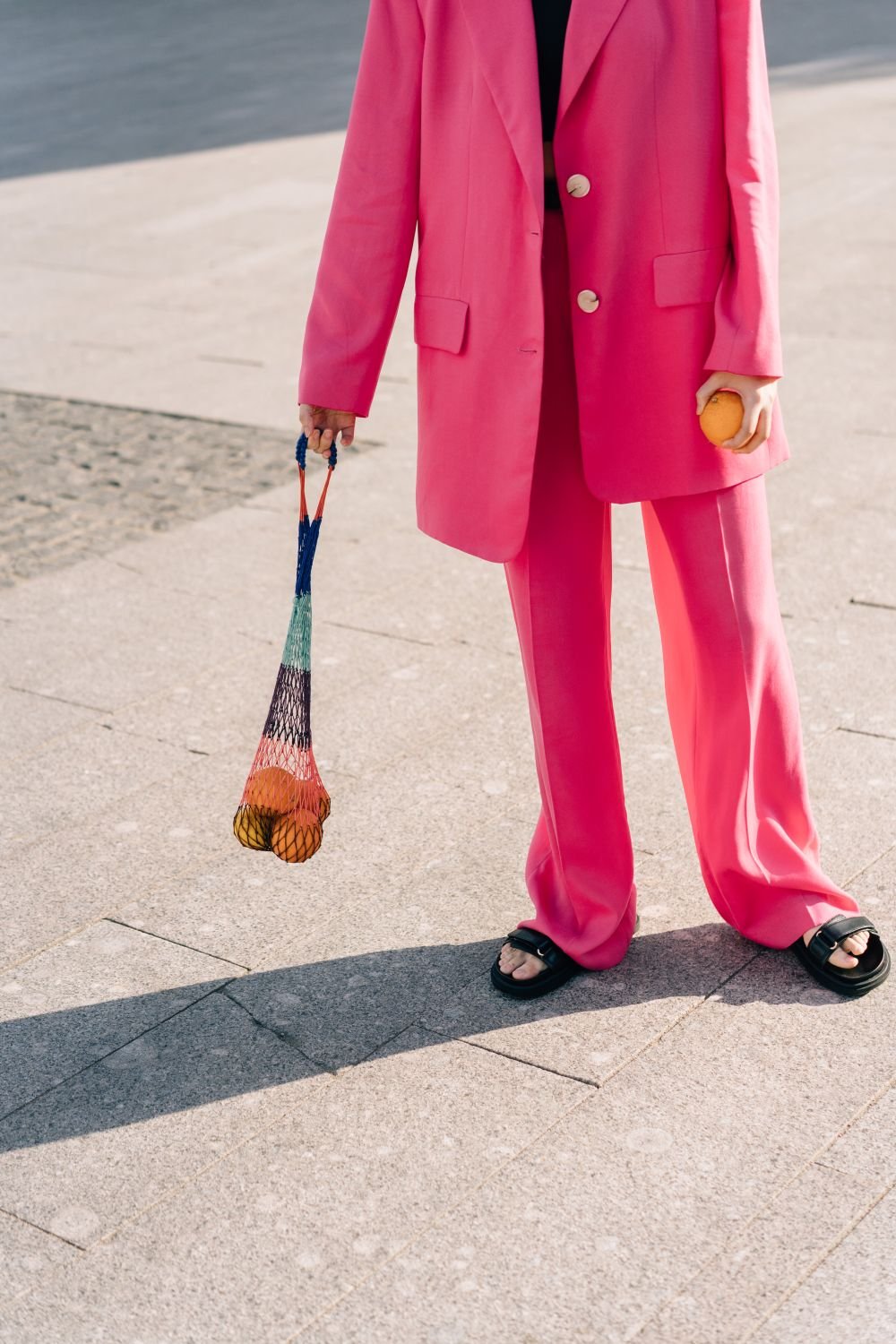
Love this guide? Save it to your Pinterest board so your suit formula is ready before the next cold morning — Save this guide on Pinterest.

Want a caption for your own pin? Try the site’s free Pinterest caption generator — it writes Pinterest captions and pin titles for your outfit photos in seconds, so your saved looks are ready to share beautifully.
All photographs in this article are free-licensed images from Pexels, served in a compressed, web-optimised size.